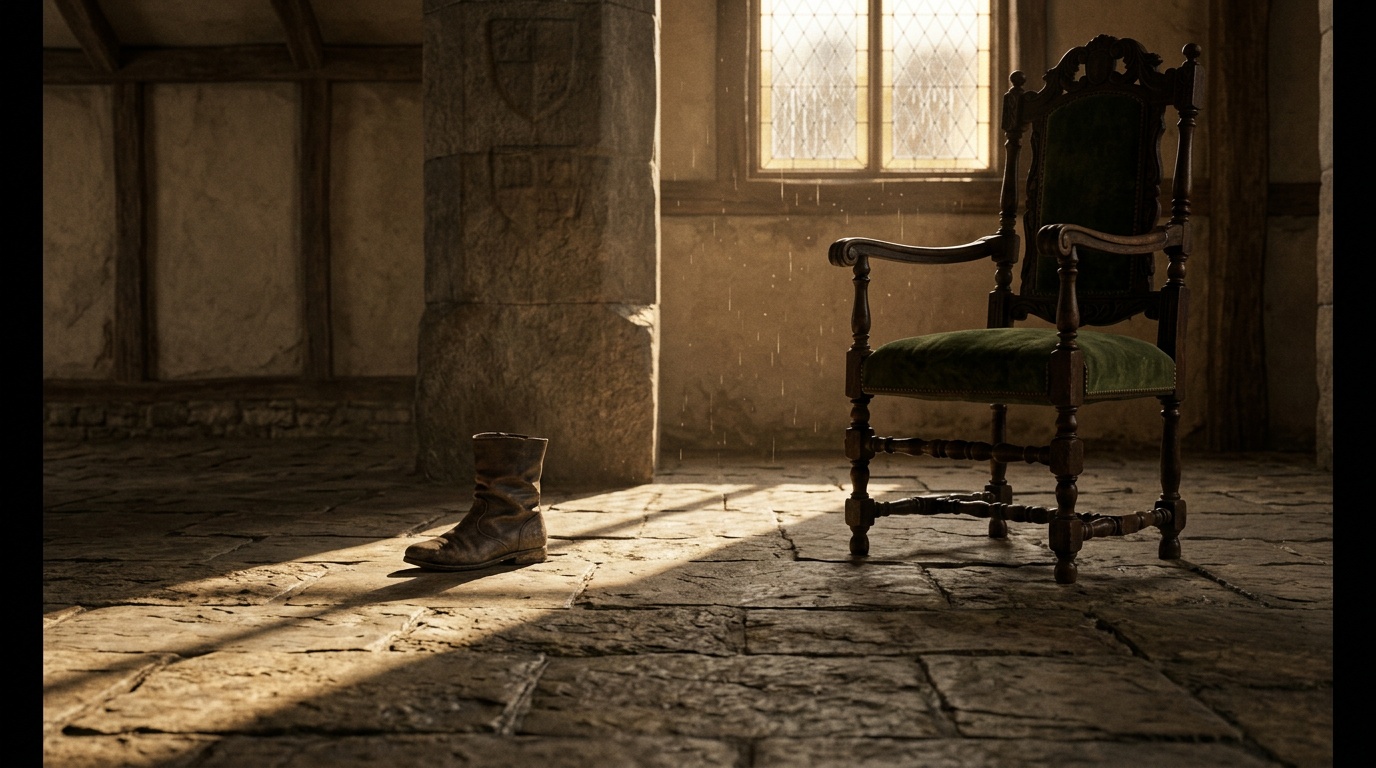
Baelor Chose Honor Over Blood
THE ARGUMENT
Baelor Targaryen's support for Dunk is not honor overcoming politics but a calculated displacement of his own unresolvable conflict: he has privately concluded that legitimacy derives from conduct rather than birth, but he will not say so and survive, so he engineers a legal mechanism that might say it for him. His silence when asked whether all knights share the same oath is not ambiguity but suppressed conviction. The trial of seven is the only structure in which Baelor can win his argument against Aerion without having to openly make it.
How This Theory Works
Baelor is not defending Dunk. He is defending himself from the version of knighthood his family embodies. His admission that he might have done exactly what Dunk did is not a diplomatic gesture toward a hedge knight; it is a confession that his own sense of legitimacy does not derive from blood but from conduct, and that admission places him in irreconcilable tension with every assumption his family holds about rank and right. He cannot answer Dunk's question about the knightly oath without condemning Aerion, and he cannot condemn Aerion without condemning the institution that made him heir. The silence is not evasion. It is the sound of a man who has already reached a conclusion he cannot speak aloud.
The contrast with Aerion is not incidental to the argument; it is the argument. Aerion states plainly that the trial of seven is a theater of Targaryen strength. Baelor's response is to give Dunk the legal framework to fight and to frame the outcome as a question for the gods, invoking a moral standard that supersedes rank entirely. The two princes are running opposite philosophies through the same legal mechanism, and Baelor knows it. His discomfort is not the discomfort of a moderate caught between factions. It is the discomfort of someone who has privately defected.
What the theory approaches but refuses to state is this: Baelor's support for Dunk is not honor overcoming politics. It is Baelor using Dunk as a proxy to test whether his own philosophy of knighthood can be institutionally ratified without him having to openly break from his family to do it. He needs the gods to confirm what he has already decided, because he is not willing to confirm it himself. The trial is his escape from having to choose.
If that reading holds, then every champion who stands for Dunk is not choosing a hedge knight over a prince. They are being recruited, knowingly or not, into Baelor's private argument with the meaning of Targaryen legitimacy. The trial of seven becomes the only arena in which Baelor's philosophy can win without Baelor having to pay the cost of winning it.
Is this theory convincing?
Key Evidence
Baelor's Admission of Shared Impulse
When Dunk asks whether Baelor would have done the same thing in defending Tanselle, Baelor admits he might have, then deflects by saying the difference is rank rather than righteousness.
Silence on the Knightly Oath
Dunk asks pointedly whether all knights take the same oath to protect the innocent, and Baelor looks away in silence rather than answering, implying he cannot disagree without condemning his own family.
Baelor Steers Dunk Toward Trial
Rather than allowing Dunk to default into maiming, Baelor actively presents trial by combat as an option, giving Dunk the legal framework to fight rather than simply suffer the consequences.
Gods as Arbiter of Justice
Baelor frames the trial as a matter for the gods to decide whether Dunk was right or wrong, invoking a moral standard that supersedes royal rank and positions Dunk's cause as potentially just.
Aerion's Trial as Power Display
Aerion explicitly states he invoked the trial of seven to make a show of Targaryen strength, revealing that for him the legal mechanism is theater rather than justice, which throws Baelor's contrasting seriousness into relief.
Dunk's Honor Versus Formal Training
Baelor asks Dunk directly how skilled he is at arms, and Dunk honestly admits he lacks the years of training a prince would have, yet Baelor still supports his right to the trial, prioritizing the principle over the odds.
This theory was evaluated using Theory Atlas editorial standards, including evidence review, narrative fit, and competing interpretation analysis. Learn how Theory Atlas evaluates theories →
Other Theories for S1E04
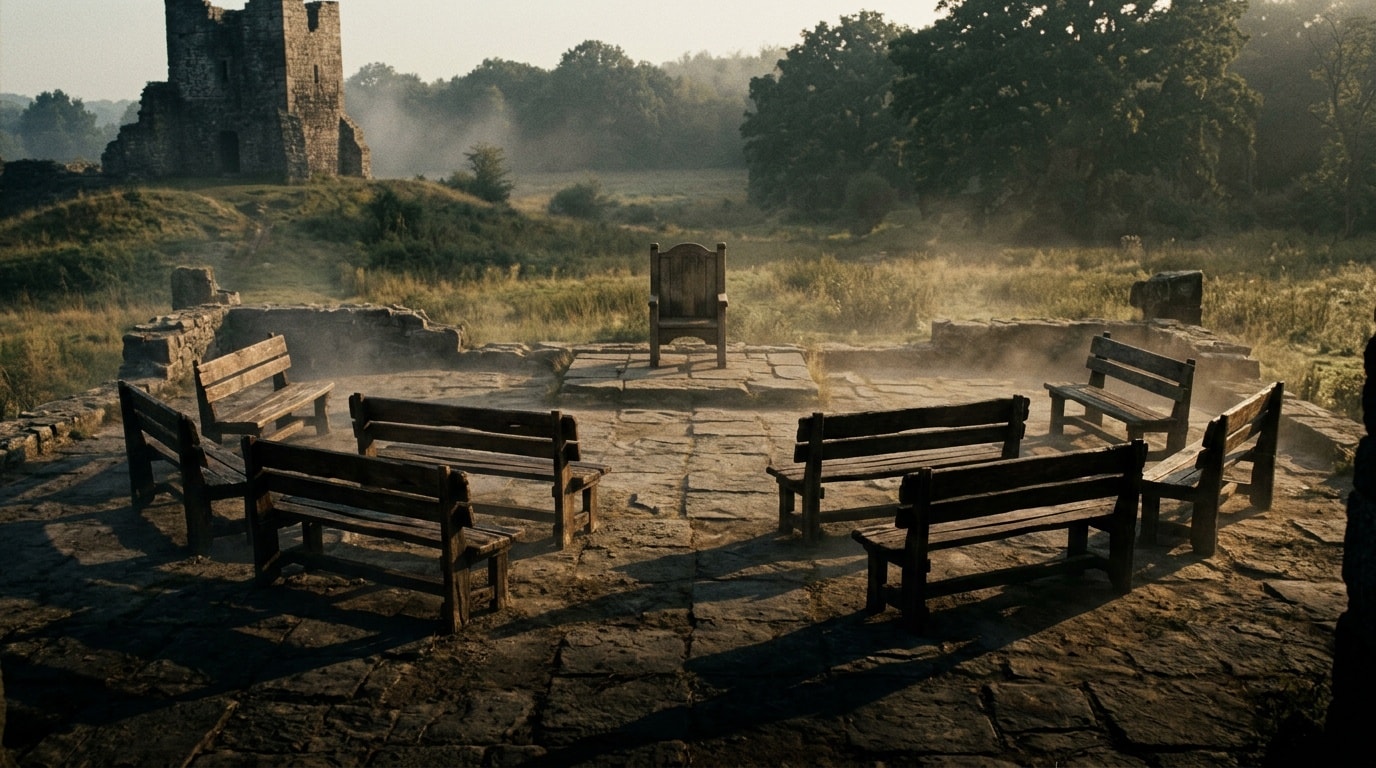
Nobody Wants to Fight a Targaryen
The trial of seven is a mechanism for converting Targaryen political dominance into a legal verdict: if no knight will risk royal displeasure to stand beside Dunk, that silence becomes proof of his guilt.

Aerion Thinks He Is Literally a Dragon
Aerion's dragon delusion is confirmed, but what the show has not yet made explicit is its structural consequence: Aerion has exited the shared framework of reality that law, family, and reason operate within, which means every institution trying to check his violence is reasoning in a language he no longer speaks.

Dunk's Hesitation Discloses a Broken Chain: Two Fabricated Legitimacies, One Shared Silence
When Dunk says 'I shouldn't' before knighting Raymun, the show covertly discloses that Ser Arlan never formally knighted him, leaving a broken chain of conferral at the foundation of every legal right the episode depends on.
Dunk's Moral Sincerity Is the One Thing the Westeros Architecture Was Never Built to Stop
The show is running the same argument through two registers at once: behaviorally, Dunk's unconditional goodness forces every character whose identity depends on the knightly-oath gap remaining unexamined into either honesty or a more naked form of dishonesty; symbolically, the elm on his shield names what that quality is.
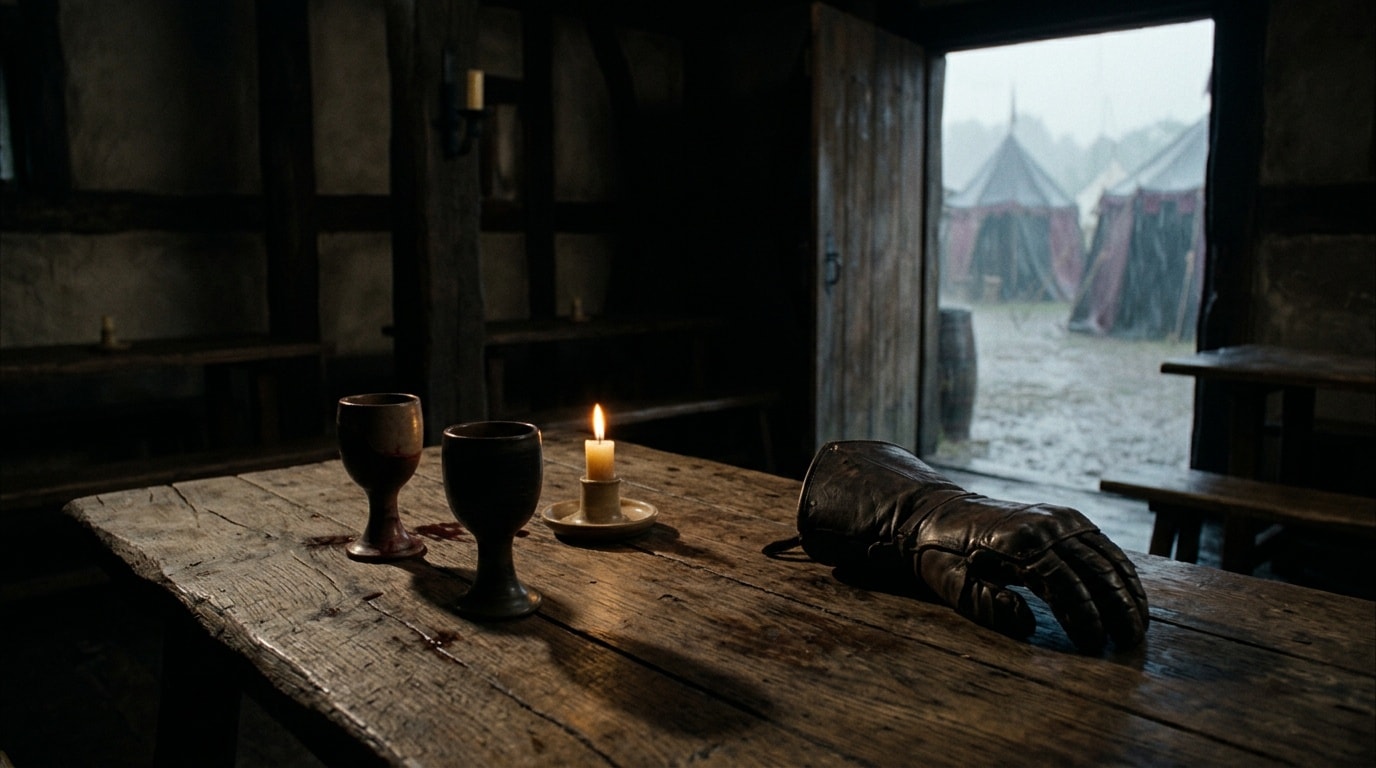
Daeron Dreams of Dunk Killing a Dragon
Daeron has foreseen Aerion's death at Dunk's hands, and his drinking and absence from Ashford are not weakness but the behavior of a man who already knows how the trial of seven ends.