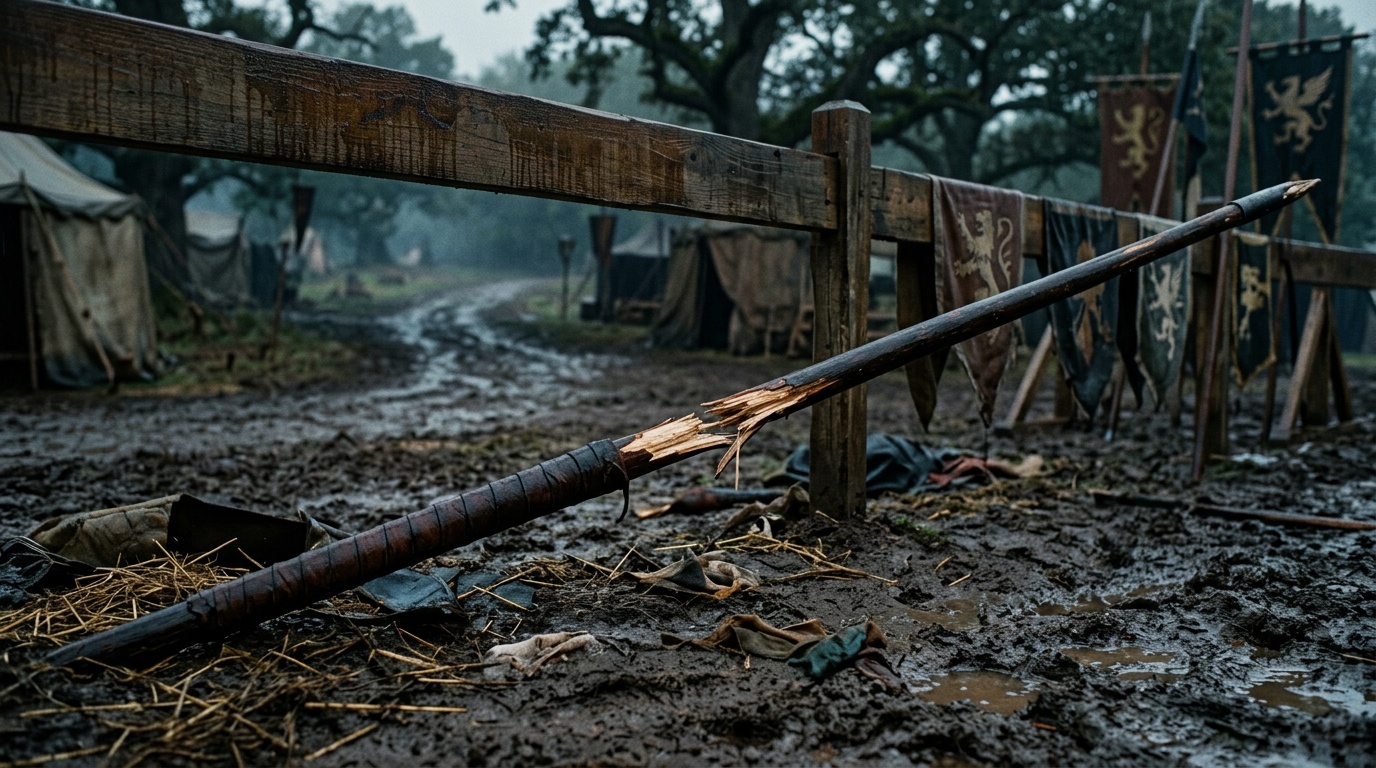
Flea Bottom Forged the Fighter Aerion Cannot Beat
THE ARGUMENT
Aerion can defeat Ser Duncan the Tall on formal terms, but the fighter Dunk of Flea Bottom, shaped by body-looting and survival violence before any knight ever touched him, operates on a different combat logic entirely. The episode's flashback makes this split structural rather than merely thematic: two fighters occupy the same body, and the trial of seven will determine which one finishes the fight. The gap between Dunk's title and his actual origin is not a weakness Aerion can exploit, it is the one variable Aerion's training did not prepare him for.
How This Theory Works
Aerion can defeat Ser Duncan the Tall, but the fighter Aerion cannot beat is Dunk of Flea Bottom, and the show has now made that distinction structurally explicit. Nothing in the trial so far suggests Ser Duncan the Tall has a formal answer for Aerion's technical superiority. The unconfirmed claim is that he does not need one, because the fighter who will finish the trial is not Ser Duncan.
The flashback gives this claim its foundation. A child-aged Dunk strips bodies, smothers wounded soldiers, and sells scrap at the Flea Bottom forge without ceremony or hesitation. Rafe's lesson about Pudding and Cedric, that no one ever forgets a wound and repayment always comes, is not backstory. It is the combat philosophy Dunk actually operates on: absorb the damage, remember it, make it count later. The blacksmith returning the Blackfyre leather straps because he cannot melt them down or resell them frames Flea Bottom as a place where only the strictly practical survives. Formal symbols of noble war are worthless there. What endures is what cannot be refined away.
Aerion's training is optimized for exchanges with predictable structure, distances, and rules. Dunk unconscious in the mud is not yet defeated because the version of him shaped in King's Landing's worst wynds does not process combat the way a trained knight does. It does not wait for the correct opening. It gets up because the only thing Flea Bottom ever taught him to refuse is dying in filth. When Egg shouts at him to rise, he is not reaching the knight. He is reaching the part of Dunk that predates any knight entirely, the part that has no code except survival and no memory except who hurt him.
The hardest implication of this theory is not that Dunk will win. It is that Dunk's formal knighthood is a performance layer over a fighter who was already complete before Ser Arlan ever found him, and that the trial of seven will force that original fighter back to the surface in a way knighthood never could have.
Is this theory convincing?
Key Evidence
Aerion Knocks Dunk Unconscious
In the trial's opening exchange, Aerion drives his lance into Dunk's ribs and then catches the left side of his helmet with a flail, sending Dunk face-down and unconscious in the mud, demonstrating Aerion's clear technical superiority.
Egg's Shout Echoes Ser Arlan
Dunk recovers consciousness when Egg shouts at him to get up, a moment that mirrors the words of his former master Ser Arlan, suggesting Dunk's revival is driven by something deeper than knightly conditioning.
Young Dunk Loots Redgrass Field
The flashback shows a child-aged Dunk stripping bodies, smothering a wounded man without flinching, and selling scrap metal at the Flea Bottom forge, establishing a foundation of survival instinct that predates any formal training.
Rafe's Lesson About Repayment
Rafe tells Dunk the story of Pudding and Cedric to argue that wounds are never forgotten and repayment always comes, a philosophy of endurance and deferred counter-violence that mirrors the theory's claim about Dunk's combat character.
Blackfyre Leather Returned at Forge
The blacksmith hands back the Blackfyre leather straps because he cannot melt them down or resell them, a detail that frames Flea Bottom as a place where only the unrefineable and the strictly practical survive.
Dunk Versus Knight Distinction
The theory draws on framing that separates 'Ser Duncan the Tall,' who Aerion can outfight on formal terms, from 'Dunk of Flea Bottom,' who carries a different combat logic altogether, a distinction the episode's flashback makes structurally visible.
This theory was evaluated using Theory Atlas editorial standards, including evidence review, narrative fit, and competing interpretation analysis. Learn how Theory Atlas evaluates theories →
Other Theories for S1E05
The Proverb Was the Hinge: Baelor's Death as Murder and Prophecy Simultaneously
Baelor Breakspear constructed a defensive arrangement for the Trial of Seven with a gap precisely the shape of his youngest brother, and Maekar exploited that gap deliberately.
Dunk's Courage Lives Only Through Egg
Egg is not Dunk's passenger.
Dunk's Honor Is a Recursive Loop: He Has Been Apologizing to the Dead Since Before He Could Name Them
Dunk's compulsion to protect the powerless is not a moral code he chose or a virtue he developed.