Dunk's Foot Will Save the Realm
THE ARGUMENT
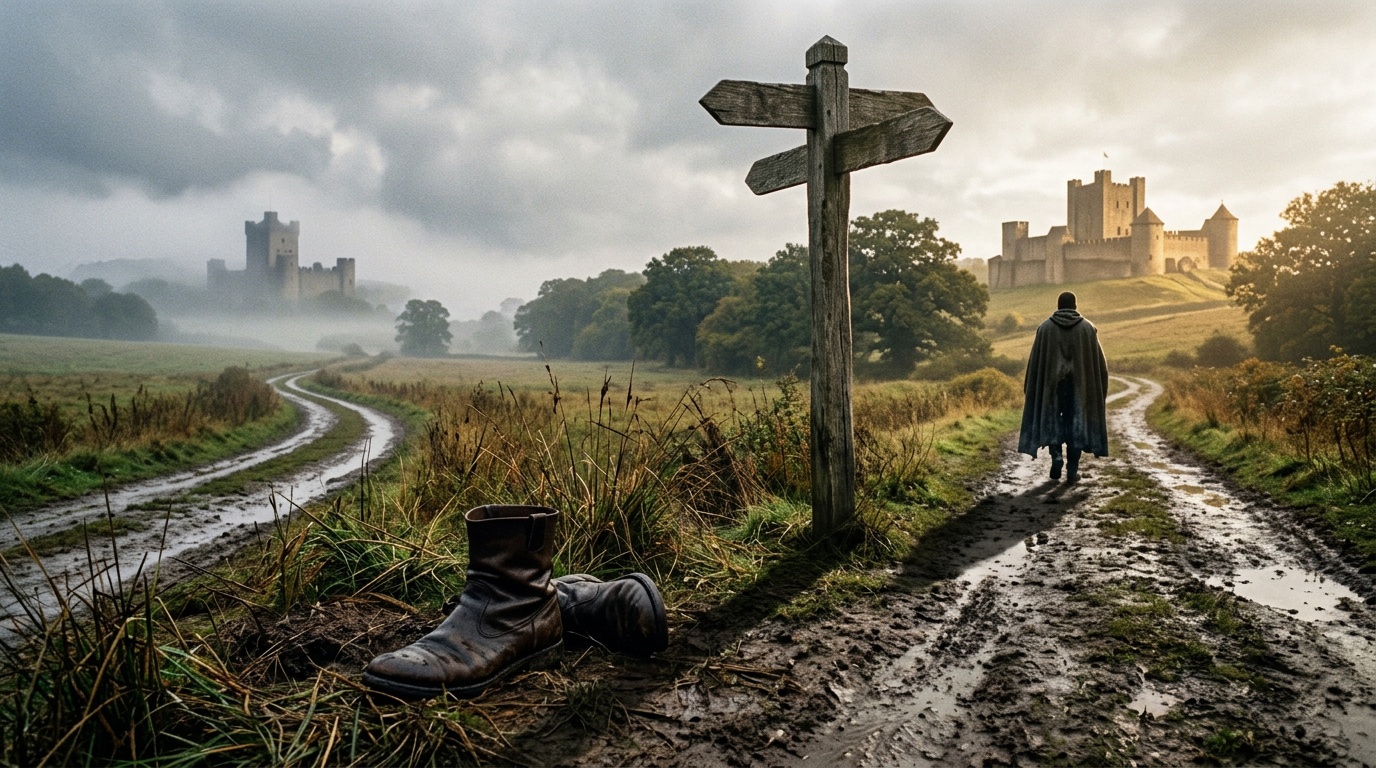
The show has already named Dunk's foot as a potential instrument of history, and it is deliberately refusing to close that claim. Every offer of safety Dunk declines keeps him available for a specific catastrophe that a sworn sword at Summerhall or Storm's End could never reach. The foot is not a metaphor. It is a structural debt the narrative is holding open.
How This Theory Works
The claim Dunk makes to Maekar is not rhetorical. He asks directly whether his foot could have been worth a prince's life, and then goes further: the realm might one day need that foot more than it needed Baelor Breakspear. The show lets that stand. Maekar responds with contempt, telling Dunk the realm has as many hedge knights as it has hedges, but Maekar is a man who has just killed his brother. His contempt is grief. The narrative does not endorse it. No correction comes, no irony frames the exchange, and Dunk does not back down.
At the funeral pyre, Valarr asks why the gods would take his father and spare Dunk. Dunk admits he has been asking himself the same thing. The show does not answer. That silence is not a loose end. It is how the narrative keeps the debt alive. An unanswered question posed by a grieving prince at a royal pyre, echoed by the man who survived, is not atmospheric texture. It is the show marking the obligation as still outstanding.
What makes the pattern concrete is what Dunk does afterward. He turns down Lyonel Baratheon. He turns down Maekar's offer of a sworn sword position at Summerhall, which is precisely the stability he has been seeking since Ser Arlan died. Refusing Summerhall in particular matters because Summerhall is where the Targaryens end. A sworn sword there is a man with a fixed place in a fixed house headed toward a fixed disaster. The show does not punish Dunk for walking away. It frames his refusal through Ser Arlan's nightly question: what will the morrow bring. Forward-facing uncertainty is the governing stance the show endorses at its close.
The specific implication the evidence drives toward is this: the catastrophe that will require Dunk's foot cannot reach a man with a lord and a household. It can only reach a hedge knight who belongs to no one, is owed by no oath, and can go where the realm needs him. The show is not withholding the payoff because the story is undecided. It is withholding the payoff because the architecture requires the foot to remain uncollected until the moment that collection becomes the only thing that matters. Dunk turned down Summerhall. He will not be there when it burns.
Is this theory convincing?
Key Evidence
Dunk's Foot Worth a Prince's Life
Dunk asks Maekar directly whether his foot could have been worth a prince's life, then wonders aloud if the realm might one day need that foot more than Baelor's life, framing his survival as potentially purposeful rather than merely fortunate.
Maekar's Dismissal Left Unrefuted
Maekar responds to Dunk's musing with bitter contempt, saying the realm has as many hedge knights as it has hedges, but the narrative does not validate his dismissal, leaving the question of Dunk's future significance structurally open.
Valarr Questions Why Gods Spared Dunk
At Baelor's funeral pyre, Valarr asks aloud why the gods would take his father but spare Dunk, and Dunk admits he has been asking himself the same question, establishing the survival as an unexplained narrative fact the show refuses to resolve.
Dunk Refuses Every Safe Path
Dunk declines both Lyonel Baratheon's offer of service at Storm's End and Maekar's offer of a sworn sword position at Summerhall, turning down exactly the stability he has wanted since Ser Arlan died, suggesting the show is keeping him available for a different purpose.
Ser Arlan's Evening Wondering
Dunk invokes Ser Arlan's nightly habit of saying 'I wonder what the morrow will bring,' using it as the philosophical frame for his own survival, suggesting that forward-facing uncertainty is the show's governing stance on Dunk's future role.
This theory was evaluated using Theory Atlas editorial standards, including evidence review, narrative fit, and competing interpretation analysis. Learn how Theory Atlas evaluates theories →
Other Theories for S1E06
Maekar's Conversation with Dunk Is a Single Political Act in Two Moves
Maekar Targaryen already knows he will rule, and his private conversation with Dunk after Baelor's death is not grief or candor.
Egg Already Inherited What Dunk Cannot Fix
The knife scene establishes that Egg's Targaryen inheritance is not latent but already operational, activated at the mirror before Maekar's silent presence stops what the show refuses to resolve.
Arlan Died Before He Could Knight Dunk
Dunk's question to the dying Arlan is not a grievance about affection but a confession that he cannot confirm his own knighting occurred.
Baelor Built a Closed Honor System With One Unguarded Entrance, and Dunk's Survival Was Its Contemptuous Remainder
Baelor Targaryen engineered institutional safety into what he presented as personal sacrifice, placing himself against oath-bound Kingsguard who could not harm him while his champions absorbed lethal risk against unsworn opponents.
Broken Shield, Broken Self
Dunk's refusal of Maekar's offer was not independence.
Arlan's Phrase Encodes the Season's True Stakes
The show is positioning Maekar as the character who is actually right.