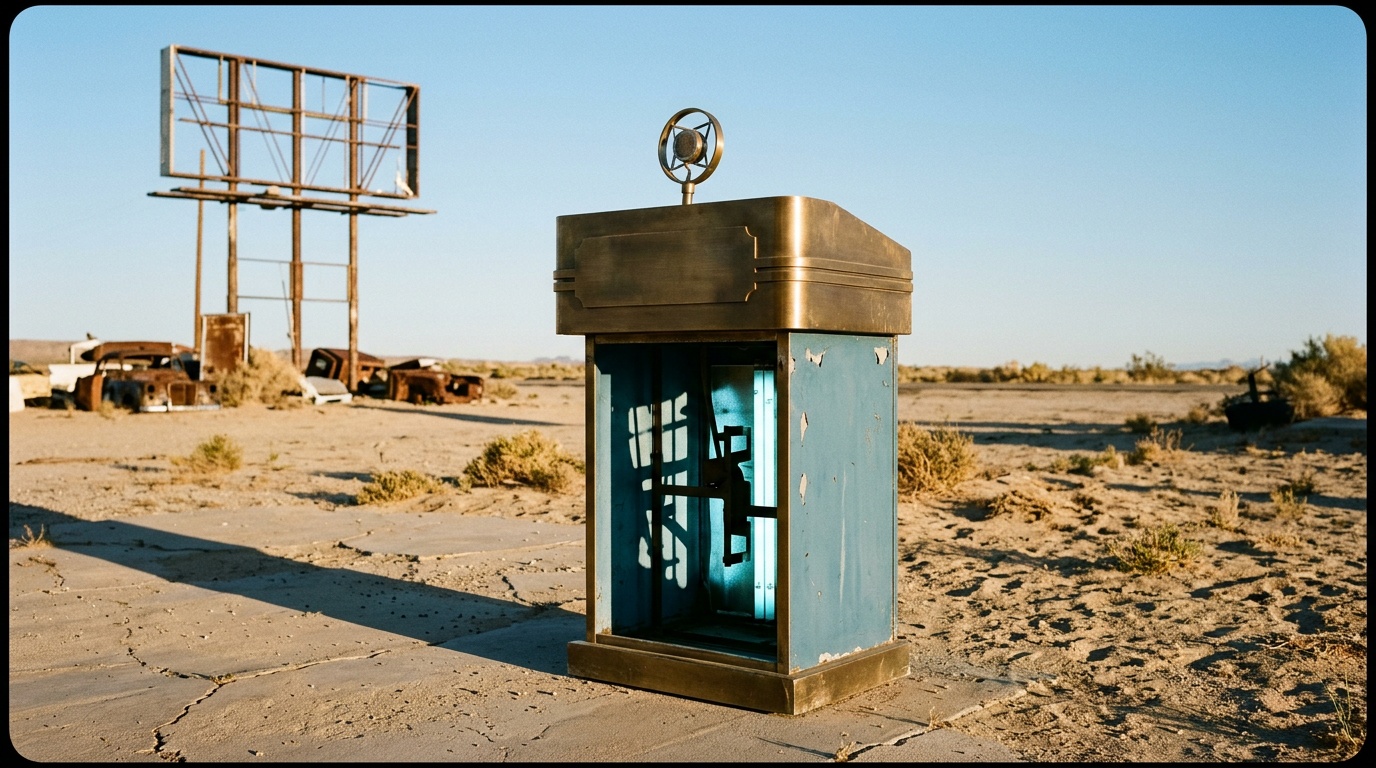
Cooper Knew Before the Bombs Fell
THE ARGUMENT
Cooper Howard knew the bombs were coming, said nothing to save anyone but his daughter, and failed even at that. His 219-year survival in the wasteland is not a tragedy of circumstance but the ongoing self-punishment of a man who has never been able to forgive himself for what he chose to withhold. The show is not building toward what Cooper has endured. It is building toward what he has never confessed.
How This Theory Works
The episode does not treat Cooper's foreknowledge as backstory. It treats it as the original wound from which everything else bleeds. He overhears the Vault-Tec meeting, learns the war is deliberate, and discovers his own wife is part of the plan. That combination does not produce a man who acts. It produces a man who calculates in silence, goes home, and tells his daughter they are taking a vacation to Bakersfield. The vacation cover story is the tell. Under extreme pressure, with the world about to end, Cooper's first instinct is to manage disclosure, not to share the truth. He knew the system he would need to warn was itself the threat. His silence was not passivity. It was a choice, framed as an agonizing one by the episode cutting to him alone on his knees after getting Janey moving. He is not grieving. He is processing the weight of what he has just decided not to do.
That decision did not even save the people it was made for. Cooper and Janey are still in a suburban Los Angeles neighborhood when the sirens sound. His foreknowledge bought them nothing. He knew, stayed silent to protect himself and his daughter, and watched the world end anyway, with his daughter still in the blast radius. A man surprised by the apocalypse is a victim. A man who saw it coming and could not save the person he was protecting his silence for is something else entirely.
In the present timeline, when Lucy mentions how House saved Las Vegas, the Ghoul goes quiet and begins pulling at his pre-War history. It is a small moment, but it points toward something still unresolved. The brutality the Ghoul performs in the wasteland reads less like callousness born of two centuries of survival and more like a man who decided, somewhere in the rubble, that he would never again be the person who stays quiet to protect himself while everyone else dies. Whether that project is redemption or just a longer way of punishing himself is the question the show has not yet answered. The hardest implication of this theory is that it may not be either. Cooper may have decided that staying alive in a world he helped allow is the punishment, and that every brutal act in the wasteland is less about survival than about making sure he never again has anything left worth protecting with his silence.
Is this theory convincing?
Key Evidence
Cooper at the Vault-Tec meeting
Cooper secretly listened in on a meeting of corporate leaders at Vault-Tec headquarters where the plan to deliberately instigate nuclear war was discussed, giving him advance knowledge no ordinary citizen possessed.
Wife's complicity revealed
Cooper learns at the same meeting that his own wife was involved in Vault-Tec's plan to trigger the war, compounding his foreknowledge with personal betrayal and explaining his immediate emotional collapse.
Rushed evacuation without explanation
After the meeting, Cooper races home and orders his daughter to pack without telling her the truth, a deliberate concealment that shows he understood the stakes but chose not to disclose what he knew.
Private collapse after discovery
Cooper sinks to his knees alone after getting his daughter moving, a moment the episode frames as a man processing not just grief but the weight of knowing something he cannot undo or share.
Family still in Los Angeles at sirens
Cooper and his daughter are still in a suburban Los Angeles neighborhood when the nuclear warning sirens sound, confirming his evacuation attempt failed and his family remained in the blast zone despite his foreknowledge.
Vacation cover story to daughter
Cooper tells Janey they are taking a vacation to Bakersfield rather than revealing the true danger, a choice that shows he was managing disclosure even within his own family under extreme pressure.
Ghoul reflects on House connection
In the present timeline, as Lucy and the Ghoul discuss how House saved Las Vegas, the Ghoul visibly begins thinking back to his pre-War history, suggesting his knowledge of the apocalypse's origins remains an active psychological wound.
This theory was evaluated using Theory Atlas editorial standards, including evidence review, narrative fit, and competing interpretation analysis. Learn how Theory Atlas evaluates theories →
Other Theories for S2E01

Vault 33 Was Never a Shelter — It Was a Laboratory With a Cover Story
House's 2077 black-box experiment was not abandoned when Bill's brain failed under amplified signal — it was institutionalized.

Cooper's Khan Vendetta Spans Two Centuries
Cooper Howard has spent two centuries in deliberate, recurring conflict with the Great Khans, not as an incidental consequence of wasteland survival but as a sustained vendetta he has chosen to maintain across multiple generations of tribal leadership.

Moldaver Sent Cooper to Kill House
Moldaver tasked Cooper Howard with assassinating Robert House, not merely spying on him, using his wife's cold-fusion deal as cover to place him inside House's orbit before the bombs fell.
House's Double Hides the Real Power
The bar scene does not reveal a security precaution House adopted under pressure.

Hank MacLean Reports In to Vault-Tec Command
Hank MacLean has been executing a coordinated Vault-Tec assignment, not fleeing one, and his radio check-in at a secret facility places him inside a chain of command that survived the war and is now pointing him toward Robert House's territory.
Vault-Tec Wired Americans to Become Communists
Vault-Tec used at least one vault to manufacture ideological enemies, not study them, implanting residents with neural control devices and forcing communist indoctrination as a deployable political asset rather than a behavioral science project.