Hank Built the Conditions Under Which Lucy Would Deliver Herself
THE ARGUMENT
The simulation room in the Las Vegas management vault is not a generic Vault-Tec facility but a targeted psychological instrument Hank commissioned using his oversight authority — a faithful replica of Vault 33's residential interior built specifically to re-anchor Lucy's identity before she could act on her leverage. Hank does not experience this as manipulation but as care, which is precisely what makes it effective. The trap's final proof of success is not that Lucy stays in the room but that she demands a vault council trial — she cannot execute her father outside institutional process without repudiating the identity the room was designed to preserve.
How This Theory Works
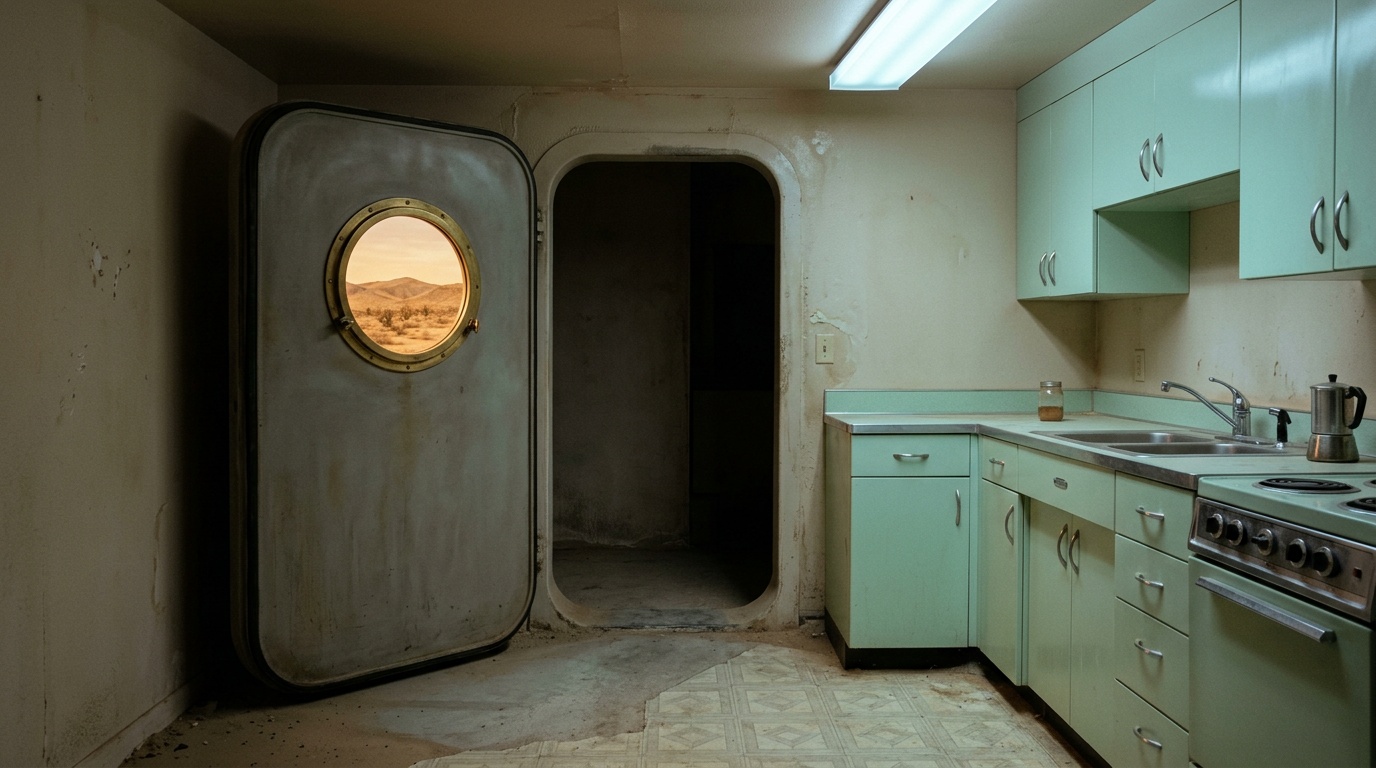
The room is labeled 'Simulation.' That word does not appear by accident in a show this precise about language, and it names exactly what Hank is doing to his daughter. The space reproduces Vault 33's residential interior with enough fidelity that Lucy recognizes it on sight — not because Vault-Tec required a generic domestic test environment in a Las Vegas management facility, but because whoever commissioned it had intimate operational knowledge of one specific vault. Among all the distinct experimental installations Vault-Tec constructed, there is no bureaucratic or research logic that explains why this facility would contain a faithful replica of Vault 33's residential layout unless the room was built for a particular person expected to walk into it. Hank ran Vault 33, he knows its layout, and he brought Lucy to this location. The room's existence requires his authority. Its specificity requires his intent.
The staging confirms this. When Lucy enters, Hank is not discovered mid-task or caught unprepared. He is setting out a meal. He pivots immediately to invoking their family book club. The architecture is doing half his work before he opens his mouth: the furniture, the proportions, the emotional frequency of the space are already pulling at Lucy's sense of what is normal before Hank says a word. The yellow dress laid out for her, the welcoming note, the Sugar Bombs on the table — none of this is how you treat a prisoner. It is how you treat someone whose cooperation you are cultivating, whose sense of self you are slowly re-anchoring to a context you control. The windows in her room are marked 'Observation,' not 'Cell.' The comfort is the restraint.
Hank's behavior under pressure confirms he is not improvising. When Lucy names what is happening — calling the black box technology brainwashing — he does not dispute the category. He reaches for a childhood memory and folds his work into the family narrative the room physically recreates around them. That is not a defense; it is a live demonstration of the technique she just named. And when she escalates, produces scissors, and demands he submit to her authority, he produces handcuffs and puts them on himself without hesitation. He is not afraid of her leverage. He is a man who knows his environment is already working on her, and he knows the scissors change nothing. His calm is not stoicism. It is confidence in the room.
What the evidence keeps circling is the most corrosive detail: Hank cannot distinguish between controlling Lucy and caring for her. He commends her for remaining unchanged. He stages domesticity rather than deploying restraint. He absorbs her threat and redirects it with a childhood anecdote. The vault system's deepest logic — that engineered consent is more durable than coercion — has been so thoroughly internalized by its architect that manipulation and love have become the same gesture in his hands. And crucially, this is what makes the simulation room possible as an instrument of institutional power rather than mere personal cruelty. Vault-Tec's apparatus was always available to be used by overseers not merely to run experiments on populations but to architect the futures of individuals. Hank did not improvise a soft cage. He picked up an existing tool and aimed it.
The trap's proof of success is not that Lucy remains in the room. It is what she does when she leaves it. Her demand for a vault council trial — process over execution, institution over judgment — is the simulation room's logic working forward in time. To execute Hank without institutional sanction would require Lucy to accept that Vault 33 is not a legitimate source of authority over anything, and that acceptance would collapse the identity she has spent the entire season defending. She cannot bring herself to act outside the institution even now, even here, even holding scissors at the throat of the man who engineered her loyalty to it. Hank offers his handcuffs and commends her for remaining unchanged because he recognizes the tribunal she is invoking and regards it as an asset. He knows the vault council's jurisdiction ends at the vault door. He knows what vaults actually are and what they were designed to do. Lucy does not yet know what he knows, and she is carrying him to a proceeding whose authority depends on her never finding out.
Is this theory convincing?
Key Evidence
Room Explicitly Labeled 'Simulation'
Lucy discovers a room marked 'Simulation' whose interior is designed to look almost exactly like the residential spaces of Vault 33, signaling that the environment is a deliberate reproduction rather than an accidental resemblance.
Hank Staging a Domestic Meal
When Lucy enters the Simulation room, Hank is already inside setting out a meal on a table and immediately pivots to invoking their family book club, staging a scene of ordinary domestic life to reframe the encounter.
Yellow Dress and Welcoming Note
Lucy wakes to find a yellow dress laid out for her and a note from Hank asking her to call him when she is ready, presenting the setup as hospitality rather than captivity.
Observation Windows, Not Cell Bars
The windows in Lucy's room are marked 'Observation,' suggesting she is inside a monitored space designed to look comfortable rather than a conventional prison.
Hank Offers His Own Handcuffs
When Lucy threatens Hank with scissors and demands to take him back to Vault 33 for trial, he calmly produces handcuffs and puts them on himself, suggesting he is not afraid of her leverage and is managing her perception of control rather than resisting it.
Brainwashing Accusation Deflected as Family Memory
When Lucy calls the black box technology brainwashing, Hank responds by invoking a childhood science experiment of Lucy's, attempting to normalize his work by folding it into the family narrative the Simulation room physically recreates.
This theory was evaluated using Theory Atlas editorial standards, including evidence review, narrative fit, and competing interpretation analysis. Learn how Theory Atlas evaluates theories →
Other Theories for S2E06
Hank Built the Philosophy Before He Needed the Alibi
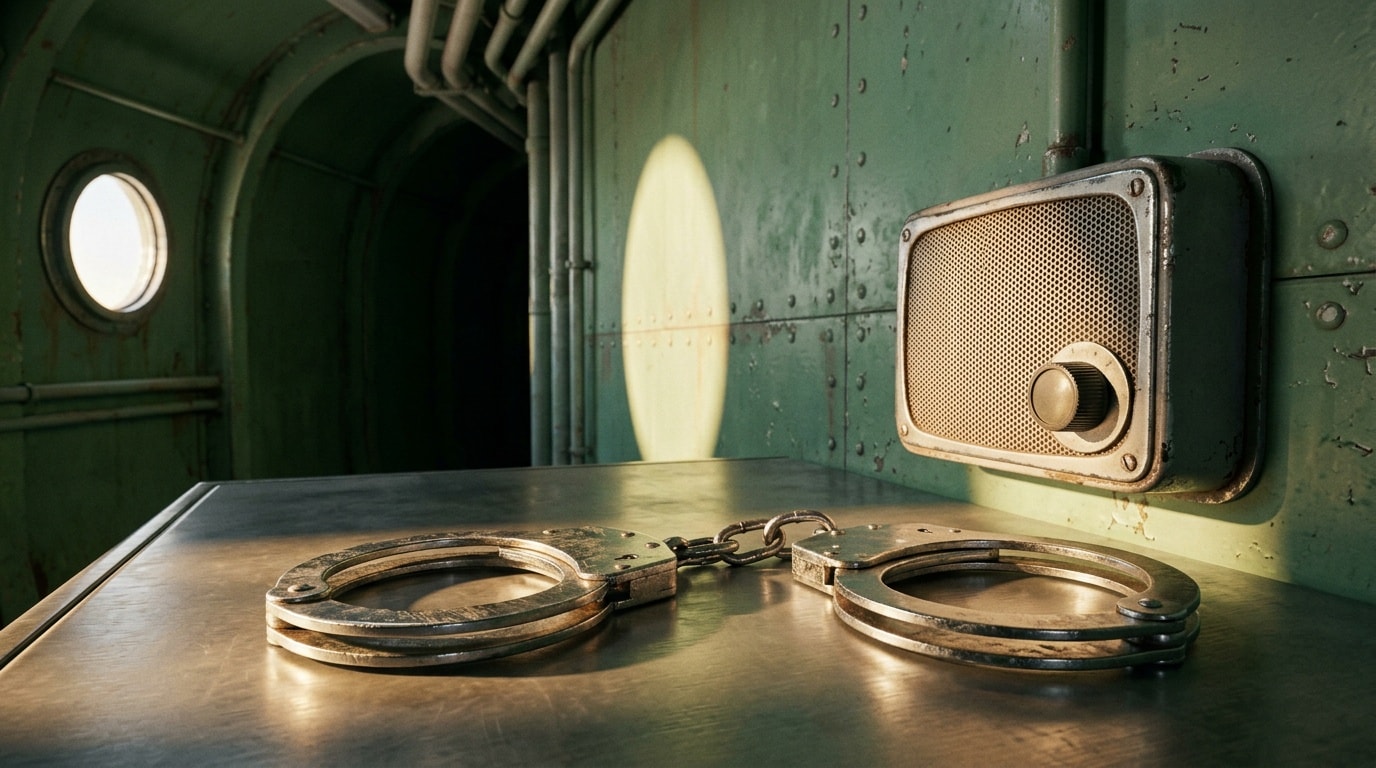
Hank's staged surrender is not a man improvising a defense under pressure — it is a man deploying an ideological architecture he constructed in advance of any action that would require justifying.
House's Vault-Tec Deal Was a Single System: Cold Fusion as the Key to a Human Control Infrastructure He Left Running
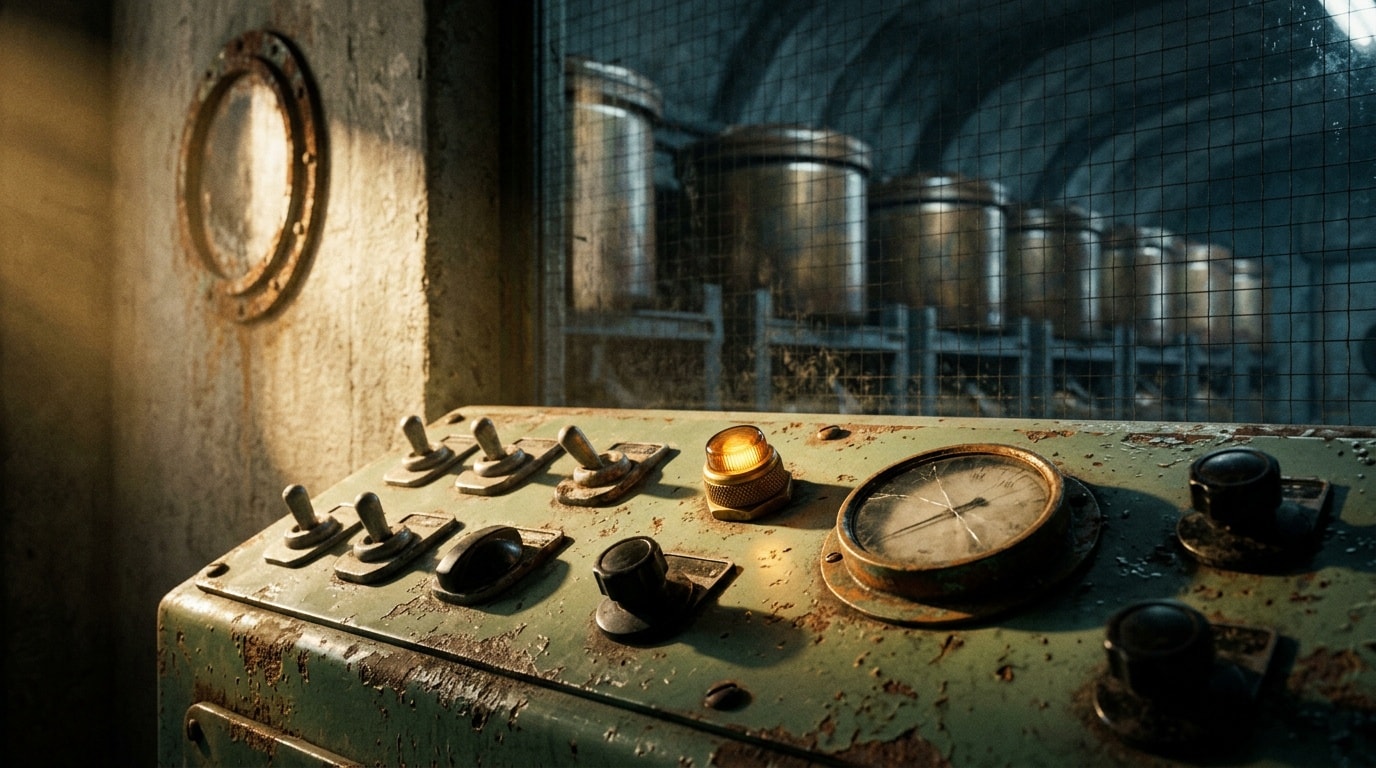
The Vault-Tec meeting was not a negotiation — it was the transfer of two inseparable components of one pre-architected system.
Dogmeat Knows Exactly What She Is Doing
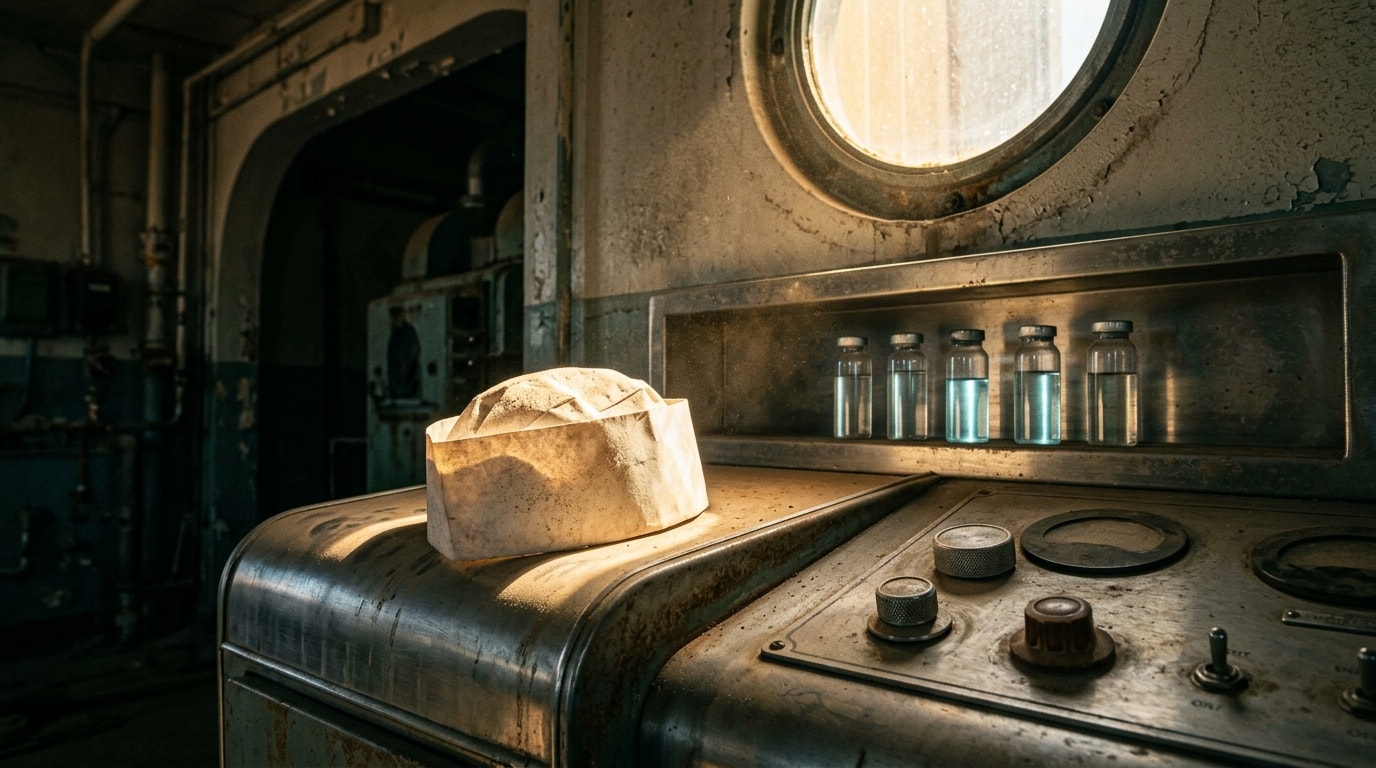
Dogmeat's refusal to retrieve the Ghoul's vials is a strategic substitution: she selected the hat because it would function as a recognition signal to humans capable of solving the larger problem, accepting the Ghoul's feral deterioration as the cost of a longer play.

Vault-Tec Chose Which Vaults Would Die of Thirst
The show confirms that Vault-Tec knew which water chips would fail before installation.
Hank Built a Mind-Control Empire Before the War
Hank MacLean's substitution into the RobCo meeting was not an act of corporate espionage but the first operational step in a project he has been running continuously ever since, with Vault 33 serving as a decades-long laboratory for solving the signal-tolerance failures that limited the technology's original deployment.
Super Mutants Claim Ghouls as Kindred Enemies
The Super Mutant who pulls the Ghoul from the pole in Freeside is extending a political recruitment: that ghouls and mutants, as shared products of human engineering, constitute a natural alliance with the Enclave as their common enemy.

The Unnamed Super Mutant Is Marcus
The unnamed Super Mutant in Episode 6 is Marcus, and his name is being withheld across every credit and metadata source because confirming it forces the show to honor two games of established lore it has not yet chosen to lock in.
Woody Was Silenced for What He Heard
Woody was removed from Vault 33 not for defiance but for asking a single question, which means the vault's suppression mechanism is calibrated to eliminate awareness before it can spread rather than revolt after it forms.