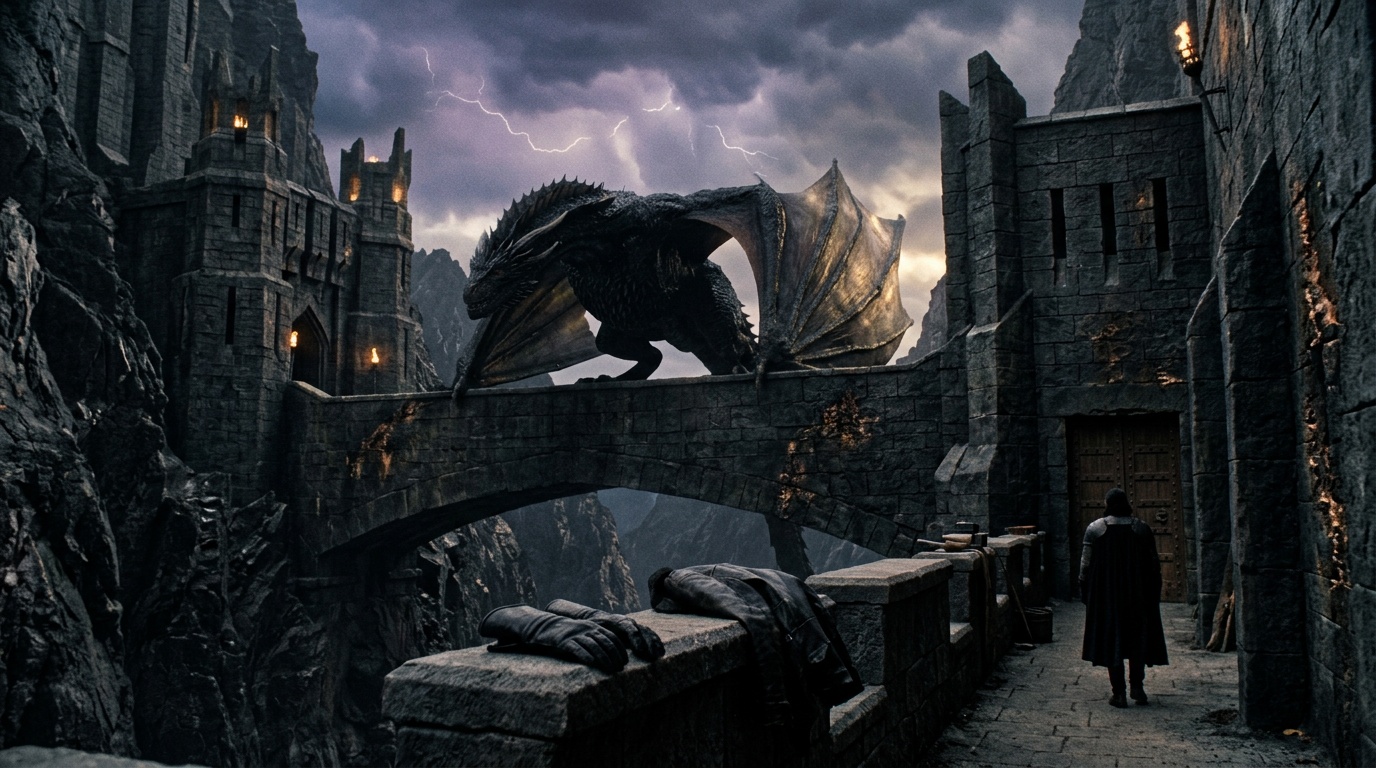
Dragons Choose Riders, Not the Other Way Around
THE ARGUMENT
Dragons exercise independent selective judgment at Threshing, evaluating riders against criteria of emotional capacity and perceived strength, which means unbonded cadets are not unlucky but rejected. Violet's double bond does not merely confirm this selection model but exposes its deeper logic: the bond tracks something real about a rider's interior state, and when that quality is strong enough, no single bond can exhaust the recognition. Threshing is not an audition with one opening. It is a verdict with no appeal.
How This Theory Works
Dragons enter Threshing with criteria already in mind. They are not passive participants waiting to be claimed. The language surrounding bonding consistently frames dragons as evaluators, not prizes. The choice, by this reading, belongs to Tairn.
Emotional regulation appears to be a core metric in the dragon's assessment. A dragon capable of transmitting emotional states through a bond has obvious reasons to screen for riders who will not be overwhelmed by those states. Pairing with someone emotionally volatile would be a liability for the dragon as much as the rider. The bond is withheld until the rider demonstrates she can hold herself together under duress, which means the dragon is not waiting for a claim but for a proof.
The corollary is that dragons can and do refuse. Cadets who fail to bond at Threshing were evaluated and found wanting. Their deaths are not collateral damage from an indifferent lottery. They are the result of a judgment rendered. The brutality of that outcome is what makes the dragons' selectivity structurally serious rather than thematically decorative.
Violet's double bond is where this framework presses hardest. Two dragons arriving at the same conclusion about the same rider at the same moment means Violet met a threshold that most cadets never approach even once. But the detail that demands the most pressure is this: Tairn's bond did not foreclose the second. If the bond were possessive in the way the show's human hierarchies are, a second dragon could not respond to Violet at all. The fact that it can means dragons are not securing a scarce resource when they select a rider. They are recognizing a quality, and when that quality exceeds the threshold, the recognition is not exclusive. This implies that the bond reflects something true about the rider's interior state, not merely a transaction completed. Dragons are not choosing partners. They are identifying what a person actually is.
Is this theory convincing?
Key Evidence
Tairn Withholds Bond Until Ready
The theory interprets Tairn's bonding with Violet as conditional on her demonstrated willingness to fight and emotional stability, suggesting the dragon was assessing her before committing to the bond.
Emotional Control as Bonding Criterion
The framework proposed is that dragons evaluate a rider's emotional control specifically, because a dragon capable of transmitting feelings through a bond needs a rider who can manage those states without being destabilized.
Dragons Refuse Weak Riders
The show's internal logic, as described in episode dialogue and lore, frames dragons as unwilling to bond with someone they perceive as weak, indicating an active selection process rather than random chance.
Violet's Double Bond as Confirmation
Violet bonding with two dragons simultaneously, an unprecedented event, is consistent with a model where exceptionally qualified riders attract exceptional dragon responses rather than bonding being arbitrary.
Unbonded Cadets Face Death
The episode establishes that cadets who leave Threshing without a bond face lethal consequences, which raises the stakes of the dragons' selective judgment from an abstract preference to a death sentence.
This theory was evaluated using Theory Atlas editorial standards, including evidence review, narrative fit, and competing interpretation analysis. Learn how Theory Atlas evaluates theories →
Other Theories
Violet Wins With Wit, Not Brawn
Violet's physical fragility forces her to compensate through intelligence, cunning, and strategic creativity, and the show consistently frames that compensation as legitimate rather than shameful.

Violet Was Marked Before Birth: How Prenatal Venin Exposure Explains Both Her Body and Her Dragon
Violet's silver-faded hair, her chronic physical fragility, and her unprecedented dual bond with Andarna are not separate anomalies but symptoms of a single unnamed condition produced by venin exposure during Lilith's pregnancy.
Lilith Knew Exactly What She Was Doing
Lilith Sorrengail placed Violet in the Riders Quadrant knowing it would not protect her, because she had already decided that surviving inside the Scribe Quadrant's managed lie was worse than dying with access to the real war.
The Prologue Plants Its Own Obituaries
Fourth Wing's prologue encodes its mortality logic before the first chapter begins: the dedication mourns the beloved dead with enough warmth to belong to a survivor's grief, while the archival framing identifies Violet as the witness who outlived them.
Dain and Imogen Hide Memory Signet Depths
Dain's memory-reading signet likely extends beyond face contact, making every physical interaction he has with cadets a covert intelligence operation, while Imogen's signet may be the capacity to erase memories entirely, explaining her assassination attempt on Violet as an incomplete erasure rather than a personal attack.