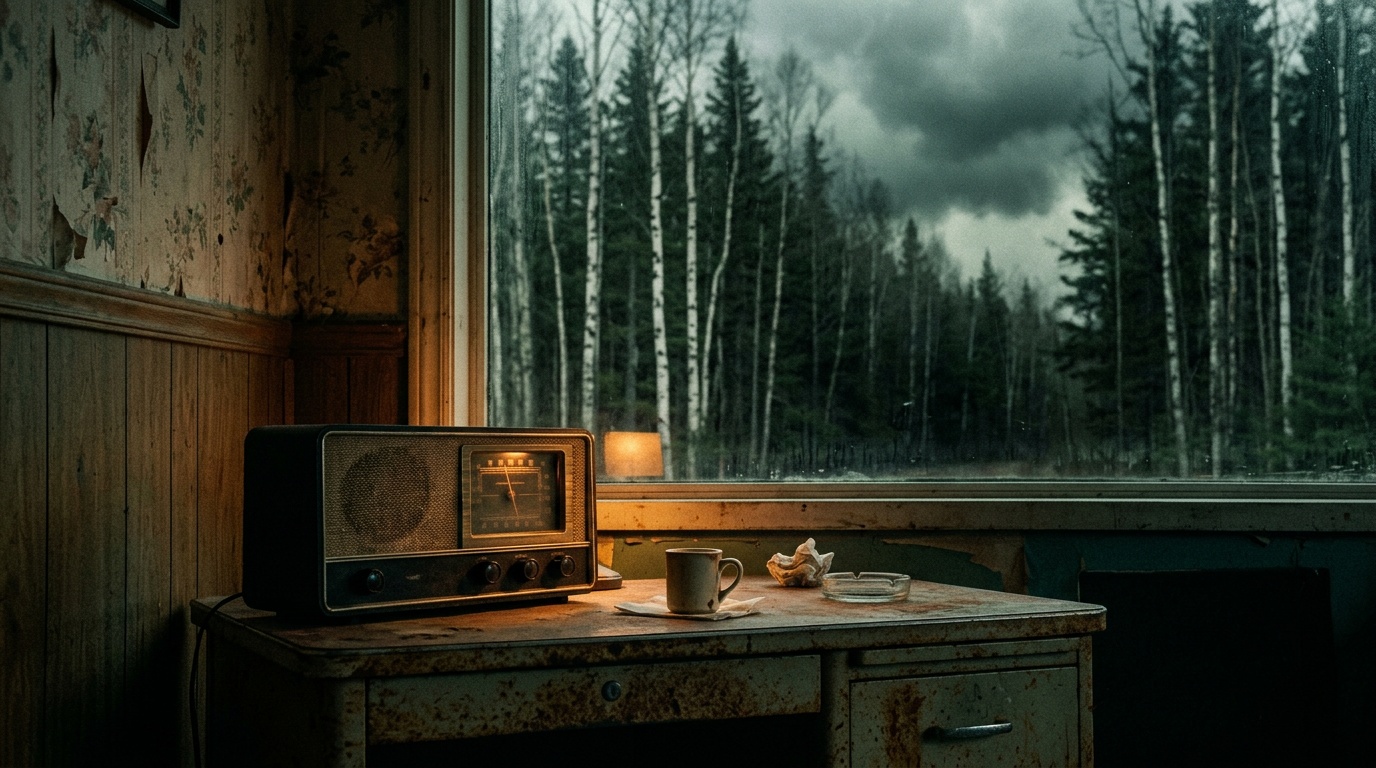
The Storm Arrives When the Signal Does
THE ARGUMENT
The town actively destroys escape infrastructure at the precise moment it becomes functional, which means the system was designed not merely to trap but to deny the conditions under which escape becomes possible. The storm's arrival the instant the radio tower establishes a signal is not a weather event but a calibrated intervention, scaled exactly to undo what the community built without doing anything more. Whatever controls this place does not tolerate successful outward communication and has the precision to respond only to that.
How This Theory Works
The town was not built to contain people temporarily. It was built to contain them permanently, and the storm is the clearest proof that the system is designed to destroy success, not merely prevent it. A passive trap has no reason to respond to a radio signal. An active one does. The distinction matters because it shifts the question from whether escape is possible to whether the place will allow the conditions for escape to exist at all.
The timing is what separates this from ordinary weather. Near-perfect conditions held across multiple episodes. A sudden, violent storm that arrives within moments of a successful transmission breaks that pattern in a way that implicates cause and effect. The thing that changed was the tower going live. Donna's warning that the wind will blow the tower off the roof is not incidental detail. It specifies that the storm is precisely powerful enough to undo the infrastructure, not to kill anyone, not to level the town, but to remove the one mechanism that reached outside. The response is calibrated. Calibration implies design.
The electrical infrastructure reinforces this. The town's wiring presents as functional at the surface while operating through principles that have nothing to do with how the residents understand power. Fake outlets, hollow lamp cords, conductorless underground transmission. That architecture is not a failure of construction. It is a completed deception, built to exhaust investigation rather than survive it. A system that took such care to make its power transmission untraceable did not leave its boundary enforcement to chance. The storm fits the same design logic: it deploys exactly enough force to neutralize the specific threat, then stops.
Sara's earlier conversations in the woods gestured at this, and other characters have circled it all season. The storm does not introduce a new idea. It converts a speculative one into an observable structural fact. The place enforces its own boundaries. What was metaphor is now meteorology.
The implication most worth pressing is what this precision reveals about who is still operating the system. A force that scales its violence to the proximity of success is not reacting blindly. It has a model of what the residents are capable of, and it intervenes at the exact threshold where capability becomes consequence. The talismans, the custodian routing individuals through selective information, the creature-side discipline: these are not independent phenomena. They are other expressions of the same active management. The storm is not a feature of the landscape. It is a decision made by something that was already watching. Every failed escape attempt has been a probe, and the tower's near-completion represents the highest-fidelity data the residents have ever generated about what the place will and will not allow. The tower did not fail because the plan was flawed. It failed because it worked, and something decided that could not stand. Whatever built this place did not build it to be escaped. It built it to be inhabited, indefinitely, by people who would keep trying and keep failing, each attempt feeding information back into a system that will always know exactly how much force is required to take apart the next one.
Is this theory convincing?
Key Evidence
Storm Follows Successful Transmission
Clara points out approaching storm clouds immediately after Jim announces the radio tower has a signal, and Donna warns they have roughly ten minutes before the wind destroys the tower.
Previously Perfect Weather Breaks
The storm's arrival is notable precisely because the weather had been consistently clear up to the moment the tower went live, making the timing appear causally connected to the transmission.
Town's Awareness of Escape Pressure
The theory draws on the recurring in-show idea that the place becomes hostile when residents push too hard against its boundaries, with the storm serving as the season's most concrete illustration of that dynamic.
Donna's Structural Collapse Warning
Donna's specific warning that the wind will blow the tower off the roof suggests the storm is powerful enough to undo the entire escape infrastructure the community spent the episode building.
Storm Arrives, Not Drifts In
The storm does not gradually build over the course of the episode but appears abruptly in the immediate aftermath of the broadcast, which observers read as a deliberate intervention rather than coincidence.
This theory was evaluated using Theory Atlas editorial standards, including evidence review, narrative fit, and competing interpretation analysis. Learn how Theory Atlas evaluates theories →
Other Theories for S1E10

Fromville Runs a Two-Phase Predation Architecture, and Tom Is Its Finished Product
Fromville operates a closed predation system with two interlocking phases: a pre-arrival intelligence layer that profiles, cross-references, and positions structural pieces before first contact, feeding into a personalized hope-collapse-despair cycle calibrated to each resident's specific psychological wound.

Ethan Sees Everyone Playing Assigned Roles
Ethan's certainty about Victor's safety and separate role is not optimism but structural knowledge: he understands the town as a coordinated quest in which each person holds a specific function, and deviation from that function rather than lack of ingenuity is what keeps adults trapped.
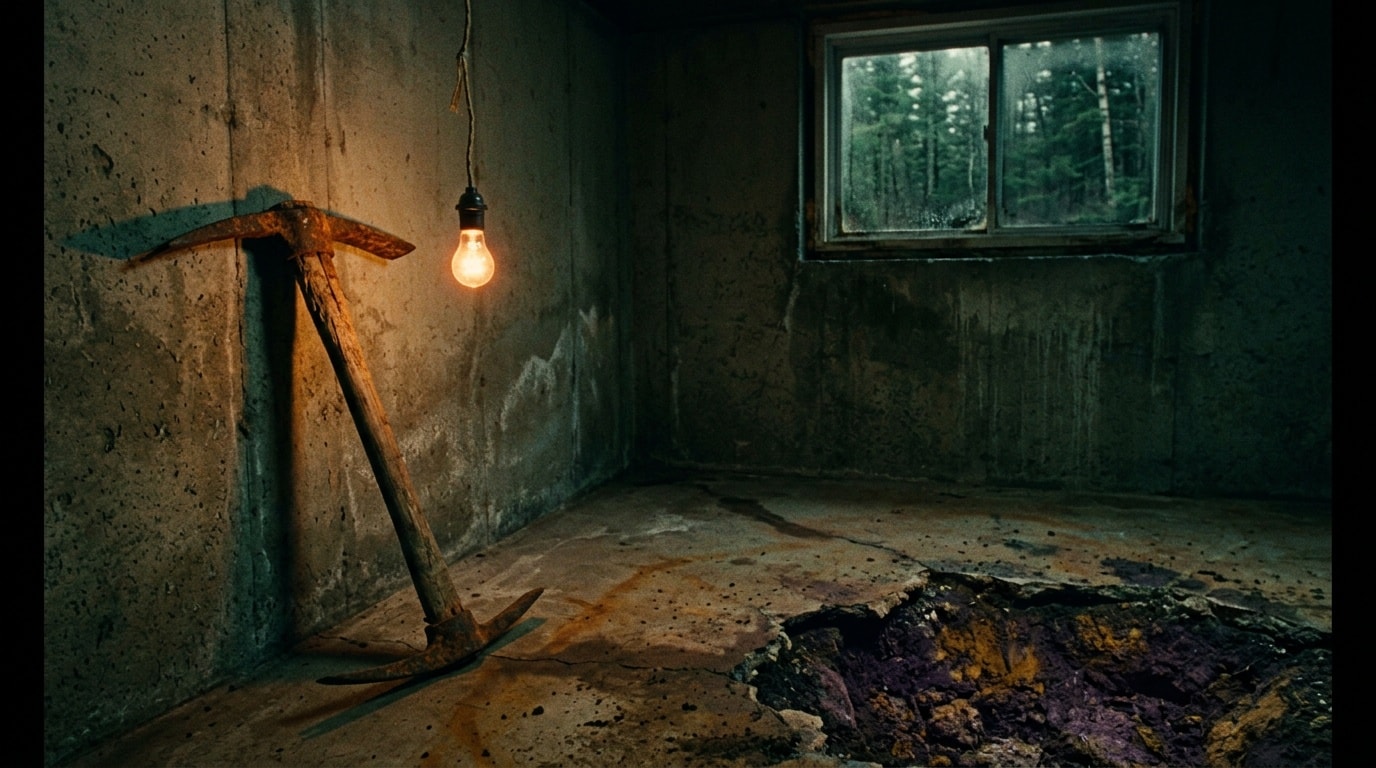
Tabitha's Pickax Points Toward Hidden Discovery
Tabitha's excavation beneath the basement floor is building toward a discovery the town's designed system does not want made.

The Boy in White Runs a System of Selective Disclosure, Not a Rescue Operation
The town operates a hidden communication layer that identifies specific individuals (Victor, Ethan, Sara, Boyd) as cognitively or experientially receptive targets, then uses the boy in white to deliver precisely calibrated information to each one.

Dead Residents Warn the Living Through Signals
The voices contacting the townspeople through radio and forest phenomena are the dead, but their capacity to warn is not independent -- it is a function the town permits and shapes.