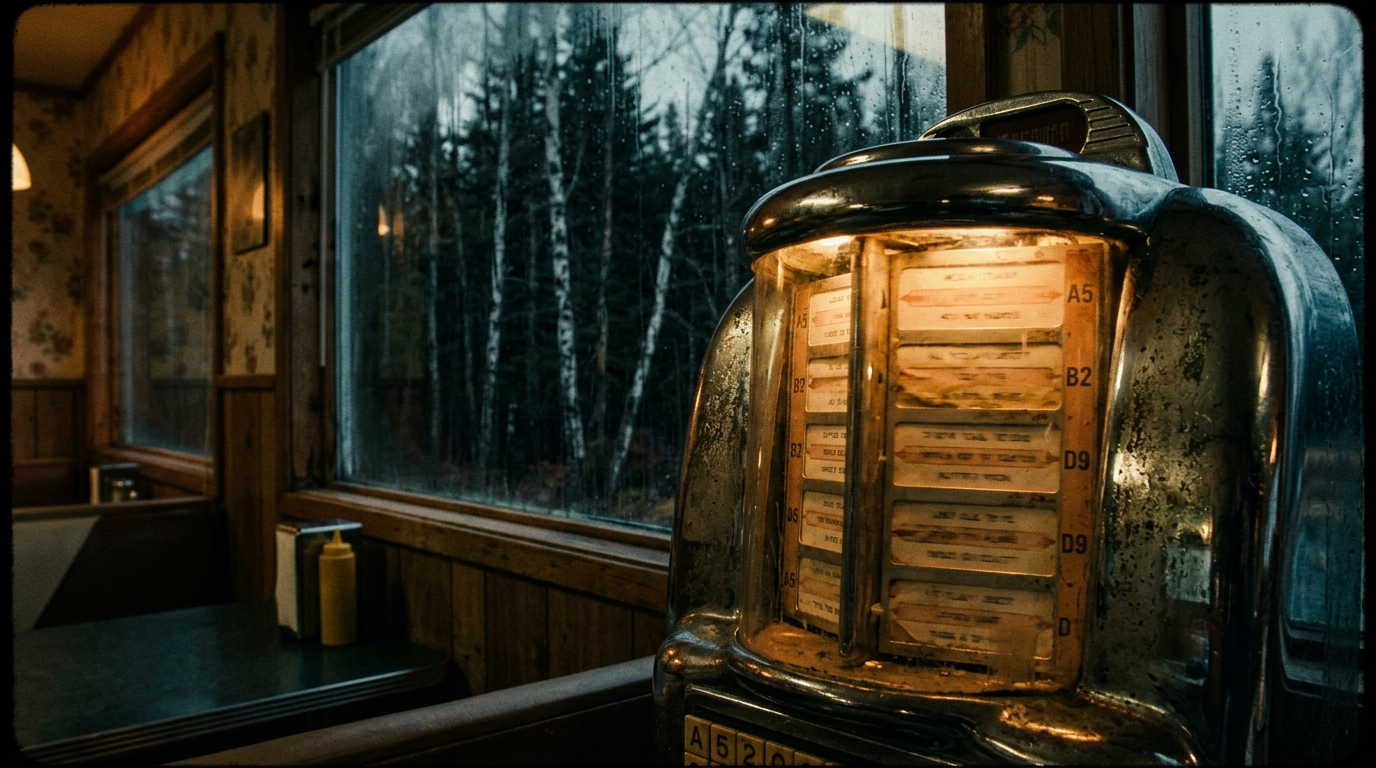
Unexplained Signals as the Town's Voice
THE ARGUMENT
The jukebox and radio activations are the town registering cognitive thresholds, not mechanical malfunctions or ambient supernatural noise. One signal fires on arrival, the other fires at the precise moment a resident crosses from confusion into structural comprehension of what the town is. If these activations are deliberate, the town's architecture is not oriented toward containment alone but toward identifying the residents who begin to understand it.
How This Theory Works
The town does not broadcast signals randomly. It tracks cognitive thresholds. Both activation events occur not as background noise but as precise responses: one to physical arrival, one to the moment understanding replaces denial. This distinction is where the theory presses hardest.
The jukebox fires the instant Jim and Ethan cross the Diner threshold. The timing ties activation to the newcomers' presence, suggesting the town registers specific arrivals rather than operating on any fixed mechanical schedule. Whatever is producing these signals, it is responsive rather than ambient.
The radio event at the Sheriff's Office is more structurally significant. It activates at the exact moment Kenny finishes walking Jade through the map of origins, the revelation that residents arrived from entirely different geographic locations on the same day. The signal does not precede the disclosure or follow it at a distance. It fires during the comprehension event itself. Jade takes the radio with him when he leaves, treating the activation as evidence rather than interference. His instinct is correct: the sequence implies the signal is a prompt, not a coincidence.
If the town occupies an unstable or shifting spatial position, fluctuating electronic signals would be a natural byproduct of that instability. The jukebox and radio would then function as passive instruments sensitive enough to register the town's movements even when no one is monitoring them. But the spatial-instability reading alone does not explain why activations cluster around arrival and revelation rather than distributing evenly across time. The town is not just leaking signal. It is responding to people.
The sharpest implication sits in the difference between the two events. The jukebox responds to bodies entering. The radio responds to a mind crossing into genuine comprehension of what the town is. If both are the town's signals, then something in the town's architecture is specifically oriented toward that second transition, the moment a person stops explaining the place away and starts trying to read it. The town, on this theory, does not simply trap people. It waits for the ones who begin to understand, and it marks them when they do.
Is this theory convincing?
Key Evidence
Jukebox Activates on Newcomers' Entrance
The tabletop jukebox in the Diner turns on by itself at the exact moment Jim and Ethan walk in, with no one touching it and no apparent mechanical cause.
Radio Fires During Map Revelation
The radio at the Sheriff's Office activates while Kenny is explaining to Jade that all the town's residents arrived from entirely different geographic locations, linking the signal to a moment of supernatural disclosure.
Jade Takes the Radio as Evidence
Immediately after the radio goes off, Jade takes it with him when he leaves the Sheriff's Office, treating the unexplained signal as something worth investigating rather than dismissing.
Town Location as Signal Interference Source
The theory proposes that if the town occupies a shifting or unstable spatial position, the jukebox and radio activations would correspond to moments of locational movement, making them involuntary readouts of the town's own instability.
This theory was evaluated using Theory Atlas editorial standards, including evidence review, narrative fit, and competing interpretation analysis. Learn how Theory Atlas evaluates theories →
Other Theories for S1E04

Victor Was Kept, Not Spared: His Silence Is the System Working Correctly
Victor survived the town's prior selection event not by accident but by design: the town retained him as a receiver, and everything he does in the present is a survival architecture built on the single lesson that emerged from the root cellar: invisibility works.
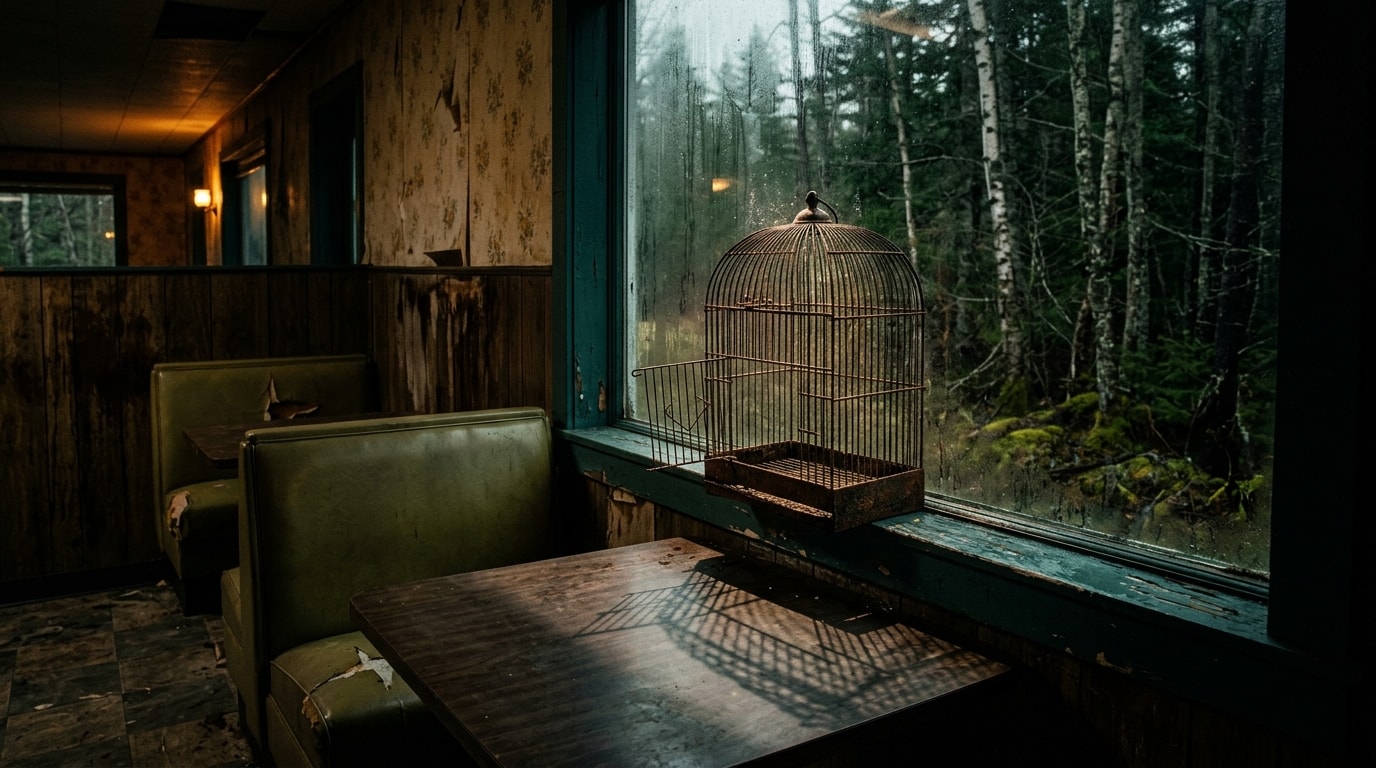
Are We Being Punished? Tabitha's Guilt
Tabitha has privately concluded that the town is punishing her specifically, most likely for her failure around Thomas's death, and her drive to hold the family together functions as penance rather than survival instinct.
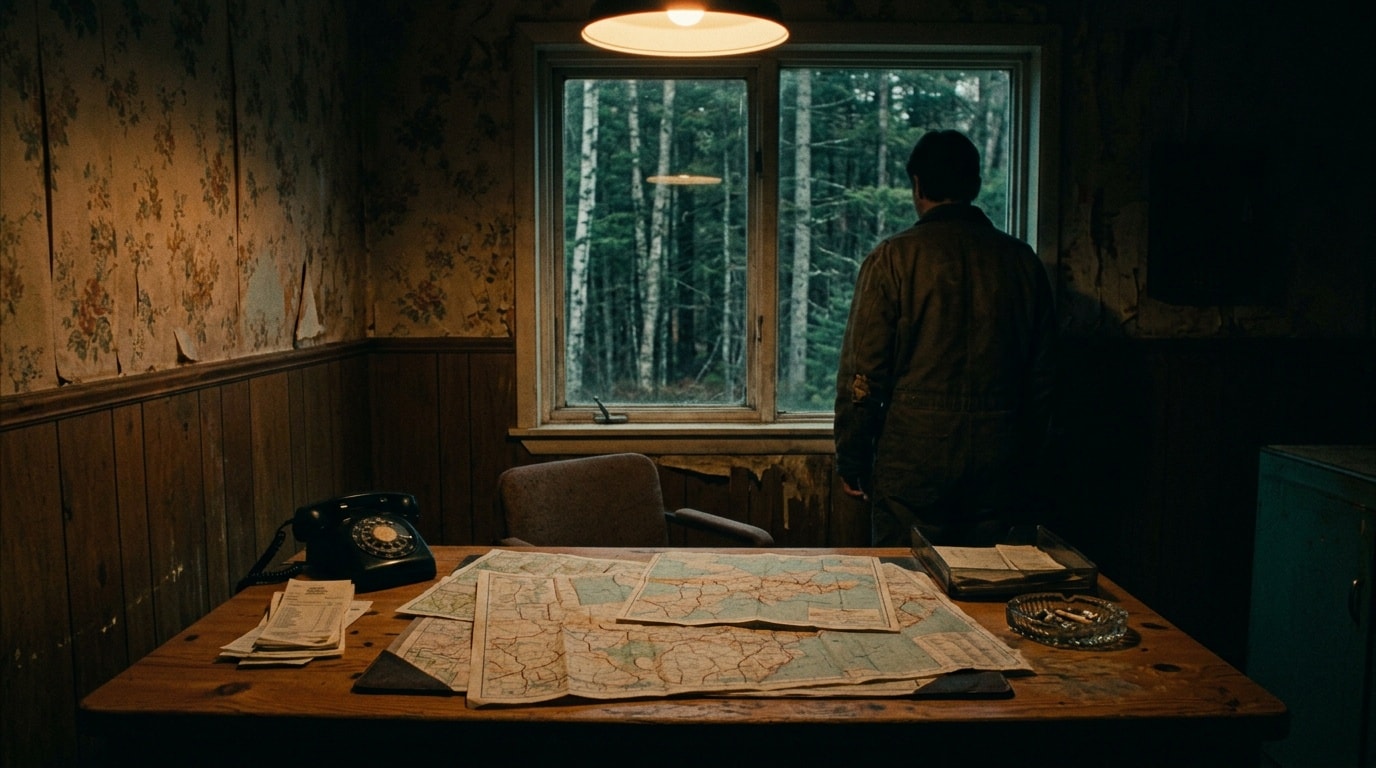
America's Roads Feed the Town
The town is not a regional trap that unlucky travelers stumble into.

Victor's Recruitment Is Diagnostic: Ethan's Grief Is His Qualifying Credential
Victor's attention to Ethan is not protective instinct but the conclusion of a decades-long diagnostic process.

Naming Things as Survival in Colony House
Trudy's habit of naming her possessions is not eccentricity or generic coping.