The Bracelet Proves the Loop: The Town Targeted Julie Before She Could Walk
THE ARGUMENT
A bracelet handmade from a specific pair of bootlaces, lost the night Julie Matthews was born, turns up archived among the belongings of prior Town residents, establishing that the Town's relationship with this family predates their arrival by years and identifies Julie, not her parents, as the primary acquisition target. The same discriminating intelligence that reached backward to collect that object also deploys personalized, intent-calibrated hallucinations against individuals capable of dismantling it, absorbs those individuals into its own accumulated consciousness, and uses their knowledge to construct the next trap. Prior residents are not the Town's victims; they are its current operating system.
How This Theory Works
The bracelet is the hardest piece of evidence in the series because it eliminates almost every comfortable explanation at once. An object handmade from a specific pair of bootlaces, carrying an accidental flaw that rules out any replica, cannot arrive by coincidence in a storage room full of strangers' accumulated belongings. When Jim confirms it as his own, the only remaining question is mechanism, and the mechanism the evidence supports is not loop return, not prior physical visit, but something stranger and more targeted: the Town reached backward into the Matthews family history and extracted an object from the night a specific child was born. Not a random night. Not a later crisis. The night Julie entered the world. Whatever intelligence governs this place was present at Julie's birth, or deliberately indexed that moment, which means the family was not snagged opportunistically. The Town collected an object from the night a particular child was born, archived it among the belongings of people who are no longer present, and then collected the child. Jim and Tabitha may be incidental. Julie is not.
The antenna sequence establishes what kind of intelligence is doing the collecting. When Jade and Jim approach the marked tree, the full hallucinatory assault falls exclusively on Jade: blood flooding his hand at the moment of contact, dismembered Confederate bodies, a Black Union soldier pursuing him into the treeline. Jim, who physically climbed the tree, sees and feels nothing and has to shake Jade back into awareness. If the Town's forces operated on proximity, the targeting would be reversed or at minimum shared. That it falls on the person who conceived the antenna plan, committed resources to it, and directed others toward a specific goal means the mechanism is reading intent: the organized, outward-facing purposefulness of someone who could plausibly disrupt what the Town has built. Jim is a body in a tree. Jade is the reason the tree matters. The same discriminating precision that once reached a hospital delivery room to collect a bracelet is here selecting, from two men standing in the same location, the one whose mind poses the actual threat.
The content of Jade's vision confirms the intelligence is not merely selective but adaptive. What he sees is not generic period horror. It is a racially inverted Civil War tableau in which a Black Union soldier is the pursuer and the Confederate dead are the victims, a configuration that places someone who looks like Jade on the aggressor's side of a history in which his actual ancestors were the primary sufferers. Jim sees none of it, which eliminates environmental cause entirely. The vision is engineered specifically for Jade's psychology: his sense of historical identity, his capacity for guilt, his understanding of where he stands in relation to that history. Whatever is upstream of the tree has enough curated knowledge of this specific person to know which arrangement of the past would land hardest. And the symbol already carved into the bark before Jade's vision begins establishes that the designation preceded him. He did not bring the symbol, did not invent it. The 1972 journal found in Town storage alongside a yearbook from that year contains drawings of the identical symbol, produced by someone who underwent the same procedural sequence, vision first, symbol following, under structurally identical conditions. The symbol is a reservation. The Town marked that location for a person who would think exactly the way Jade thinks, and it was waiting.
The voices complete the architecture and reveal what the loop produces. Sara's access to them is the most important structural evidence in the series because of what the voices demonstrate they know: that two cars would arrive on the same day, that this pattern had occurred before with everyone dying, and precisely where Boyd buried a bag in a private act no external observer should have witnessed. A hallucination does not predict verifiable external events with precision. It does not possess surveillance of unobserved moments. These are not symptoms of a disturbed mind; they are demonstrations of accumulated, specific, intimate knowledge, the kind of knowledge that can only come from having watched this happen before. Then the voices say the thing that frames everything else: they tell Sara they used to be just like her. That is not comfort. It is a confession of mechanism. The voices are former residents, people who arrived as Sara arrived, heard the same promise of escape the voices are now extending to her, followed those instructions, and were absorbed rather than freed. They are the 1972 journal writer, who accumulated enough belongings to fill a storage room and then stopped producing records. They are the prior population whose objects persist without owners. The Town did not release them. It converted them into the intelligence that now speaks through the walls.
This produces the full loop, with the bracelet as its earliest confirmed data point. The Town identifies a target (in the Matthews family's case, apparently at the moment of Julie's birth) and indexes a personal object as the anchor. It marks locations in advance for the specific type of mind most capable of organizing resistance. When that person approaches, it deploys a historically and psychologically personalized vision calibrated to their exact identity, not their companion's. If the person follows the bait, the escape promise, the symbol sequence, the instruction chain, they are absorbed into the accumulated consciousness rather than freed, and their intimate knowledge of people like themselves becomes the mechanism by which the next planner is identified and trapped. Khatri's instinct to conceal Sara and protect her channel to the voices is correct in its assessment and wrong in its assumptions: the voices are not allies with information about escape. They are prior absorptions extending the same offer that absorbed them. The 1972 journal has no final pages because the person writing it reached the end the Town had prepared. The bracelet in the storage room is not a relic of a prior visit. It is evidence that the loop was running before Julie could walk, that the Town had already decided, and that the prior residents now whispering about escape routes are the ones who followed those same whispers to their conclusion.
Is this theory convincing?
Key Evidence
Voices Predicted Two Cars Arriving
Sara tells Khatri that the voices knew two cars would arrive on the same day and warned that this exact pattern had occurred before, with everyone dying as a result.
Voices Knew Boyd's Buried Bag
Sara reveals that the voices told her they watched Boyd bury the bag, demonstrating specific knowledge of a private act no one else should have witnessed.
Voices Claim Former Entrapment
Sara tells Khatri the voices said they used to be just like her, implying they were once human residents of the town who became trapped and were never freed.
Khatri Hides Sara From the Community
Rather than sending Sara to the Box, Khatri conceals her in the church basement and questions her privately, treating her knowledge of the voices as something worth protecting and investigating.
Voices Offered a Promise of Escape
Sara tells Khatri the voices promised that if she followed their instructions, they would help everyone escape and go home, framing their communication as purposeful and goal-directed.
Nathan Confirmed Voices Before His Death
Khatri reveals to Sara that Nathan told him about the voices before he died, establishing that Sara's experience was known to at least one other person and was not dismissed as fiction.
Khatri's 74th Book Framework
Khatri frames the town's residents as possibly living through the unwritten 74th book of the Bible, a chosen experience, which positions the voices as narrative agents rather than random noise.
This theory was evaluated using Theory Atlas editorial standards, including evidence review, narrative fit, and competing interpretation analysis. Learn how Theory Atlas evaluates theories →
Other Theories for S1E06
Khatri's Two Deceptions Point to One Conclusion: He Already Knows the Town Has a Process
Khatri is not hiding Sara out of mercy, and he is not reassuring Tabitha out of pastoral duty.
The Town Is the Bible's Unwritten Book
Father Khatri proposes that the Bible's 73 canonical books are not its end, and that the townspeople may be living and writing a 74th book chosen for a divine or supernatural purpose they cannot yet understand.
Boyd Bets His Life on the Talismans
Boyd intends to venture into the forest using talismans as protection, extrapolating from the fact that they worked inside the RV to the possibility that they could shield him beyond the town's perimeter.
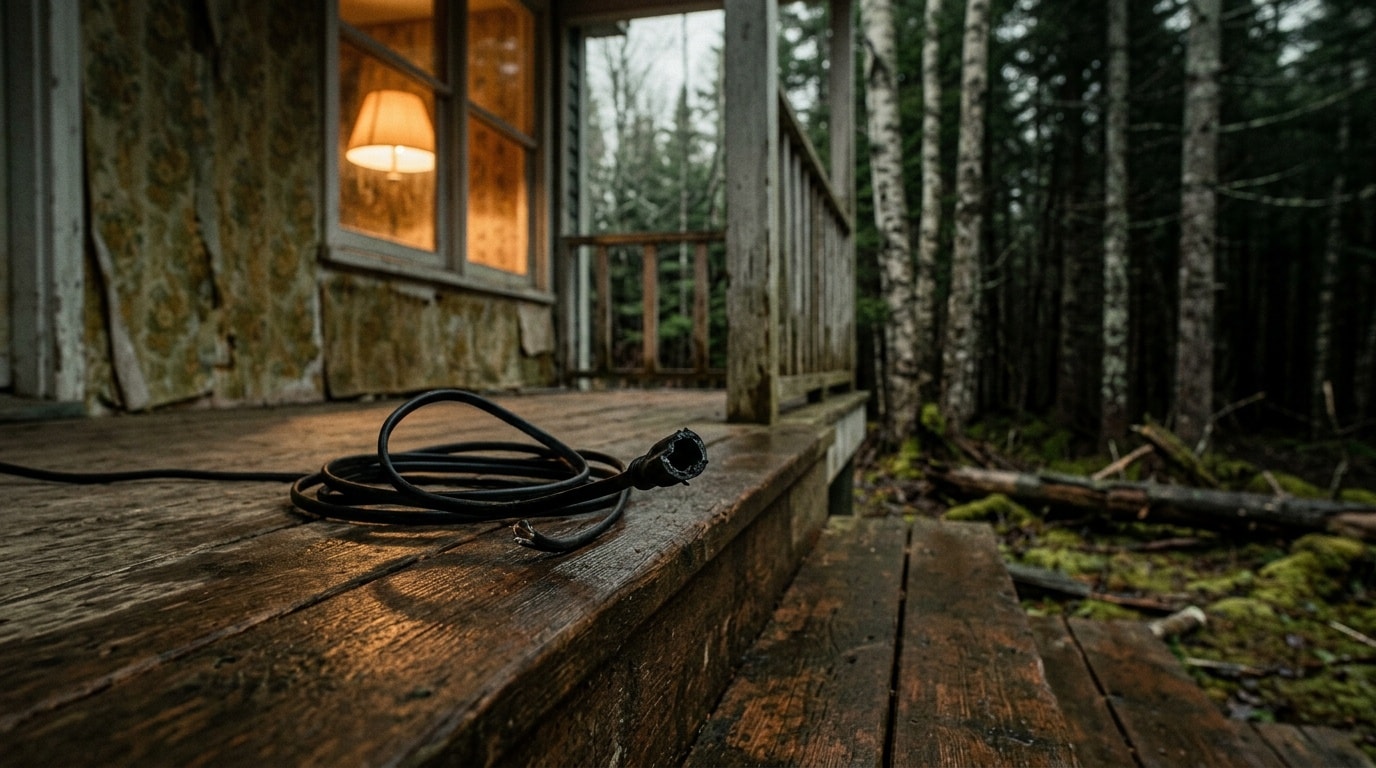
The Town's Infrastructure Was Built to Be Traced to Nothing
The town's electrical system is not an incomplete construction but a completed deception: surface-level mimicry of familiar infrastructure (fake outlets, hollow lamp cords, working lights) paired with an underground convergence point that transmits power through conductorless cables.
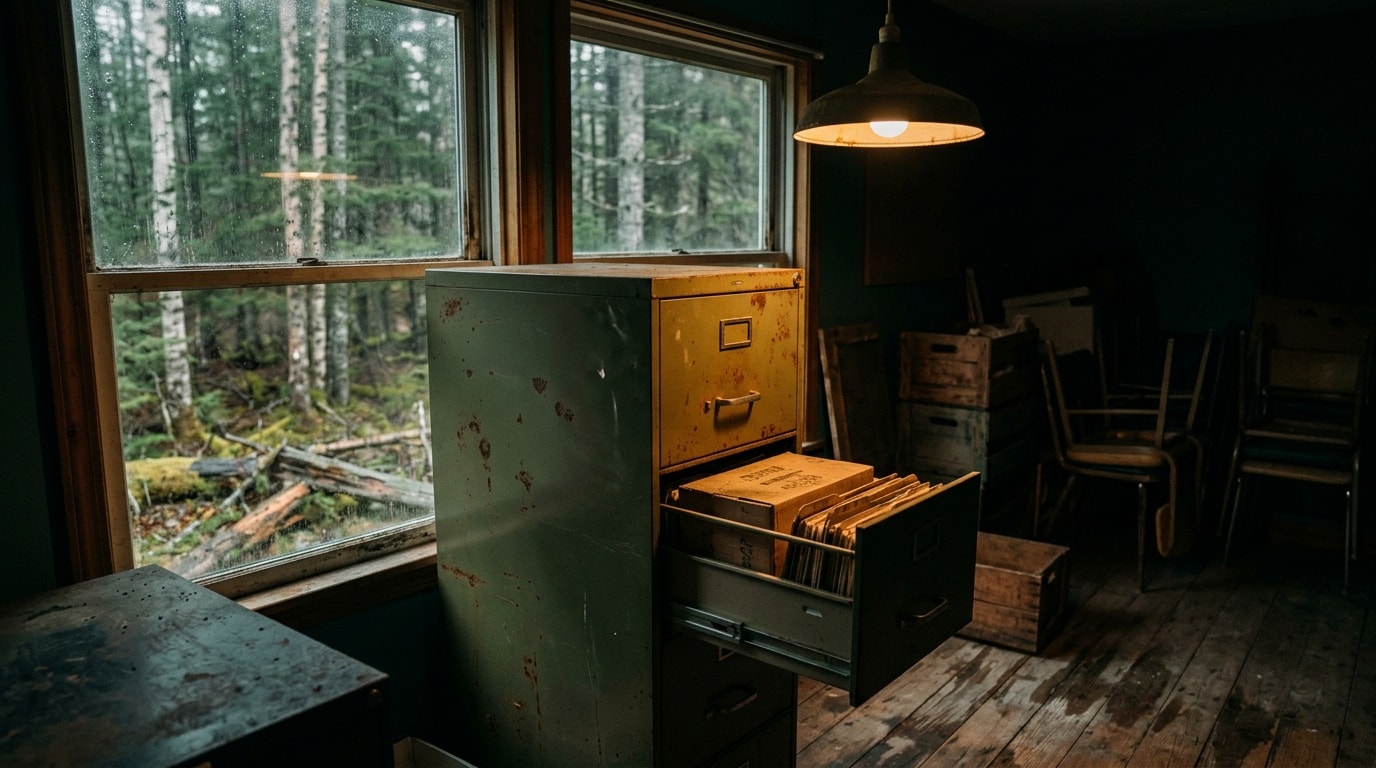
The Dragon's Cavern Hides an Escape Map
The diner storage room is the show's structural equivalent of the dragon's cavern: the place where the logic of escape is buried in accumulated objects left behind by the vanished.

Arranged Flowers Signal Deliberate Outside Contact
The arranged flowers on Colony House's porch represent deliberate communication from an actor with specific knowledge of the town's residents and, more pressingly, knowledge of which channels of contact the town cannot monitor or intercept.

Beautiful Stranger Asks to Come Inside
The flower-woman is not an anomaly but evidence of a coordinated predatory architecture in which seduction and force serve complementary functions, together covering every failure mode of human resistance.