
The Boy in White Named the Original Crime
THE ARGUMENT
The town's trap was created by a specific human act committed against children, and escape requires that act to be named and its perpetrators traced forward into the present. The Boy in White did not deliver a prophecy to Christopher. He delivered an accusation, and someone inside the town may still carry the lineage of the people who made it.
How This Theory Works
The Boy in White's message to Christopher is the most precise statement of cause any supernatural entity has made in the show's run. He did not say the answers are hidden or lost. He said they are at the beginning, and that it has always been about the children and what was done to them. That construction is structural. It locates the origin of the town's entire apparatus not in abstract evil but in a specific historical act committed against specific victims by specific people. The show has been treating this as prophecy. It reads more like an indictment.
Victor's memory of the Church is not decorative detail. A child who survived the original massacre would not avoid a building out of ordinary fear. Eloise refused to enter. That refusal points toward the Church as the site where the founding harm was committed or sanctioned, not merely witnessed. The building carries a charge she could not explain and would not approach. Victor held this memory for decades without understanding what it meant. Tabitha's patient reconstruction of it suggests the information is not gone. It has been waiting for someone to ask the right question.
The most direct implication of the Boy in White's framing is that the creatures, the loops, the talismans, and the town's containment are all downstream consequences of a human decision. People did something to children. That act created the conditions that now trap everyone else. If the loop cannot close without returning to its beginning, then naming the original crime is not historical recovery. It is the mechanism of escape. The theory does not stop at guilt in the past. It points toward a living culpability. Someone now inside the town may be continuous with the people who made that choice, and the show has been deferring that accusation since its first episode. The Boy in White named the crime. He did not name the criminal. That gap is the engine of everything still unresolved.
Is this theory convincing?
Key Evidence
Boy in White's Message to Christopher
Victor recovers the memory that it was the Boy in White, not some other presence, who told Christopher 'The answers to the end are at the beginning' and that it has always been about the children and what was done to them.
Victor's Church Memory
Victor recalls that the Boy in White spoke to Christopher specifically inside the Church, a building that Eloise, a child survivor of the original massacre, refused to enter because it frightened her.
Children as Structural Key
The Boy in White's phrasing explicitly ties the condition for escape to the harm done to children, framing that harm not as historical tragedy but as the origin point of the town's current rules.
Tabitha and Victor Remembering Together
Tabitha helps Victor reconstruct the memory through patient questioning, suggesting that the information locked in Victor's past is not gone but recoverable, and that its recovery has immediate narrative consequence.
Beginning and End as Cyclical Frame
The Boy in White's construction of 'answers to the end are at the beginning' implies a loop structure in which the town's resolution cannot occur without returning to its founding event, reinforcing that the current crisis is a repetition rather than a new catastrophe.
This theory was evaluated using Theory Atlas editorial standards, including evidence review, narrative fit, and competing interpretation analysis. Learn how Theory Atlas evaluates theories →
Other Theories for S3E08

The Dungeon Recruits Julie: How the Township Closes Its Own Causal Loops
The dungeon ruins beneath Fromville function as a temporal displacement mechanism that sends Julie into specific anchored moments in the Township's past, allowing her to intervene rather than observe.

Thomas Knows Your Name and Your Fear
The Township's controlling force does not discover its residents' vulnerabilities through observation.

Henry's Mirror: Jim's Future Already Happened
Henry Kavanaugh is not offering sympathy.

The Kimono Woman Runs a Dual-Track Recruitment Operation, and Both Tracks Have Already Closed
The Kimono Woman is not haunting Fatima and Elgin; she is auditing them, having already confirmed that one will act under compulsion without fully disowning it, and the other will act under instruction without refusing.
Jasper Was Engineered as a Conduit: The Township Weaponized Victor's Misdirection
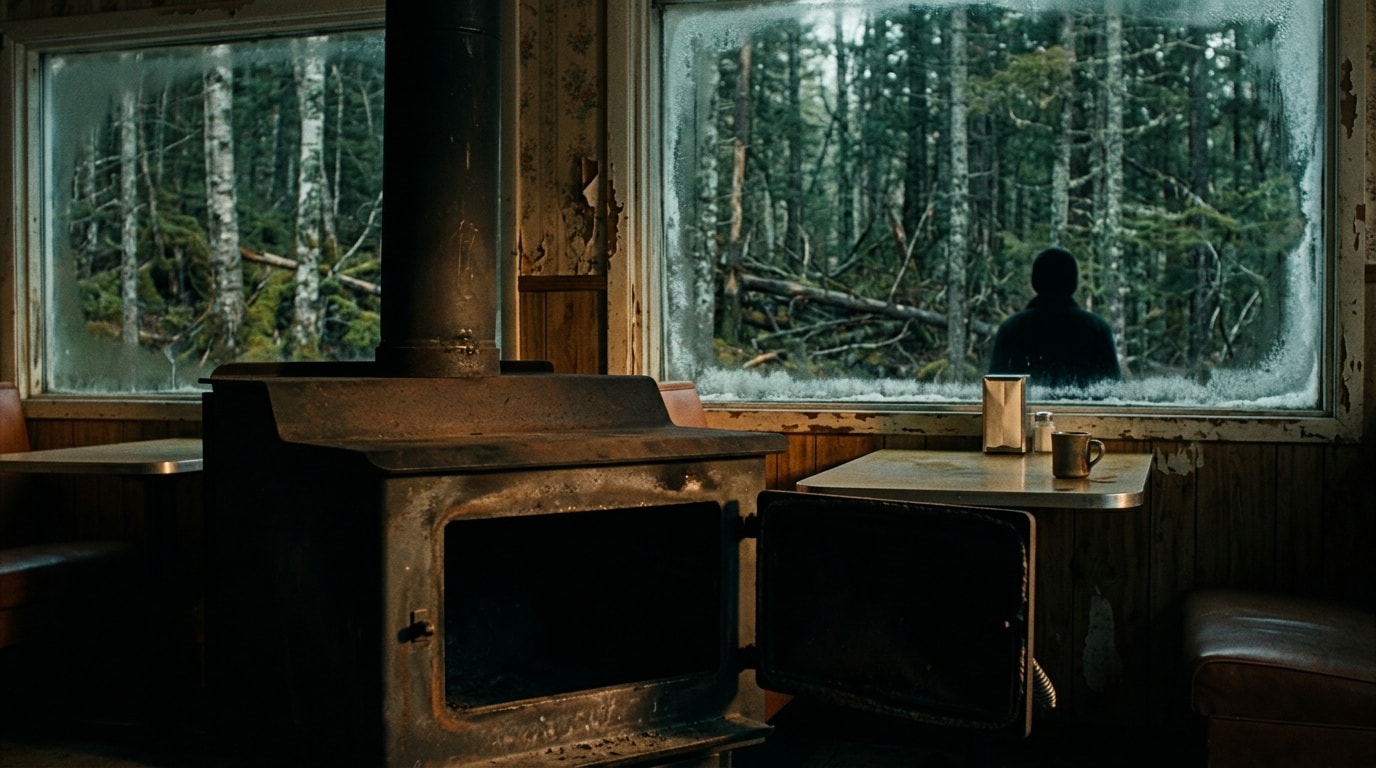
The Boy in White did not merely allow Victor's misattribution of the doll to persist; he structured the original communication event so that a bystander would form exactly that misattribution, and has since maintained Victor's exclusion from direct contact as an operational feature rather than an oversight.
Fatima Was Engineered as an Incubator, and the Talisman Proves It
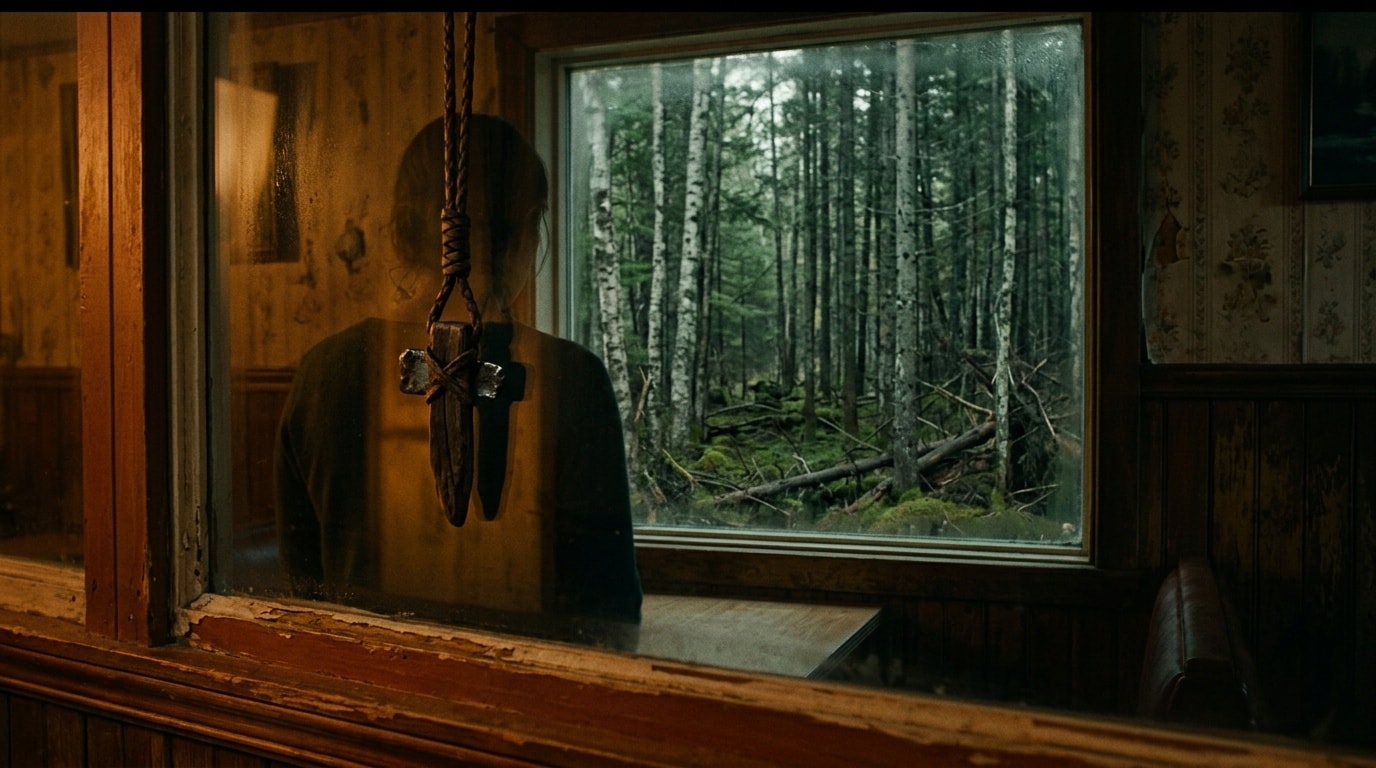
Fatima was selected and prepared by the Township as a biological vessel for a non-human organism, with her medically confirmed infertility serving as the proof of manufacture: the pregnancy bypassed a system that cannot function, meaning the Township replaced her reproductive biology entirely rather than working around it.