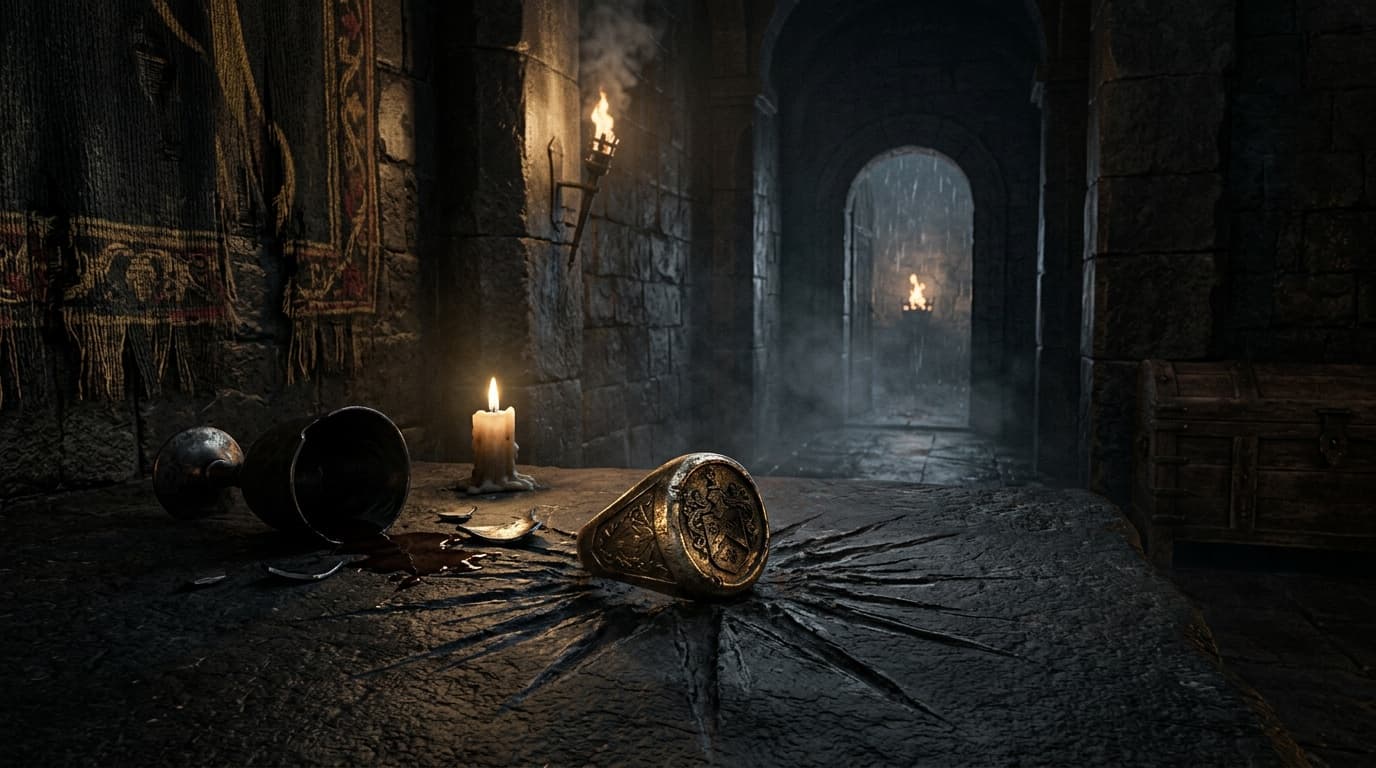
Cole Killed Joffrey to Destroy the Man Who Would Have Said Yes
Plausibility Score
(?)Convinced
(?)#665
of 1000 theories
Theory Ranking
(?)READER VERDICT
Is this theory convincing?
Trend builds after 10 votes.
Be among the first to weigh in.
THEORY ASSESSMENT
The episode directly shows Cole's prior confession to Alicent, Joffrey's approach on the dance floor, and the public murder, giving the theory a strong grounding in confirmed events with the only inferential gap being the interior weight Cole placed on each motivating factor.
STORY CONTEXT
The Lord Commander went from Rhaenyra's sworn protector to her bitter enemy, and fans here debate what truly drives him: wounded pride, genuine belief in the Green cause, religious conviction, or something darker rooted in that rejected night.
WHY THIS MATTERS
If Cole's murder of Joffrey was an act of self-authorship rather than a loss of control, and if Alicent's subsequent intervention converted that self-destruction into permanent obligation, then the ideology driving some of the bloodiest decisions in the conflict is not conviction but the ongoing suppression of a single unbearable alternative self, sustained by a loyalty structure built on vacancy rather than belief. The most dangerous actors in the game are not those who want power but those who need a particular story about themselves to remain true, especially when someone else is invested in keeping that story intact.
ALTERNATE INTERPRETATION
A minority reading in the evidence argues that Cole's violence was not the climax of accumulated emotional trauma but a more specific reaction to confusion and misread social cues: that Joffrey approached Cole as a potential ally rather than a threat, and Cole simply misinterpreted the overture as blackmail in a moment of already unstable emotion. Under this reading, the murder is not a psychotic break driven by layers of shame and rejection but a tragic error of interpretation, which would make Cole less of a man who chose destruction and more of one who stumbled into it.
Adjacent Reading — Not a Competing Theory
Other Theories for S1E05
Larys Chose Alicent Over Chaos
Larys Strong is not a loyalist who found a patron.
Daemon's Dance Is a Throne Play
Daemon's wedding conduct is a coordinated throne play in which Rhaenyra's desire for him is not the occasion for seduction but its deliberate output.

Alicent Converts Criston's Panic Into Loyalty
Alicent Hightower does not spare Criston Cole out of mercy.
Rhea's Taunt Triggered an Unplanned Murder
Daemon did not ride to Runestone with the intention to kill.

Otto Made Alicent Believe Murder Was Inevitable
Otto Hightower's parting warning was not fatherly concern but a precision instrument: by framing Rhaenyra's threat to Alicent's children as structural rather than personal, he installed an unfalsifiable premise that converts Alicent from a grieving friend into an ideological enemy regardless of what Rhaenyra actually intends.