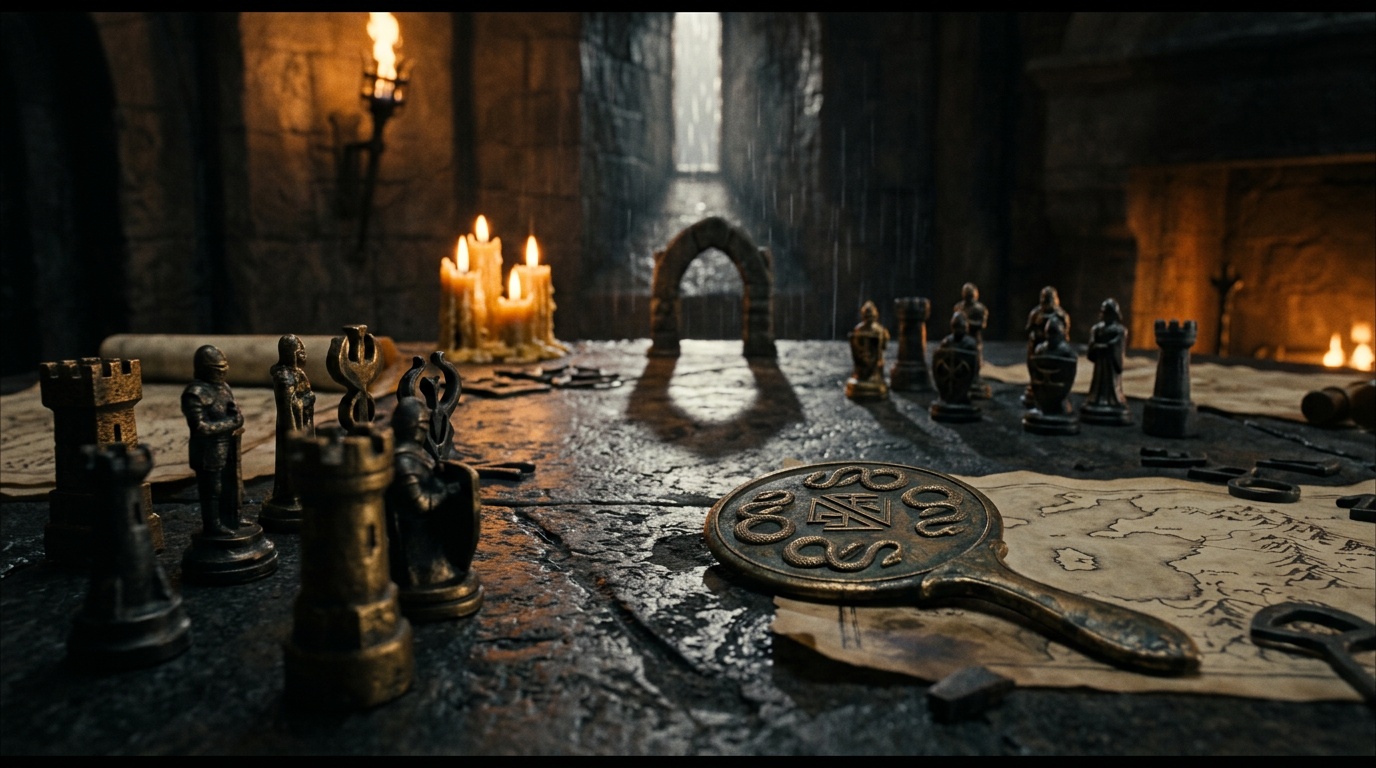
Luke's Knife Makes Peace Impossible
THE ARGUMENT
The show is building toward a confirmation that no diplomatic effort between the Blacks and Greens can hold, not because of political miscalculation, but because Aemond's wound carries a specific, falsifiable charge: the moment any negotiation requires Aemond's cooperation, the empty socket in his face will veto it. The hidden mechanism is not hatred but humiliation at the hands of a frightened child, which is the one kind of grievance that cannot be traded away or symbolically satisfied.
How This Theory Works
What the show has not yet shown us is the moment a genuine peace effort collapses specifically because Aemond refuses to hold. That scene, if it comes, will prove what the evidence is already pointing toward: the wound does not just inflame the conflict, it structurally forecloses resolution. Every future negotiation has to pass through a man whose face is a daily record of the thing that cannot be undone. Aemond does not have to sabotage peace consciously. He simply has to be in the room.
The evidence for this hidden mechanism runs through the sequence of escalation the show constructs with unusual deliberateness. The pig prank is not random cruelty. It is a group verdict on Aemond's standing, and his immediate response, claiming Vhagar in the dark, is a declaration that he refuses that verdict. That is the most exposed Aemond will ever be: ambition visible, need for recognition nakedly on display, the claim still fresh. Luke's knife lands at exactly that moment. And Luke is not a worthy opponent. He is the smaller, panicking child who grabs a knife in fear, not calculation. Aemond cannot frame what happens to him as being bested. He was mutilated by a boy who did not even intend to take the eye. That specific shape of the injury, accidental, unheroic, inflicted by someone beneath him, is what makes it unabsorbable.
The irreversibility of the wound is the show's structural argument, not just its emotional texture. Cultures organized around honor do not allow a visible blood debt to remain private. The empty socket appears at every court appearance. It is legible to everyone in every room. That publicity transforms a personal grievance into a political fact regardless of what Aemond chooses to do with it, and it gives every faction with an interest in conflict a ready instrument. The wound does not need Aemond's active participation to shape events. It works on its own.
The sharpest implication the evidence points toward is this: Rhaenyra's faction cannot actually lose the peace through bad diplomacy. The peace was already lost in the yard at Driftmark, before any adult made any decision. If that is what the show is arguing, then every scene of council deliberation and attempted negotiation in the seasons that follow is not drama about whether peace is possible. It is drama about how long it takes the characters to discover it was never possible. The tragic structure is not that the wrong choices were made. It is that the one choice that mattered was made by a frightened child who did not know what he was deciding.
Is this theory convincing?
Key Evidence
Luke Cuts Out Aemond's Eye
During the fight over Vhagar, Lucerys grabs Jace's knife and cuts out Aemond's eye, marking the first serious physical violence between the two family factions.
Vhagar Claim Triggers the Fight
Aemond's successful claiming of Vhagar, the largest living dragon, is the immediate provocation that transforms the boys' longstanding enmity into a violent physical confrontation.
Petty Conflict Becomes Serious Violence
The decade-long pattern of mockery and friction between the children, culminating in the pig prank and then the eye loss, represents a structural escalation from symbolic to literal injury.
First Blood Between Rival Factions
The eye loss is explicitly the first literal blood spilled between Rhaenyra's and Alicent's children, distinguishing it from all prior hostilities as a point of no return.
Irreversibility of the Wound
An eye cannot be restored, and the permanence of Aemond's injury means the incident cannot be dismissed as a childhood quarrel, embedding a blood grievance into the family's future.
This theory was evaluated using Theory Atlas editorial standards, including evidence review, narrative fit, and competing interpretation analysis. Learn how Theory Atlas evaluates theories →
Other Theories for S1E07
Alicent's Blade Finds Rhaenyra Instead
Alicent will reach for the Catspaw again.
Helaena Sees What Others Cannot
Helaena Targaryen has already stopped warning people, not because her foresight has failed but because she has accepted that knowing the future does not make it changeable.
Laenor Lives: The Burnt Corpse Belongs to a Squire
The body pulled from the fire at Driftmark is not Laenor Velaryon but a substitute, most likely a squire, whose death Daemon arranged to give Laenor a clean disappearance.
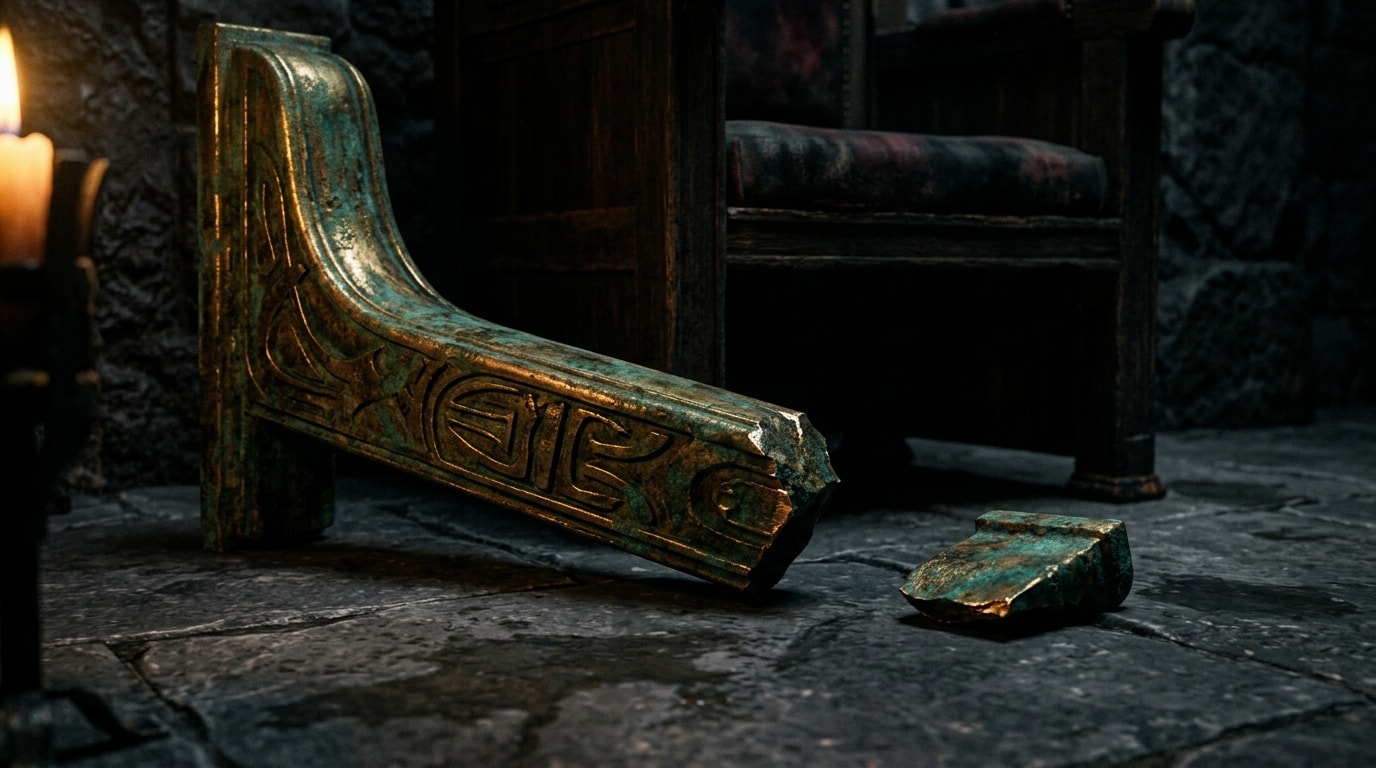
Viserys Is Losing the Succession in Two Directions at Once
Viserys's physical amputation and cognitive erosion are not separate crises but the same crisis running on two tracks, each following the same logic of irreversible thresholds, each reinforcing the other.
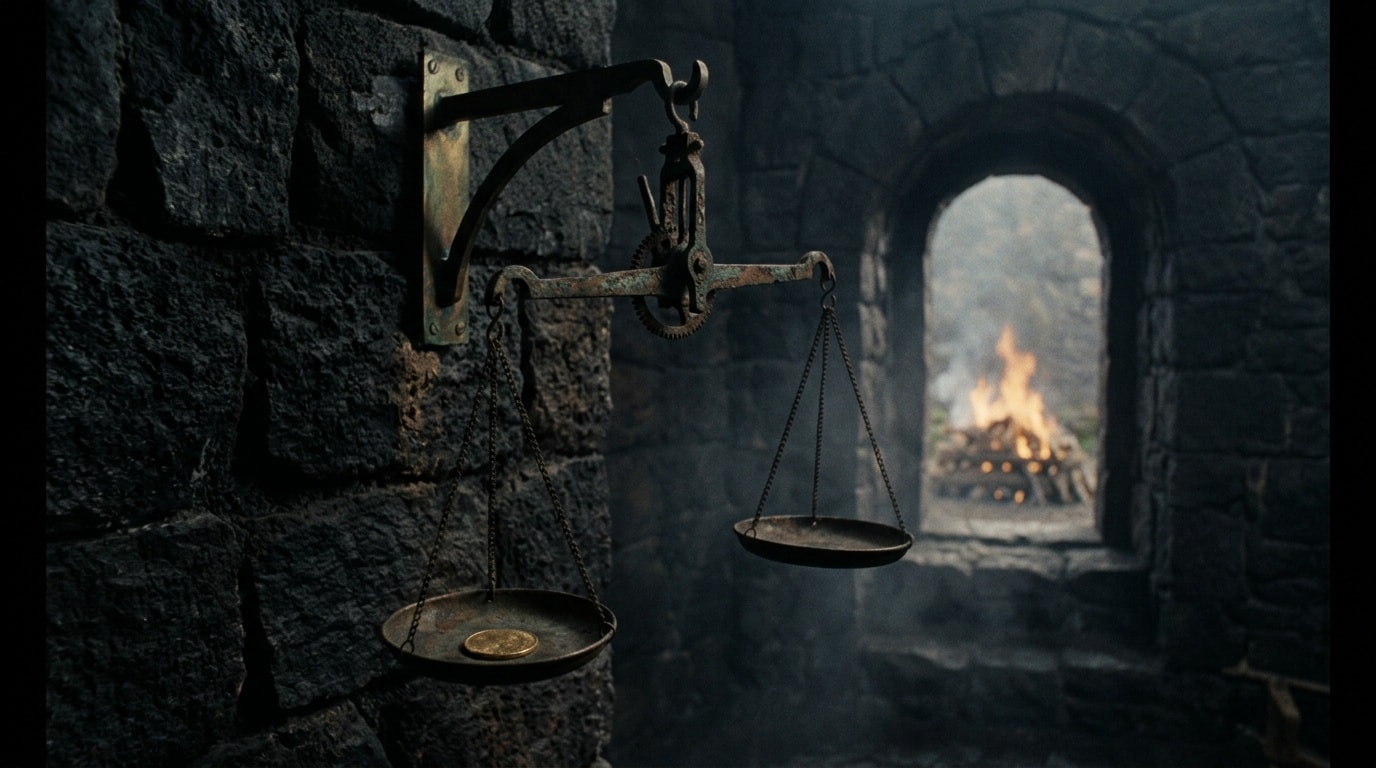
Daemon Laughs Because He Reads the Room
Daemon's laugh at Laena's funeral is not grief or dark humor.
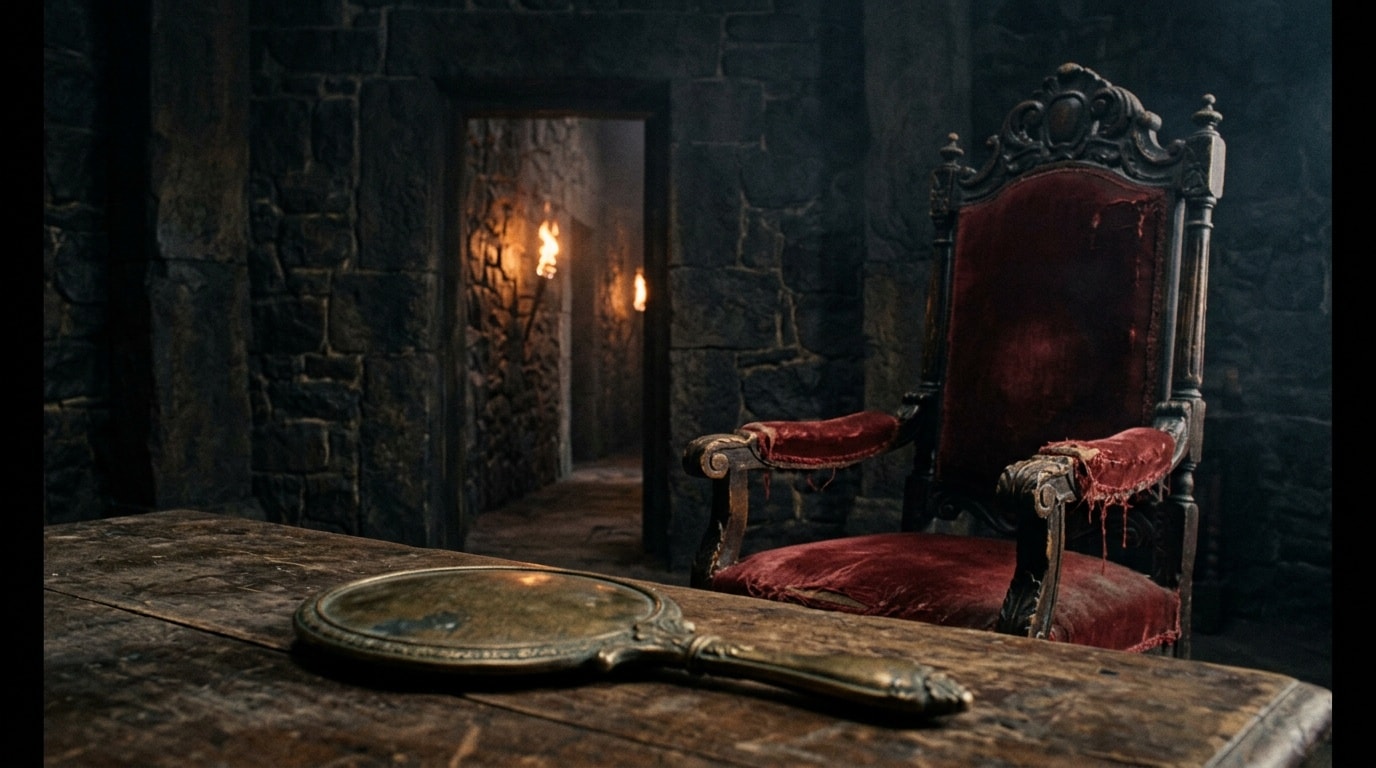
Larys Makes Alicent Complicit in Violence
Alicent's continued proximity to Larys, despite his escalating offers of extreme violence, is not reluctant tolerance but a functional arrangement she sustains through performed horror rather than actual refusal.
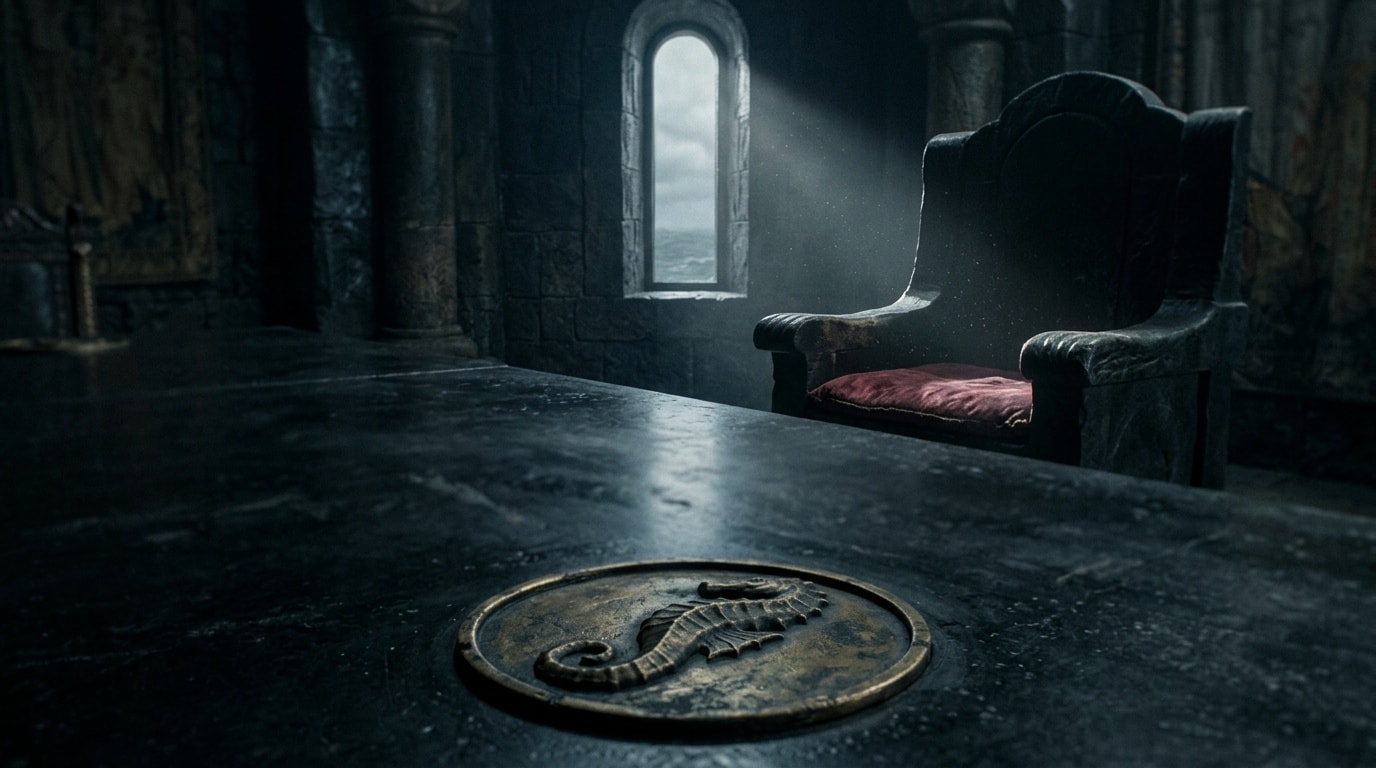
Corlys Values Names Over Blood, Until He Doesn't
Corlys Velaryon's acceptance of Rhaenyra's sons as Velaryon heirs is a strategic deferral, not a resolved conviction, and his silence under direct questioning about their parentage reveals that his names-over-blood doctrine is a performance rather than a principle.