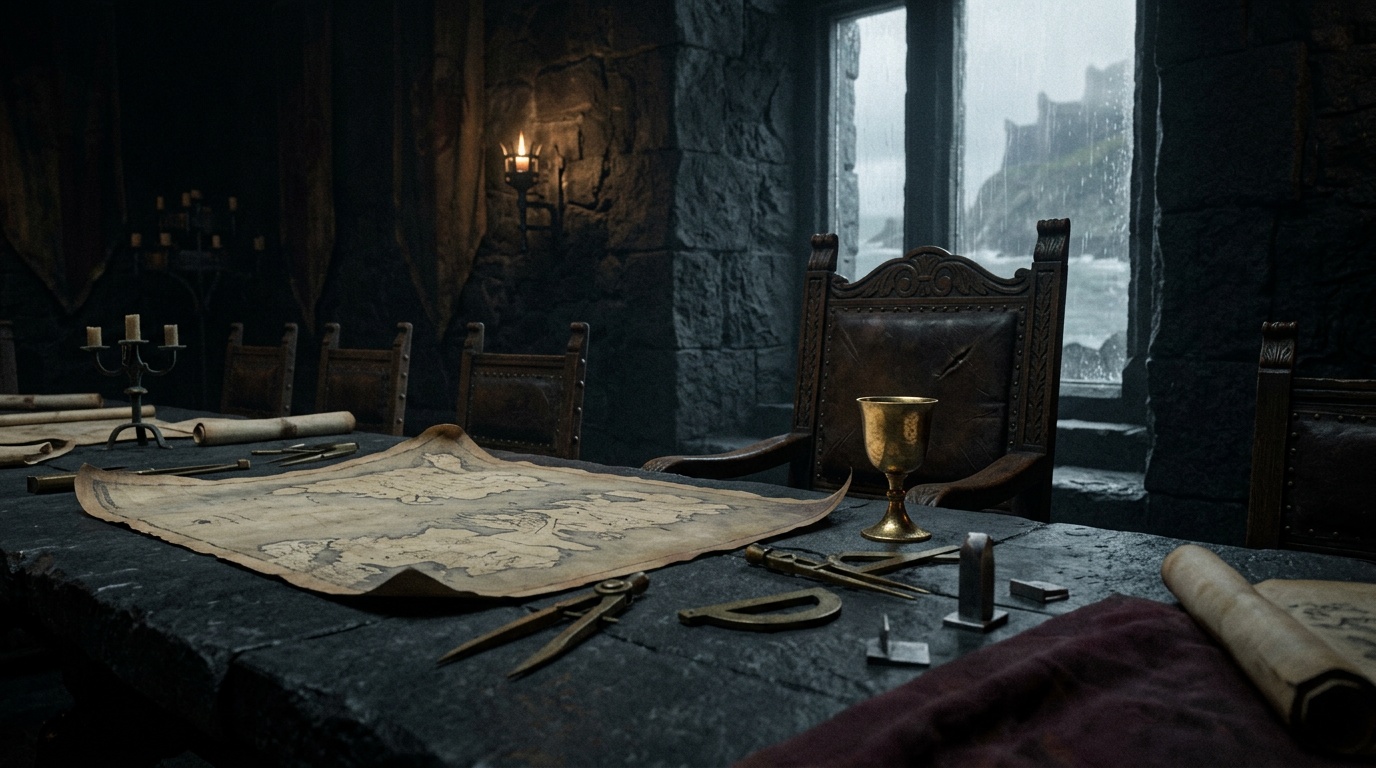
Rhaenyra's Competence Gap Will Cost the Blacks
THE ARGUMENT
Rhaenyra's private admission that she was structurally excluded from military knowledge is not a wound she can resolve through self-awareness. It is the defining ceiling of her command, one that is already producing unilateral action from her own son and strategic counsel from a spy master rather than from any general. Viserys trained her to steward a kingdom at peace, and that preparation is exactly what the Dance of Dragons punishes.
How This Theory Works
Rhaenyra's private admission to Mysaria is not a moment of self-awareness that unlocks growth. It is a confession that she has already reached the limit of what she can correct. Viserys prepared her to inherit a kingdom at peace, and the training he withheld cannot be recovered mid-war by force of will or good counsel. The cup instead of the sword was not a metaphor for sexism in the abstract. It was a precise structural exclusion that left her able to name lords and castles but unable to translate political legitimacy into military command. That gap is now the central instability of the Black cause.
The contrast between her public deflection and her private reckoning is the theory's sharpest evidence. In council she silences Broome by pointing out that the men around her have seen no more battles than she has, which is rhetorically effective and substantively evasive. Alone with Mysaria she concedes the real asymmetry: she was deliberately excluded from military knowledge while they at least circulated in a world where such knowledge existed. She was not merely absent from battles. She was kept from the thinking that precedes them. The council fractures after Rook's Rest not only because of the loss but because no one at its center can convert grief and legitimacy into a coherent strategic direction.
Jace's unilateral negotiation with House Frey is the most precise measure of how far the vacuum has already spread. A teenage son does not bypass his queen because he is impulsive. He does it because waiting for strategic direction from above has become untenable. The initiative flows upward from below, which is the structural signature of a command failure, not a momentary one.
The only counsel Rhaenyra receives that matches her actual capability comes from Mysaria, who advises her to exploit the smallfolk's bad-omen reading of Meleys's death. That advice is legible to Rhaenyra because it operates in the register she was trained for: symbolism, legitimacy, and the management of perception. What it cannot do is substitute for military direction. The show is tracking a queen who is maximally competent inside the preparation she was given and structurally unable to move outside it. That is not a correctable deficit. It is the inheritance Viserys actually left her.
Is this theory convincing?
Key Evidence
Cup Instead of Sword Confession
Rhaenyra tells Mysaria that her father gave her a cup to carry rather than a sword, teaching her the names of lords and castles but withholding military knowledge from her entirely.
Public Deflection, Private Admission
Rhaenyra publicly silences Broome's criticism by noting the council's equal inexperience, then privately admits to Mysaria that the comparison is not truly equal because she was structurally excluded from military training.
Black Council in Open Turmoil
The Black Council fractures openly after Rook's Rest, with conflicting counsel and no clear strategic direction from Rhaenyra, reflecting the leadership vacuum her unpreparedness creates.
Jace's Unauthorized Frey Negotiation
Jace bypasses Rhaenyra entirely to negotiate the Twins crossing with House Frey, acting unilaterally because waiting for strategic direction from his mother has become untenable.
Mysaria Fills the Strategic Void
Mysaria, not any council member, supplies the only actionable strategic insight Rhaenyra receives in this episode, advising her to exploit the smallfolk's bad-omen reading of Meleys's death.
Rhaenyra Mirroring Viserys's Weakness
Rhaenyra's indecision and inability to command her council echoes the same pattern of weak central leadership that characterized Viserys's reign, suggesting the failure is generational.
This theory was evaluated using Theory Atlas editorial standards, including evidence review, narrative fit, and competing interpretation analysis. Learn how Theory Atlas evaluates theories →
Other Theories for S2E05
Daemon's Conversion: How Architecture, Operation, and Psychology Will Make His Usurpation Feel Like Loyalty
Daemon Targaryen is not on a path to consciously betray Rhaenyra.
Dead Dragon Cracks Targaryen Divine Mystique
The smallfolk's horror at Meleys's severed head signals the collapse of the theological premise that made Targaryen rule feel inevitable rather than merely imposed.
Alicent Built the Logic That Erased Her at Both Levels Simultaneously
Alicent's removal from power is not a betrayal of the system she constructed but its correct functioning: the instrumentalizing parenting logic she applied to Aemond and the patriarchal institutional logic she spent her political life defending are the same logic operating at different scales, and she built both.
Cole's Silence Built the Trap: Aemond's Regency Is Engineered to Collapse
Criston Cole withheld Aemond's role in the Battle of Rook's Rest from Alicent before the Small Council named a regent, a sequenced act of deflection that transferred power from Alicent to Aemond while ensuring she remained the only person positioned to eventually destroy that authority.
Aemond Left Aegon Alive on Purpose
Aemond used the Battle of Rook's Rest as deliberate cover to remove his brother from power, then chose to leave Aegon comatose rather than dead, calculating that a breathing king was more politically useful than a martyr.
Jeyne Arryn's Loyalty Has a Dragon-Sized Price
Jeyne Arryn has already decided the terms of her withdrawal from the Black coalition, and Rhaenyra cannot see it because Jace's unauthorized workaround at the Twins has patched over the evidence.
Jace's Frey Deal Bypasses Rhaenyra's Authority
Jace has not simply acted without authorization.
Dragonstone's Records Hold the War's Key
Jacaerys's plan to recruit thin-blooded and bastard-born Targaryen descendants as dragonriders is an ideological capitulation the Black faction has not yet admitted to itself.