Helaena Keeps the Child Because It Is Hers
THE ARGUMENT
Helaena's refusal to abort her pregnancy is the act of a woman who has concluded, through grief or prophetic knowledge or both, that this child is already fixed in existence and belongs to her in a way that no political argument can reach. Her outburst, 'It's mine, it's my own,' signals a psychological threshold rooted in the violent loss of Jaehaerys: she is protecting this pregnancy as an act of self-possession the show has not yet confirmed is also an act of foresight. The convergence of possessive grief and active prophetic capacity raises the possibility that Helaena is calm amid Alicent's panic because she has already seen how this thread ends.
How This Theory Works
Helaena's refusal operates on a level Alicent's political logic simply cannot reach, and the episode's evidence suggests the reason is possessive grief fused with prophetic certainty. Alicent lays out the case with precision: the child could become a rival to Joffrey, a hostage in Rhaenyra's hands, or a liability that accelerates the war's appetite for consuming everything the Greens still hold. Helaena does not dispute any of it. She says 'I can't.' When pressed further, she says 'It's mine. It's my own.' She understands the risk completely and rejects it as the relevant category altogether; the ledger of political costs Alicent is running simply does not apply to what she has decided to protect.
The psychological coherence of that refusal runs through Jaehaerys's death. Helaena has already experienced the violent removal of a child she could not protect: a targeted, deliberate loss, a consequence of a war in which her children existed as instruments. Her possessive outburst in this episode carries that history: the pregnancy is the one thing that has not yet been taken, claimed, or redirected by someone else's agenda. Whether the show intends this reading as the full explanation or only part of one remains unconfirmed, but the psychology is consistent enough that 'I can't' lands as something closer to 'I will not survive losing another one' than to strategic calculation.
The prophetic dimension adds a second layer the episode leaves deliberately unresolved. When Helaena tells Alicent 'He burns, but without fire,' she confirms her precognitive capacity is still active in this episode, still producing images that arrive as settled facts. A viewer aware of her track record has to ask whether her certainty about the pregnancy draws on the same source. Her refusal carries no desperation, no evident fear that she might be wrong. If prophetic knowing underlies 'I can't,' she is declining to undo something she has already watched survive, a settled fact rather than a weighed option. Her calm in the face of Alicent's escalating panic functions as the tell: this is what Helaena looks like when she already knows the answer.
Those two readings converge at their most uncomfortable point when Mysaria enters. Mysaria intercepts them during the escape attempt and learns of the pregnancy, transforming it from a private secret into a political fact now in motion. Whatever consequences Helaena's refusal has set in train, they are now accelerating. Alicent has been trying to negotiate a situation that Helaena has already decided she will not negotiate. A Helaena acting from grief-driven possessiveness is making a catastrophically dangerous choice in full awareness of the cost, which means the show is building toward the moment that cost is collected. A Helaena acting from prophetic certainty has already seen how this pregnancy resolves, and her refusal is itself the prophecy in action: she will not manage what she knows cannot be undone.
The most uncomfortable possibility the show is circling is that both readings are simultaneously true and that Helaena's certainty is correct. She knows this child survives, and she is willing to let every political consequence Alicent fears detonate around her because she has already seen the other side of it. Mysaria's discovery sets a clock. Whether it is grief or foresight holding Helaena steady while that clock runs, the episode presents her refusal as fixed, and that fixity is what the theory turns on.
Is this theory convincing?
Key Evidence
Helaena's Possessive Outburst
When Alicent presses her to abort, Helaena shouts 'It's mine! It's my own, it's mine,' a declaration of ownership that bypasses all of Alicent's political reasoning and points to a grief-driven, not strategic, refusal.
Alicent's Unanswered Case
Alicent explicitly details the dangers, including the child becoming a rival to Joffrey, a hostage, or a tool against Rhaenyra, and Helaena acknowledges the logic but still refuses, suggesting her motivation is emotional or prophetic rather than a misunderstanding of the risk.
Jaehaerys's Death as Prior Loss
Helaena lost her son Jaehaerys to assassination in a prior season, establishing that she has already experienced the violent removal of a child she could not protect, which makes her possessive attachment to this pregnancy psychologically coherent.
Active Prophetic Vision This Episode
Helaena tells Alicent 'He burns, but without fire' when describing Aemond, confirming her precognitive capacity remains functioning in this episode and raising the possibility that her certainty about the pregnancy draws on the same source.
Mysaria Discovers the Pregnancy
Mysaria intercepts Alicent and Helaena during their escape attempt and learns of the pregnancy, transforming it from a private secret into a political fact in motion, which accelerates whatever consequence Helaena's refusal has set in train.
This theory was evaluated using Theory Atlas editorial standards, including evidence review, narrative fit, and competing interpretation analysis. Learn how Theory Atlas evaluates theories →
Other Theories for S3E05
Cole Marches Toward a Death He Chose
Criston Cole has designed his own death as a message addressed specifically to Alicent Hightower, using the Riverlands campaign as a pretext to stage a suicide spectacular enough to force her retroactive acknowledgment at the moment she can no longer act on it.
Two Leaders Destroying Their Own Coalition
Rhaenyra's grief over Jace and Luke has fused with her political identity until vengeance and governance feel like the same activity, narrowing every council discussion toward Aemond and Vhagar while her coalition frays around her.

Mysaria Is Building Her Own Exit
Mysaria is running a private ledger that serves her own survival before Rhaenyra's intelligence interests, and Alicent's argument in the passage is what tips the balance.

Alys Rivers Feeds Aemond's Open Wound
Aemond's entrapment at Harrenhal operates on two interlocking levels.
Orwyle Traded the Flask for His Freedom
Orwyle's delivery of the flask was a calculated farewell transaction: he gave Alicent one final service while simultaneously announcing his defection, positioning himself to bring Rhaenyra the most institutionally credible possible disclosure of Helaena's pregnancy.
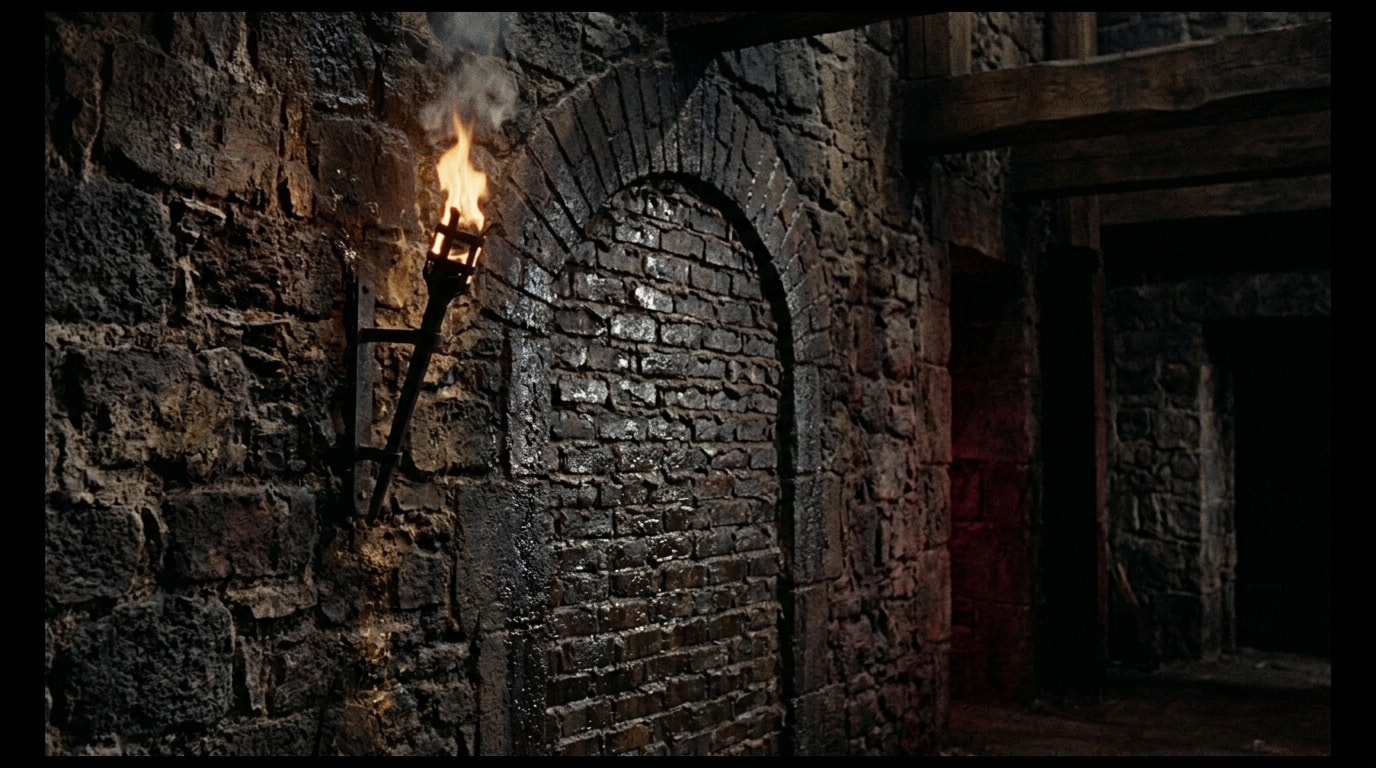
The Murder Tunnel Traps Its Own Survivors
Rhaenyra's forces deliberately sealed the hidden passage after the Blood and Cheese assassination, converting what had been an infiltration route into a dead end that blocks Helaena's only bid for freedom inside the space where her son was killed.
Larys Finally Speaks Truth to Aegon
Larys Strong's monologue in episode 5 reads as a handler's audit of a failing asset, delivered at the precise moment flattery has lost its usefulness as a tool.
Sunfyre Lives Through Aegon's Bond
Sunfyre is alive, hidden and injured, and Aegon's persistent certainty about this functions as the show's signal that the rider-dragon bond between them remains open.