
Violet Channels Divine Power, Not Rider Magic
THE ARGUMENT
Violet's lightning is a divine channel sourced from the goddess Dunne rather than conventional rider magic, and a prior divine claim on Violet from childhood preceded and structured her rider bond rather than the other way around. This means the power's conditions of availability and withdrawal are outside Violet's control entirely. The confrontation between Violet and Theophanie is not rider versus venin but the goddess's unchosen instrument against the goddess's apostate.
How This Theory Works
Violet's lightning does not originate from her as a rider but passes through her from a divine source, specifically the goddess Dunne, and the rider bond did not create that connection but merely gave it a functional outlet. This distinction matters because it reframes every condition under which her power operates.
The sky-channeling argument rests on directionality. Violet draws lightning from above, through Tairn, in a vertical pull no other rider replicates. Conventional signets manifest from within the rider outward. Violet's signet moves the other way. That is not a stylistic quirk. It is a functional difference pointing to a source external to her body entirely.
The sharpest pressure point is Theophanie. A former high priestess of Dunne turns venin, severs herself from divine favor, and can still be killed by instruments carrying divine sanction. The book confirms two reliable methods for killing venin: Violet's lightning and a dagger from a god. Both are divine instruments. Neither is rider-generated in the conventional sense. If venin are creatures that have severed themselves from the natural order, only power originating outside that severed system can reach them. Violet's effectiveness against venin is not incidental to her signet. It is the argument that her signet operates on a different ontological register than ordinary magic altogether.
The Dunne priestess's recognition of Violet closes the loop in a way that must be pressed fully. If Violet was nearly dedicated to Dunne as a child, the goddess held a claim on her before any dragon chose her and before any rider bond was formed. That sequence is structural, not decorative. The rider bond did not create the connection to divine power; it provided the mechanism through which a pre-existing divine claim finally expressed itself. Tairn is not the source of the vertical pull. Tairn is the conduit whose exceptional nature matched what Dunne's prior claim required. Theophanie's arc makes the confrontation legible: a high priestess abandoned the goddess and became the most dangerous venin Violet faces, while Violet, nearly dedicated and never formally released from that prior claim, channels the same divine domain Theophanie betrayed. The lightning that kills is less Violet's signet than Dunne's answer, and Violet has never had full ownership of the power she believes is hers.
Is this theory convincing?
Key Evidence
Lightning Effective Against Venin
Violet's lightning signet kills venin in ways other riders' signets cannot replicate, pointing to a qualitative difference in the power's source or nature.
Sky-Sourced Wielding Direction
Violet draws power from above through Tairn rather than projecting it outward from within herself, a directionality inconsistent with how conventional rider signets operate.
Theophanie's Former Priesthood
Theophanie was a high priestess of Dunne before turning venin, directly connecting Dunne's divine domain to the venin conflict and to Violet's most dangerous opponent.
Divine Dagger as Parallel Kill Method
A special dagger from a god is confirmed as one of only two reliable methods for killing venin, establishing divine origin as a structural requirement for venin-killing power.
Dunne Priestess Recognizes Violet
A silver-haired priestess of Dunne on the Isle of Dunne implies that Violet was almost dedicated to the goddess as a child, suggesting a prior divine claim on her that predates her rider bond.
This theory was evaluated using Theory Atlas editorial standards, including evidence review, narrative fit, and competing interpretation analysis. Learn how Theory Atlas evaluates theories →
Other Theories

Theophanie Is Not Recruiting Violet; She Is Recognizing a Prior Claim
When Dunne's dedication to Violet was withdrawn in childhood, it was deferred rather than canceled, and Theophanie, a former high priestess of Dunne turned venin, acts as the institutional heir to that deferred claim.

Only Violet Can End Xaden
Violet is Xaden's designated executioner, and the book has structured her as such through his own words, the amber progression marking his transformation, and her self-declared threshold for when she would stop protecting him.

Jack Barlowe's Lie and Violet's Dreamwalking Are Two Sides of the Same Secret
Jack Barlowe's claim that no cure for venin exists because no venin wants one is deliberate interference by a loyal venin protecting the only real vulnerability of his kind: a mechanism that bypasses consent entirely.

Violet Was Marked by Two Gods
Violet has been marked by both Dunne and Malek, and her signet powers are expressions of those divine claims rather than rider magic she controls.

Father's Research Was Always About the Cure
Violet's father encoded a directed path toward a venin cure inside his final research, and the letter pointing her to Deverelli was a deliberate handoff written for her specifically, not a passive research note.

Irids Draw From Sky, Not Earth, Which Is Why Venin Want Andarna Alive
Irid dragons source their power from an atmospheric or celestial substrate rather than the earth, structurally excluding them from the magical economy venin corrupt and drain.
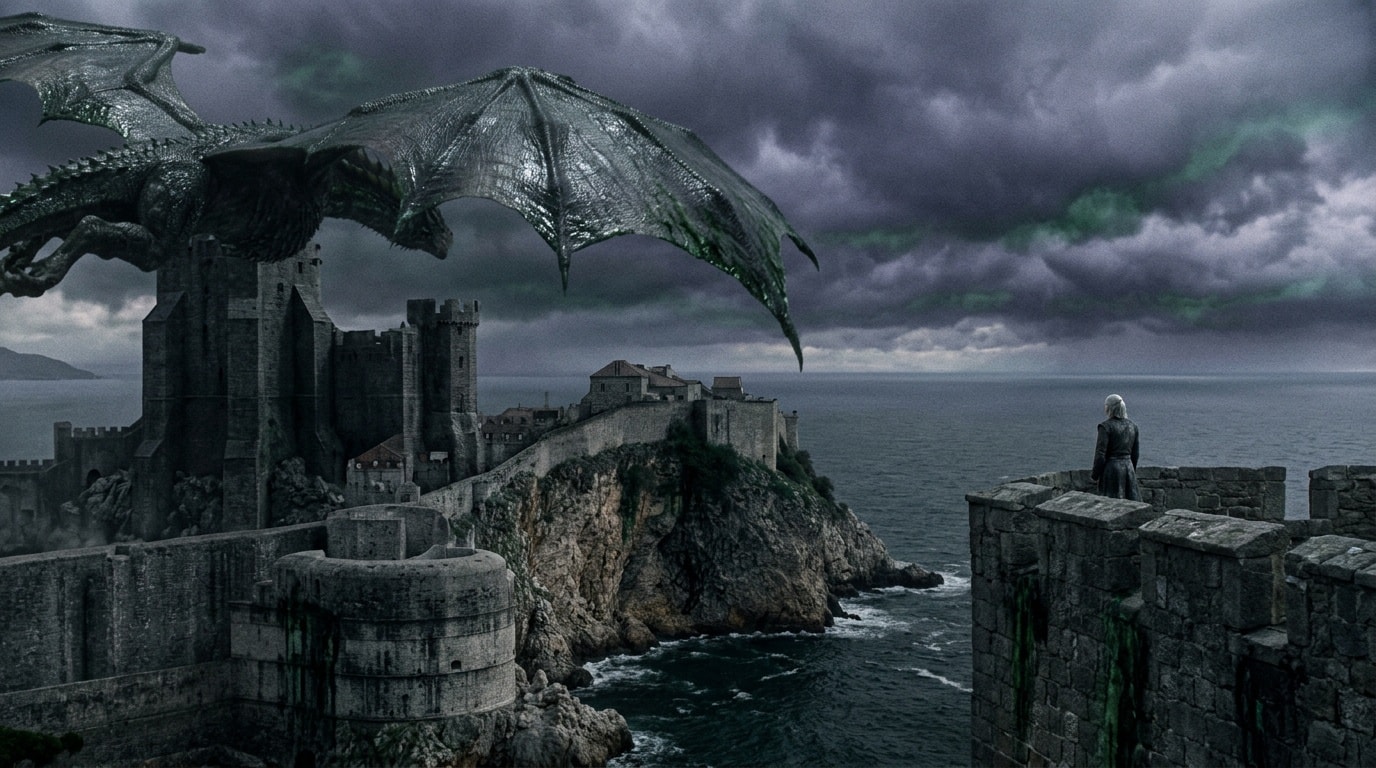
Violet's Silver Hair Signals Venin Lineage
Violet's silver hair marks a hereditary connection to venin biology, a conclusion the book structures toward while withholding confirmation.

Zihal's Empty Box Will Hold Xaden's Soul
The glass box Xaden receives from Zellyhna's fate ritual is a prepared soul-vessel, not a gift, with its empty interior designating what venin conversion will take and its foot-sized dimensions encoding the precise loss through the sole-soul homophone.