Love, Control, and the Hidden Sensor
THE ARGUMENT
Helen secretly monitored Carol's drinking during their attempt to have a child together, not as an impulsive act of anxiety but as a sustained private audit that reframes the entire relationship as one built on asymmetric trust. Carol was not Helen's equal partner in 2011 but her subject, assessed against a standard she was never told existed. The discovery does not just reveal hidden tension in the relationship; it reveals that Carol's most intimate memories of that period belong to a version of events that was never real.
How This Theory Works
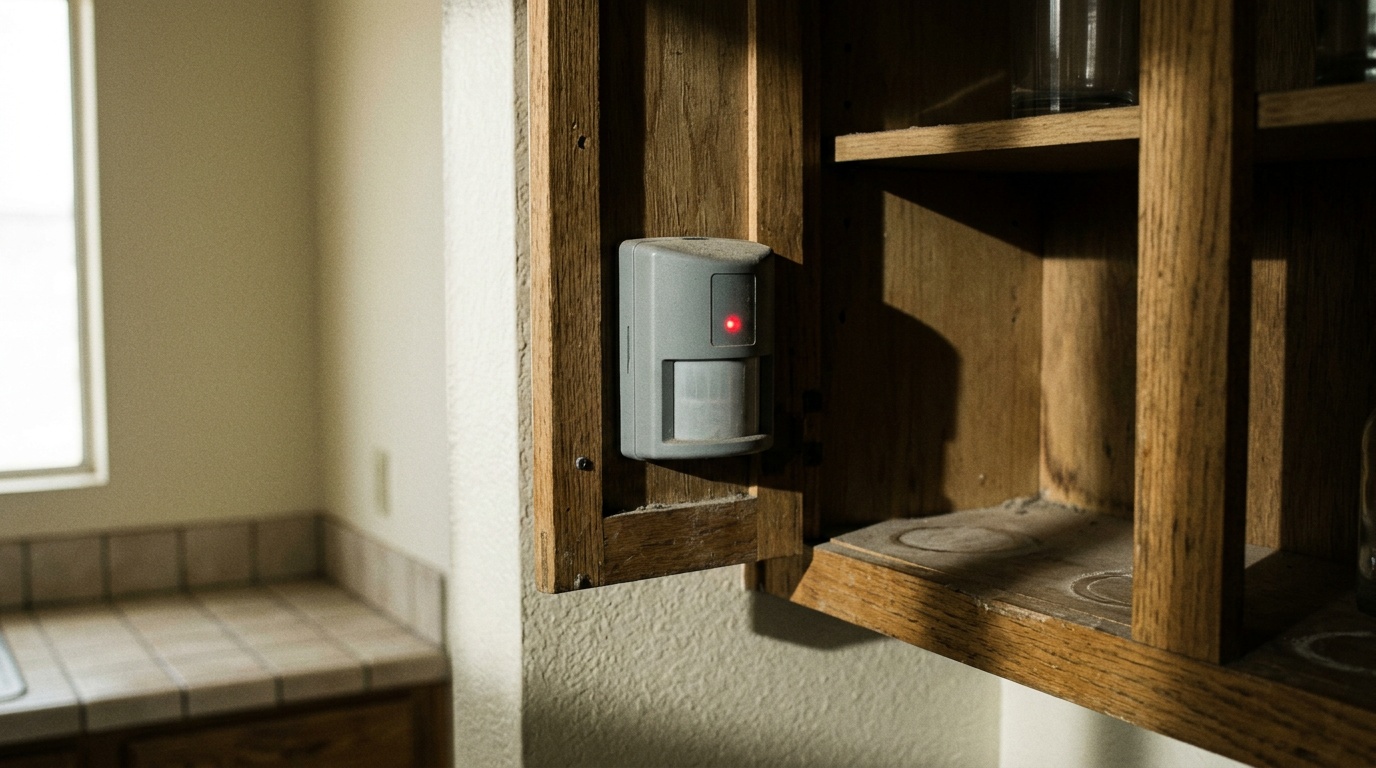
Helen installed a sensor in Carol's alcohol cupboard not because she feared Carol would fail, but because she had already decided Carol might, and could not bear to confront that judgment directly. The distinction matters. Covert monitoring over months is not the behavior of someone managing anxiety. It is the behavior of someone who has appointed themselves an authority over another person's readiness, and who lacks either the courage or the respect to share that verdict. The timing places this during the period when Helen and Carol were actively trying to have a child, which means Helen was simultaneously performing the role of equal partner in a shared project while conducting a private audit of whether Carol deserved to be in it.
The more generous reading, that the surveillance was anxious love rather than control, does not survive the duration. A single panicked act might be forgiven as fear. A sustained covert monitoring program, across the most intimate months of a relationship, is a structural choice. Helen was not worried and then stopped. She was worried and kept watching and kept silent. That silence compounded daily into a form of deception that no subsequent tenderness could retroactively dissolve.
What Carol is now confronting is not the loss of a relationship she knew. It is the loss of a relationship she thought she knew, which is a different and harder grief. Every memory from that period has been recontextualized not by new information about events but by new information about the frame Helen was holding around her the entire time. Helen was not her equal partner in 2011. She was her evaluator. And Carol had no idea she was being evaluated, which means she had no way to consent, refuse, or even respond. The sensor does not prove Helen was cruel. It proves Helen did not fully believe Carol was her equal, and spent months collecting evidence for a verdict she never delivered out loud.
Is this theory convincing?
Key Evidence
Sensor Found in Booze Cupboard
During Musos's search of Carol's home for a recording device, he discovers a sensor hidden inside her alcohol cupboard, revealing that someone had been monitoring her drinking.
Surveillance Dated to Baby Planning
The sensor is connected to the period around 2011 when Helen and Carol were trying to have a child, placing the covert monitoring at the most intimate and high-stakes moment of their relationship.
Relationship Cracks Revealed Retroactively
The drinking surveillance is part of a pattern of post-facto revelations about Helen and Carol's relationship, suggesting the couple's outward stability concealed significant underlying tension.
Surveillance as Expression of Love
One reading of the discovery frames Helen's monitoring not as a cold betrayal but as an expression of anxious, imperfect love, consistent with a character who cared deeply but could not communicate that care directly.
Unvoiced Doubts About Carol's Drinking
The existence of the sensor implies Helen had concerns about Carol's alcohol consumption that she never raised openly, pointing to a pattern of concealment within the relationship.
This theory was evaluated using Theory Atlas editorial standards, including evidence review, narrative fit, and competing interpretation analysis. Learn how Theory Atlas evaluates theories →
Other Theories for S1E09

The Girl Was Always the Trap
The hive engineered Carol's bond with Zosa as a precision conversion operation, targeting her specifically because she was their most determined opponent and exploiting the same coercive logic, love as justification for bodily override, that human institutions had already used against her.
Manus Finds the Frequency That Frees Them
Manus has been handed a working method -- frequency-based intervention at moments of hive signal instability -- by someone who already understood it, and is now being used to develop or demonstrate it at a scale that could threaten the hive's entire signal network.
Carol's Frozen Eggs as Forced Conversion Key
The Joined have obtained Carol's frozen eggs and are using them to derive induced pluripotent stem cells, engineering a personalized conversion agent that bypasses her biological immunity without her consent.

Carol Chooses the Girl Over the World
The season finale title 'La Chica o El Mundo' encodes the central decision Carol faces: abandon her personal bond with Zosia to help Manus save humanity from the Hive, or follow her heart and leave with the collective.
The Angriest Alliance the World Needs
Manousos engineered the terms of his partnership with Carol before she knew a partnership existed.

Zosa Still Exists Inside the Hive
The Hive does not erase individual consciousness but actively manages it as an instrument of persuasion.