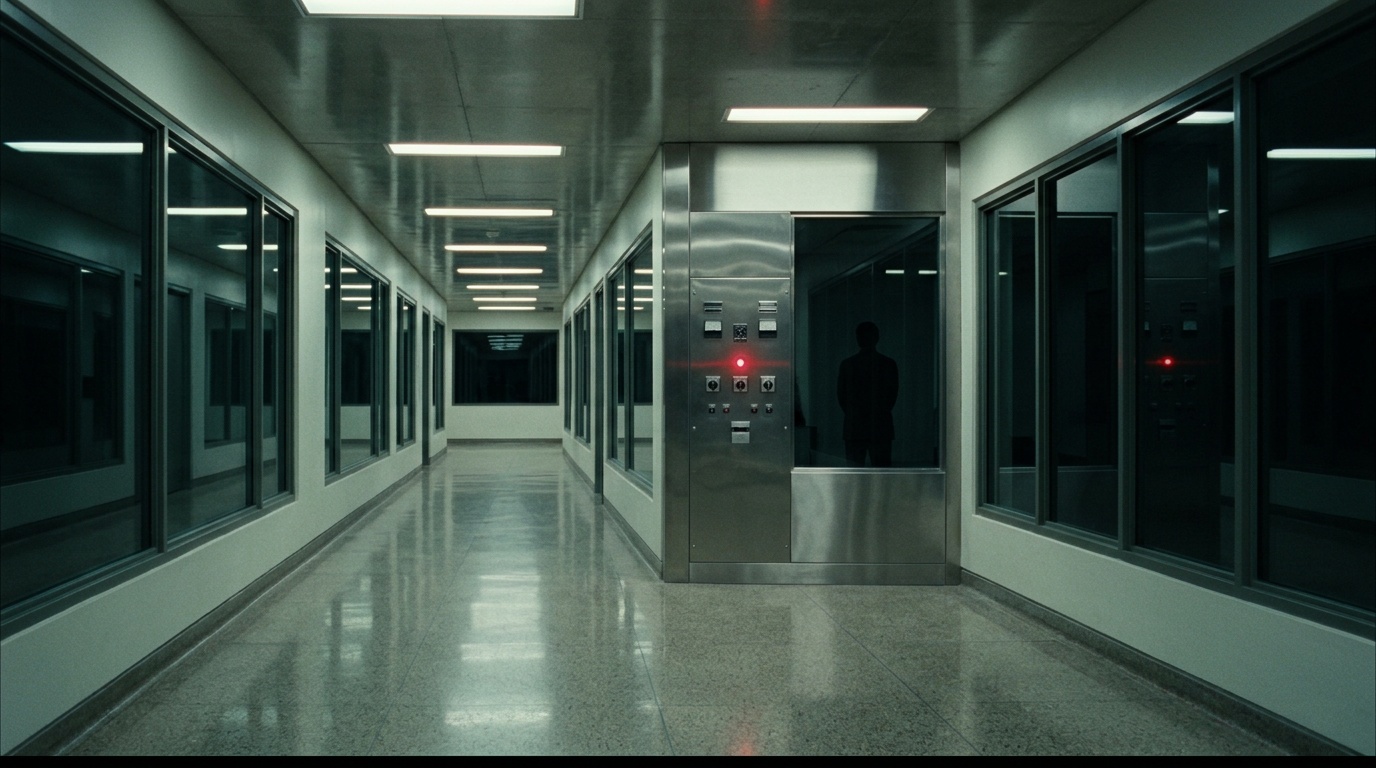
Helly's Outie Owns Her Own Cage
THE ARGUMENT
Helena Eagan did not enroll in severance as a victim. She enrolled as an owner, with full institutional authority to end the arrangement at any point, and she has repeatedly refused. The innie's suffering is not a cost Helena accepts alongside her purpose. It may be the purpose itself.
How This Theory Works
The Eagan reveal recontextualizes every prior scene of Helly's suffering not as tragedy but as policy. Helena controls the institution. She signed the intake forms. She has access to the family that runs the company, to the designers of the procedure, and to the exit. After the suicide attempt, after the recorded plea, after each escalating act of self-harm designed to force her own hand, the answer was still no. That is not bureaucratic inertia. That is an owner exercising a decision.
Angela's instruction to thank her father places Helena inside active coordination with Lumon's founding family at the highest level. That framing does not describe a dissident or a reluctant insider conducting some private investigation. It describes a loyalist. Someone whose innie was not an accident of circumstance but a deployment. A tool constructed for a purpose the innie cannot conceptualize and was never meant to.
The hardest implication is not that Helena is cruel but that she is precise. Helly's resistance, her refusals, her anguish, may not be obstacles to Helena's goal. They may be evidence that the instrument is functioning correctly. The innie who fights hardest against the system is the one whose outie built the system, holds the key, and keeps choosing to leave the door locked.
Is this theory convincing?
Key Evidence
Helena Eagan Named at Gala
At the gala, Helly is introduced as Helena Eagan, directly confirming on screen that her outie belongs to the founding family that owns and operates Lumon Industries.
Angela's Father Reference
A Lumon employee named Angela tells Helly to thank her father if she sees him, placing Helena inside active coordination with Lumon's founding family leadership rather than as a peripheral member.
Innie as Instrument of Owner
Because Helena controls the institution imprisoning her innie, every refusal to release Helly from the severance arrangement is an act of self-imposed captivity with deliberate intent, not institutional bureaucracy.
Ownership Inverts Victim Structure
The theory argues that Helly's framing as a sympathetic captive is structurally inverted by the Eagan reveal, since her outie holds ultimate authority over her continued imprisonment.
Prior Outie Refusals Recontextualized
Each time Helly's outie declined to grant her release, including after the suicide attempt, those refusals now carry the weight of a family member and institutional co-owner actively choosing to sustain the arrangement.
This theory was evaluated using Theory Atlas editorial standards, including evidence review, narrative fit, and competing interpretation analysis. Learn how Theory Atlas evaluates theories →
Other Theories for S1E09
Gemma Is Alive Inside Lumon
Lumon did not hire a grieving man.
Irving's Outie Has Been Mapping Lumon
Irving's outie was running a targeted investigation into Lumon's severed workforce before his innie had any basis to prompt it, and the severance procedure itself may have been Lumon's instrument for containing him rather than a choice he made freely.
Radar the Dog Signals Irving's Naval Past
Irving's innie has reconstructed an ideological commitment to authority from a behavioral residue left by his outie's military background, without any memory of where that commitment came from.
Lumon's Real Product Is Severance Itself
Lumon's actual product is the severance procedure itself, and its goal is mass deployment across the broader population, not the protection of internal data operations.