
Lumon Erases Irving Before He Can Be Mourned
THE ARGUMENT
Lumon executed a coordinated erasure protocol against Irving so rapidly and thoroughly that it functioned as a preemptive strike against innie solidarity, not a response to grief but an attempt to dissolve the conditions under which grief becomes resistance. The spatial restructuring, photographic revision, and controlled nine-second memorial are sequential moves in a single institutional playbook designed to make Irving's removal feel like a natural transition before the remaining innies could organize their experience of it as a crime. The protocol's existence reveals that Lumon has already modeled what happens when severed workers are allowed to mourn without management, and found it unacceptable.
How This Theory Works
Lumon's erasure of Irving is a test of whether the innie population can be prevented from converting individual loss into collective identity. The desk rearrangement, the edited photographs, and the nine-second memorial are not three separate decisions. They are a single coordinated protocol executed in sequence, and the sequence reveals the system's actual priority: not to manage grief, but to collapse the window in which grief could become solidarity. The swiftness matters most. When the remaining innies return and find no gap where Irving sat, they are encountering not a workplace that has moved on, but a workplace that anticipated needing to move on before they arrived.
The erasure operates on two channels simultaneously. Spatially, the reconfigured room denies the innies a physical anchor for absence. There is no empty chair, no visible wound in the layout. The room has already metabolized Irving's removal and presents only a closed, functioning unit of three. Photographically, the edited images strip him from the shared visual record, which for innies -- who have no outie memories, no outside corroboration, no continuity outside the office -- is the only archive they have. Attack both channels at once and you do not just erase a person. You erase the evidence that the group was ever constituted around him.
Miss Huang names the institutional logic without meaning to expose it. Her objection to the memorial is not about efficiency or workplace tone. It is a direct statement that innie grief is dangerous specifically because grief requires a subject. You cannot mourn a piece of property. The act of mourning Irving as a loss converts him retroactively into a person, which converts the remaining innies into people capable of recognizing persecution. Milchick overrules her and holds the truncated memorial, but this is not a humane correction. A nine-second ceremony followed by a fruit head is a pressure release valve. It gives grief a container so small it cannot grow into anything Lumon cannot control. Irving is permitted to be mourned for exactly as long as mourning stays decorative.
The implication the theory has been approaching without landing on is this: Lumon does not fear Irving specifically. It fears what an unmourned disappearance would produce if the innies were left to process it without institutional management. A gap in the room, a missing face in a photograph, a death with no ceremony -- these would generate questions Lumon cannot answer on its own terms. The protocol exists because Lumon has already calculated that unmanaged grief is more destabilizing than a controlled one. Every element of the erasure, from the furniture to the edited images to the fruit head, is a tool for keeping the innies inside a version of events where Irving's removal is legible as a transition rather than a crime. Milchick threatening Dylan for a critical comment about Helena in the same conversation is not incidental. It confirms that the grief event was also a surveillance opportunity: let them mourn in the open, watch who uses it to push, and punish the ones who do. The memorial was a trap as much as a ritual.
Is this theory convincing?
Key Evidence
Desks Rearranged Into Three-Person Configuration
When the MDR team returns to their office, they find the desks physically restructured into a three-person grouping with no visible space where Irving's station had been.
Irving Photoshopped From Team Photos
The pictures on the team's desks have been edited to remove Irving from them, eliminating the photographic evidence of his presence in the group's shared history.
Miss Huang's Personhood Warning
Miss Huang tells Milchick he should not allow the bereavement event because it makes the innies feel like people, explicitly articulating Lumon's institutional interest in preventing the team from treating Irving's loss as a human death.
Managed Bereavement as Controlled Release
Milchick overrides Miss Huang and holds a truncated nine-second memorial followed by a fruit head, structuring grief as a brief ritual rather than allowing it to develop organically into something Lumon cannot contain.
Team Shock at Erasure's Speed
The three remaining innies are described as shocked to find the office already transformed, suggesting the restructuring happened between their last workday and their return, with no warning or transition period.
Milchick's Threat Tied to Irving's Removal
When Dylan makes a critical comment about Helena's time on the floor, Milchick immediately warns him that words have consequences and threatens to revoke privileges, linking dissent about Irving's situation to institutional punishment.
This theory was evaluated using Theory Atlas editorial standards, including evidence review, narrative fit, and competing interpretation analysis. Learn how Theory Atlas evaluates theories →
Other Theories for S2E05
Lumon Is Administering Mark's Degradation
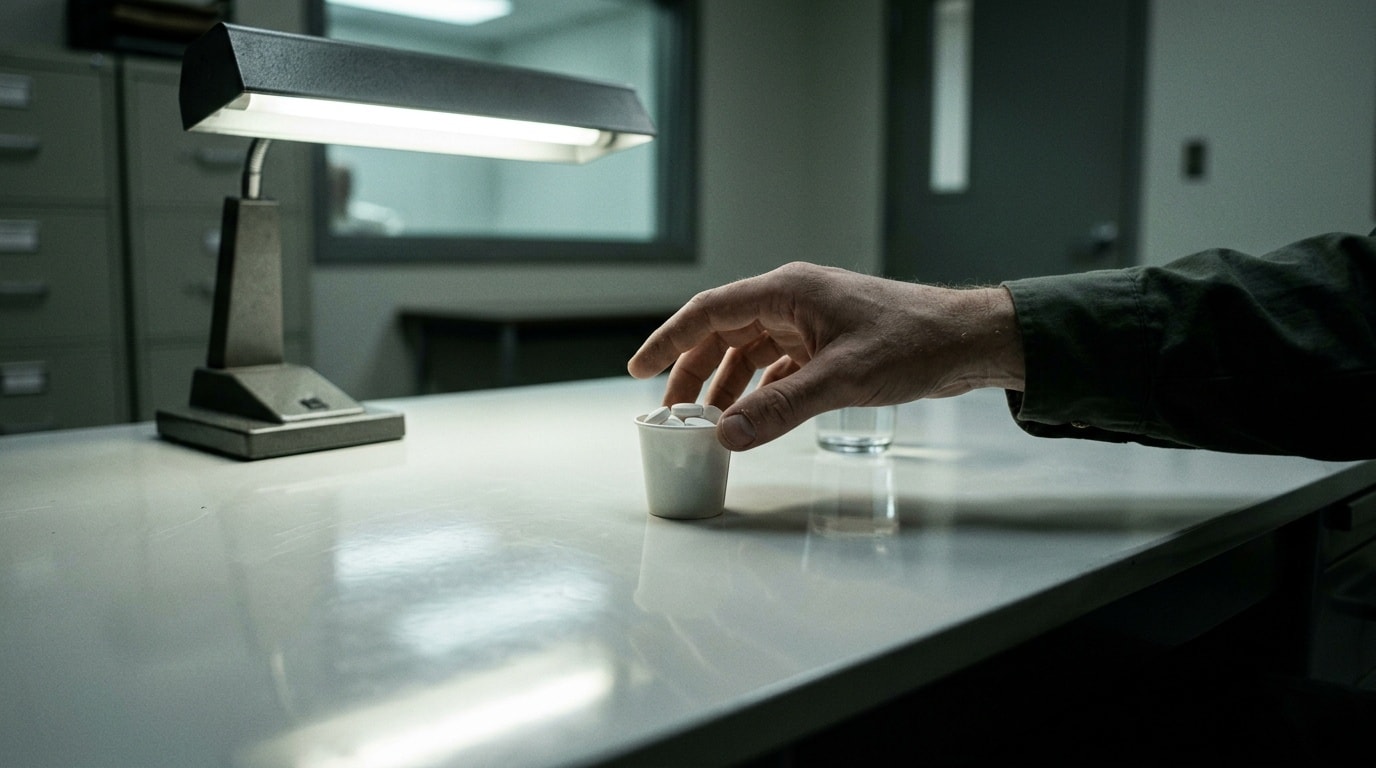
Mark's severance architecture is failing across three registers at once: neurologically, with bidirectional bleed between innie and outie cognition; behaviorally, with innie Mark exhibiting his outie's resignation while outie Mark absorbs decontextualized floor memories without alarm; and physically, with recurring coughing episodes managed by a daily pharmaceutical regimen that the show refuses to explain.
Drummond Calls Eagan 'Father' as Sacred Title
Mr.
Asal Is Running an Outside Operation Tonight
Asal is an outside operative running a structured covert action in which Mark's innie, not his outie, is the active participant, and the go or no-go decision she reserves for herself suggests execution is imminent.

Milchick Already Lost Faith at Lumon
Milchick is not drifting toward doubt about Lumon's ideology.
The Trojan Horse Lumon Sends Is Empty
Lumon's infiltration operations are not designed to gather intelligence or deliver ideology.
The Faceless Doctor Is Someone We Know
The Doctor's face is being hidden because the audience already knows it.
Burt Knew Exactly Who Showed Up
Burt's outie consciously identified Irving's innie as the erotic entanglement that ended his career at Lumon the moment Irving appeared at his door, and the dinner invitation was not sentiment but a deliberate attempt to reconstruct that relationship in the outie world beyond Lumon's reach.
Irving's Firing Activates His Outside Network
Outie Irving has been running a prepared outside operation the entire time his innie was on the severed floor, with the firing functioning as the trigger for a contingency already in place.