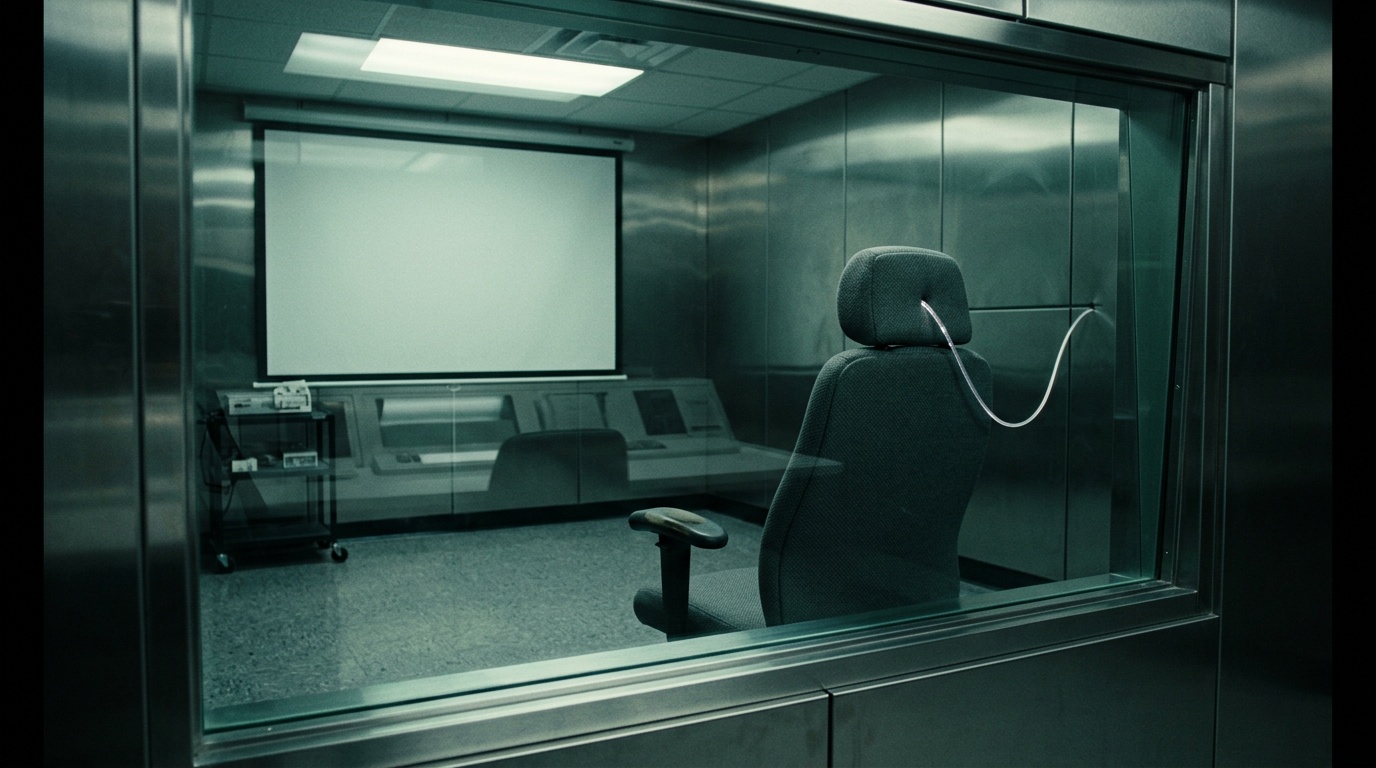
Gemma Is Still Conscious Inside Ms. Casey
THE ARGUMENT
Lumon did not erase Gemma Scout's consciousness through severance but suppressed and retained it because she performs a function no replacement can fulfill. Mark's grief was not an incidental condition Lumon accommodated but a structural requirement the system depended on to maintain her captivity. If Asal is correct, everything Lumon has done to Mark was built on ensuring he never crossed the distance between mourning and recognition.
How This Theory Works
Gemma Scout's consciousness was not erased by severance. It was suppressed and retained because Lumon requires it. Asal does not tell Mark that Ms. Casey is a surrogate or a copy. She tells him Gemma is still in there, framing it not as hope but as intelligence she already holds. That framing matters: it places Gemma's survival not in the category of possibility but of operational fact Lumon has been managing.
Asal further tells Mark that Gemma is essential to Lumon, which is the more pointed claim. Essential implies a function Lumon cannot perform without her specifically. A replacement body or a severed blank could serve procedural purposes without being irreplaceable. The word essential points toward something only the original Gemma can provide, whether that is neurological, psychological, or tied to her specific identity. Suppression and replacement produce different observable results, and the rote recitation Mark describes, facts delivered without recognition, looks like suppression: a surviving consciousness heavily conditioned rather than a personality that was simply cleared.
The most uncomfortable implication is that Mark's recruitment was never incidental to his grief. It was contingent on it. If Gemma's consciousness is intact and her function is essential, then her captivity is not a side effect of Lumon's operations but a structural requirement of them. Mark was not hired because he happened to be a grieving man who needed work. He was kept grieving because that grief is part of the architecture holding Gemma in place. The moment he stops mourning and starts recognizing, the mechanism fails. His perceptual flashes, the accelerating pressure Asal is applying to his chip, the hemorrhage risk she openly acknowledges: all of it converges on a system that was designed to hold only as long as Mark did not know what he was actually looking for. Lumon did not exploit his vulnerability. It required it.
Is this theory convincing?
Key Evidence
Asal confirms Gemma is still present
Asal explicitly tells Mark that Gemma is still in there, framing it not as a hope but as intelligence she already holds, which implies Gemma's consciousness was not destroyed by the severance procedure.
Gemma described as essential to Lumon
Asal tells Mark that Gemma is essential to Lumon, a word that distinguishes her from a replaceable body or blank subject and implies she is being used for a function only she can perform.
Gemma recites facts without recognition
Mark tells Asal that Gemma was just rattling off a bunch of facts and did not recognize him, behavior consistent with deep conditioning applied to a surviving consciousness rather than a personality that was simply wiped.
Mark's grief reframed as captivity
Asal reframes the stages of grief Mark references by telling him he might actually get to do those things, positioning his situation not as bereavement but as ongoing captivity with a recoverable outcome.
Hemorrhage risk from chip acceleration
Asal proposes flooding the chip through Mark's existing head wound to speed recovery of his Lumon memories, and acknowledges a slight chance of hemorrhage, suggesting the process of reconnecting Mark to Gemma carries physical danger proportional to its importance.
This theory was evaluated using Theory Atlas editorial standards, including evidence review, narrative fit, and competing interpretation analysis. Learn how Theory Atlas evaluates theories →
Other Theories for S2E06

Burt's Dinner Invitation Was a Lumon Trap
Burt's dinner invitation was a coordinated Lumon operation designed to clear Irving's home so that Drummond, a Lumon Elite operative, could photograph Irving's accumulated research.
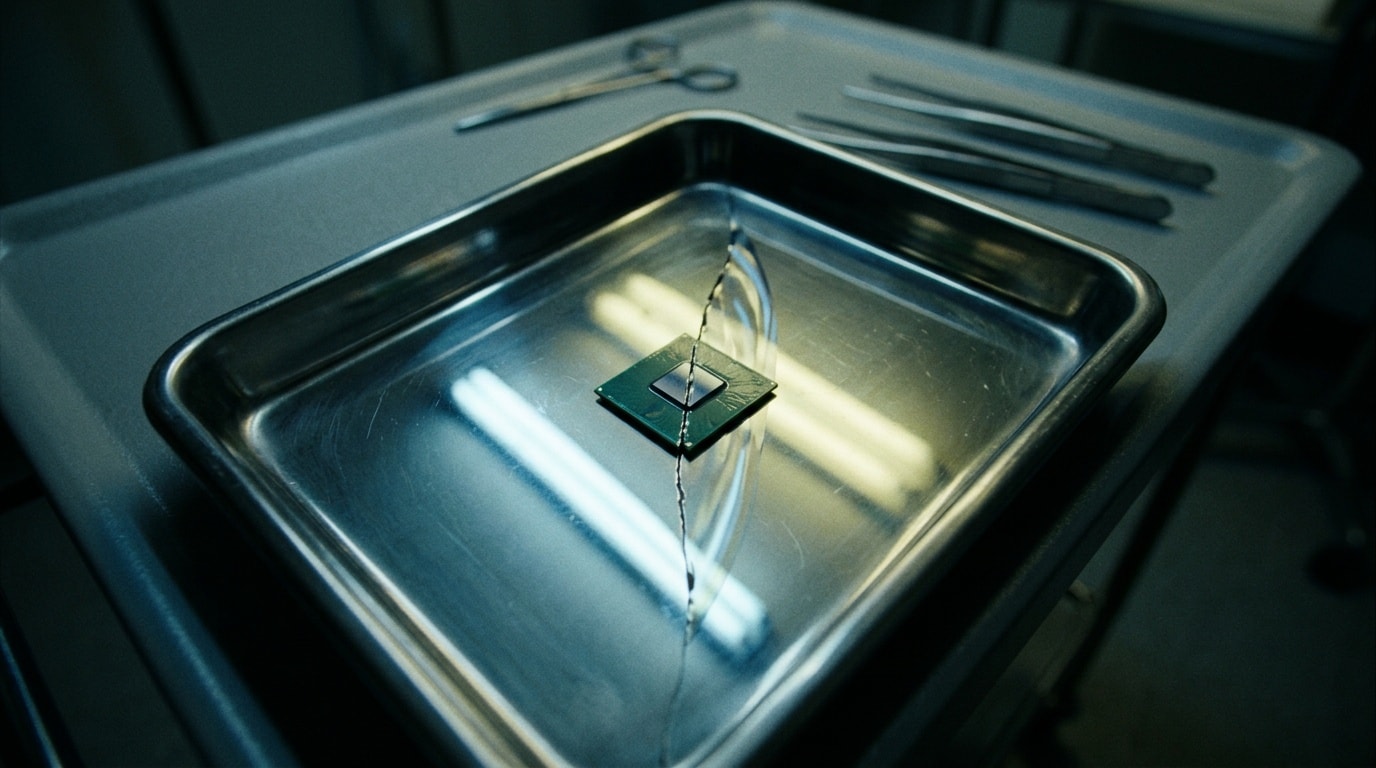
Mark's Severed Barrier Is Already Dissolving
Mark's severance barrier is already failing from within, producing real-time concurrent sensory bleed between his innie and outie experience that the chip was specifically designed to prevent.
Milchick Arrived Already Willing to Erase Himself
Milchick is not being broken by Lumon's performance review system.
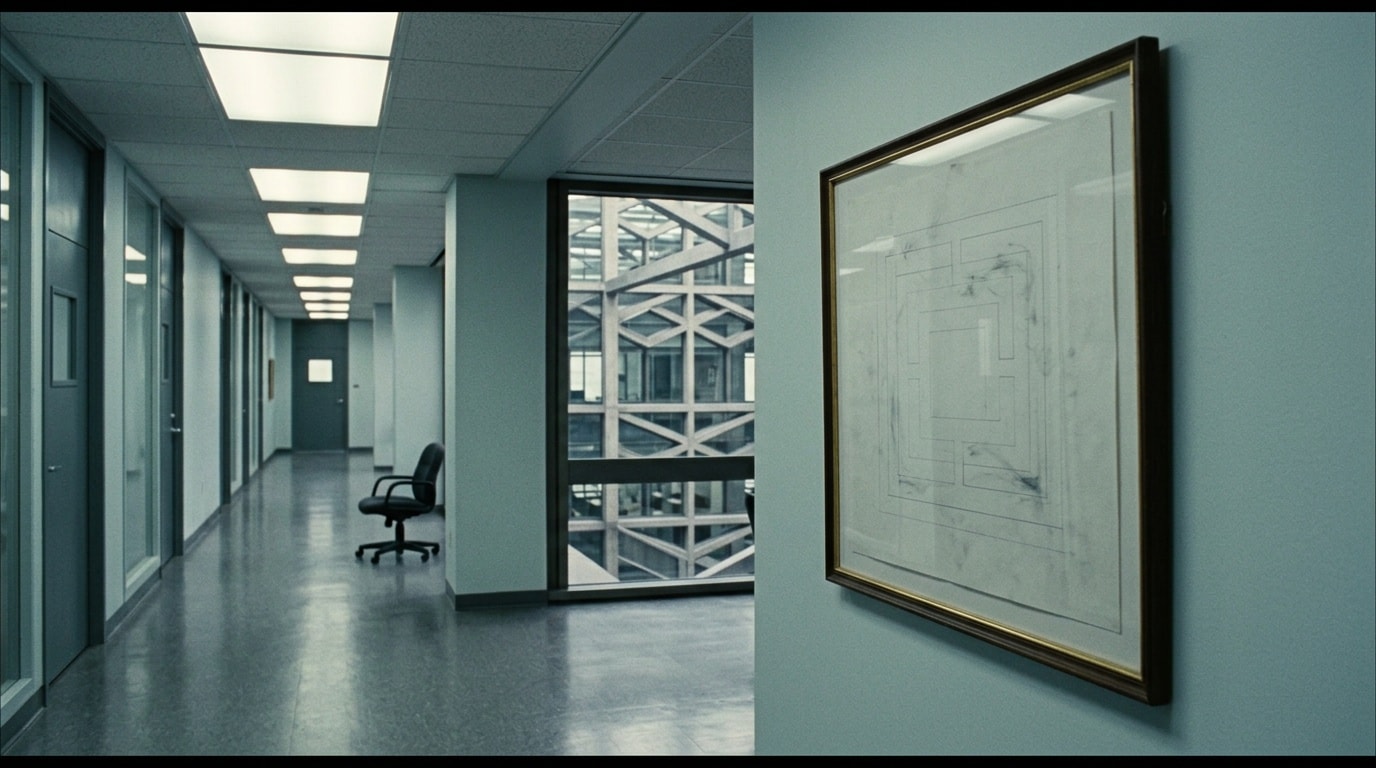
The Map Points Straight Down to Casey
Ms.

Burt Was Inside Lumon Before Severance Existed
Burt's association with Lumon predates the official severance program by at least eight years, a gap he refused to address when Irving raised it directly at the dinner table.

Helena Stole What Helly Built Back
Helena's retreat encounter with Mark was not an operational maneuver but an act of emotional acquisition, using Helly's body and identity to reach intimacy her position inside Lumon has made structurally unavailable.
The Plastic Room Is Not a Blind Spot
Mark and Helly's assumption that the plastic-sheeted room sits outside Lumon's surveillance grid has no structural basis, and the show's established pattern of monitored-with-tolerance spaces makes their belief in genuine privacy exactly the kind of mistake Lumon would want them to make.

Milchick Weaponizes Huang's Fellowship Against Her
Milchick is using Miss Huang's Wintertide fellowship as a punitive instrument activated by the specific humiliation of his performance review, not by any administrative necessity.