
Burt Severed to Buy His Own Innocence
THE ARGUMENT
Burt chose severance as a private act of conscience management, using the procedure to manufacture a version of himself clean enough to love and be loved. His innie's relationship with Irving is not a separate story from Burt's crimes but a direct product of them: innocence purchased with complicity, and then offered to someone who had no way to know what he was receiving. Severance, in Burt's case, is not a corporate instrument but a tool a person can turn against their own guilt.
How This Theory Works
Burt chose severance not because Lumon required it but because guilt had become unbearable and he wanted a version of himself that could not feel it. He had driven people to destinations he never asked about, and when that willful ignorance became insufficient insulation, he formalized it surgically. Severance gave him what avoidance could no longer provide: a self that was structurally incapable of knowing what the other self had done.
This reframes what severance can mean as a voluntary act. Every other severed employee appears to have been recruited, pressured, or deceived into the procedure. Burt presents a different model: someone who understood the complicity severance would create and selected it anyway, because guilt was the greater burden than splitting himself in two. His innie did not inherit Burt's crimes, but he did inherit the emotional life that grew in that manufactured innocence. Irving fell for a man who had been specifically engineered to be clean.
The hardest implication of Burt's admission is that his innie's love for Irving was the direct product of atrocity laundering. Burt's outie committed acts he will not name, then severed so that a sanitized version of himself could experience warmth without accountability. The innocent part that fell in love with Irving exists only because the guilty part created it as an escape hatch. What Irving felt on the severed floor was real to him, but what he was loving was a fiction Burt's outie constructed to avoid facing what he had done. Burt did not sever to protect his innie. He severed to protect himself from his innie ever being able to confront him.
Is this theory convincing?
Key Evidence
Burt's Explicit Severance Confession
Burt tells Irving directly that he severed because he liked the idea of being innocent again, wanting at least part of himself to feel clean after his complicity in Lumon's operations.
Driving Without Asking Questions
Burt admits he drove people places for Lumon and never asked what happened to them afterward, establishing the pattern of willful ignorance that severance extended and formalized.
Innocent Innie's Love for Irving
Burt states that his innocent part fell in love with Irving, directly linking the manufactured innocence of his innie to the romantic connection Irving experienced on the severed floor.
Severance as Self-Administered Absolution
Unlike other severed employees who appear recruited or pressured, Burt frames his severance as a voluntary act of conscience management, suggesting the procedure can function as self-directed guilt erasure.
Irving's Notes Naming Burt a Goon
Irving's research described Burt as a possible low-level enforcer for Lumon, and Burt does not deny the substance of this characterization, only the specific language used.
This theory was evaluated using Theory Atlas editorial standards, including evidence review, narrative fit, and competing interpretation analysis. Learn how Theory Atlas evaluates theories →
Other Theories for S2E09

Outie Dylan's Threat Erases His Innie's Only Life
Outie Dylan's resignation is an act of self-protective erasure driven by his inability to tolerate proof of his own deterioration, and the severance system is designed to let him commit it without experiencing it as harm to anyone.

Dylan Chose Oblivion Over an Empty Existence
Dylan's innie resigned not because his outie forced him to but because he had privately concluded that existence without Gretchen was not worth sustaining, making his departure the first act of deliberate self-termination an innie has chosen rather than had imposed.
Burt Was the Driver Who Let Irving Go
Burt has been functioning as a Lumon operative whose role is to transport people to outcomes he does not acknowledge, and his decision to put Irving on a train was not a defection but a managed exit Lumon may have designed from the start.
Smashing the Toy Destroys Miss Huang's Childhood
The ring toss ritual is not an isolated moment of cruelty.
Helly Knows She Is Helena Eagan
Helly has already concluded she is Helena Eagan and has been performing innie ignorance while holding that knowledge.

Lumon Used Gretchen to Kill Irving's Message
Lumon deployed Dylan's relationship with Gretchen as a precision instrument to neutralize Irving's map before Dylan could act on it.
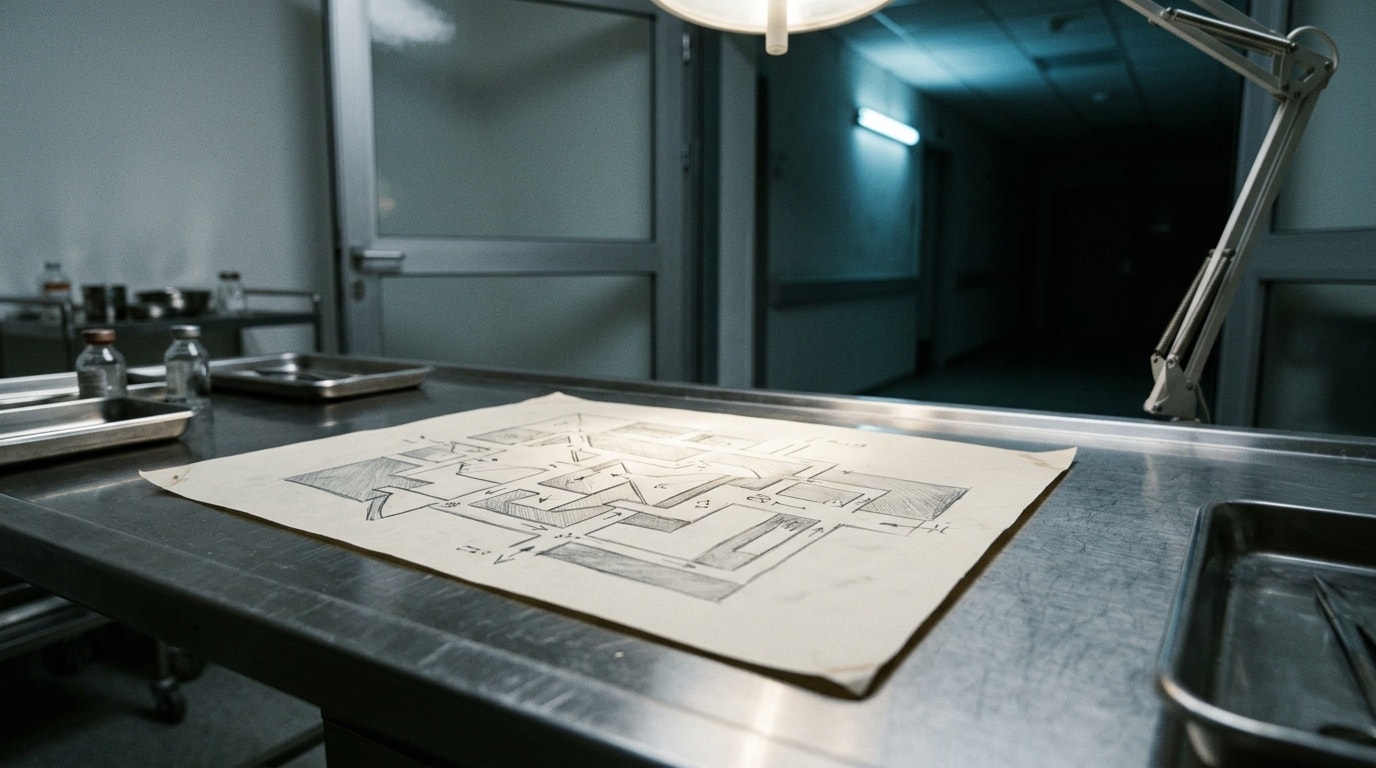
Helly Inherits Irving's Secret Investigation
Helly is not preserving Irving's map as a memorial gesture.
Burt Defied Lumon to Free Irving
Burt defied a Lumon directive by converting an assignment against Irving into a one-way exile, and he structured the departure to eliminate his own ability to betray Irving's location.