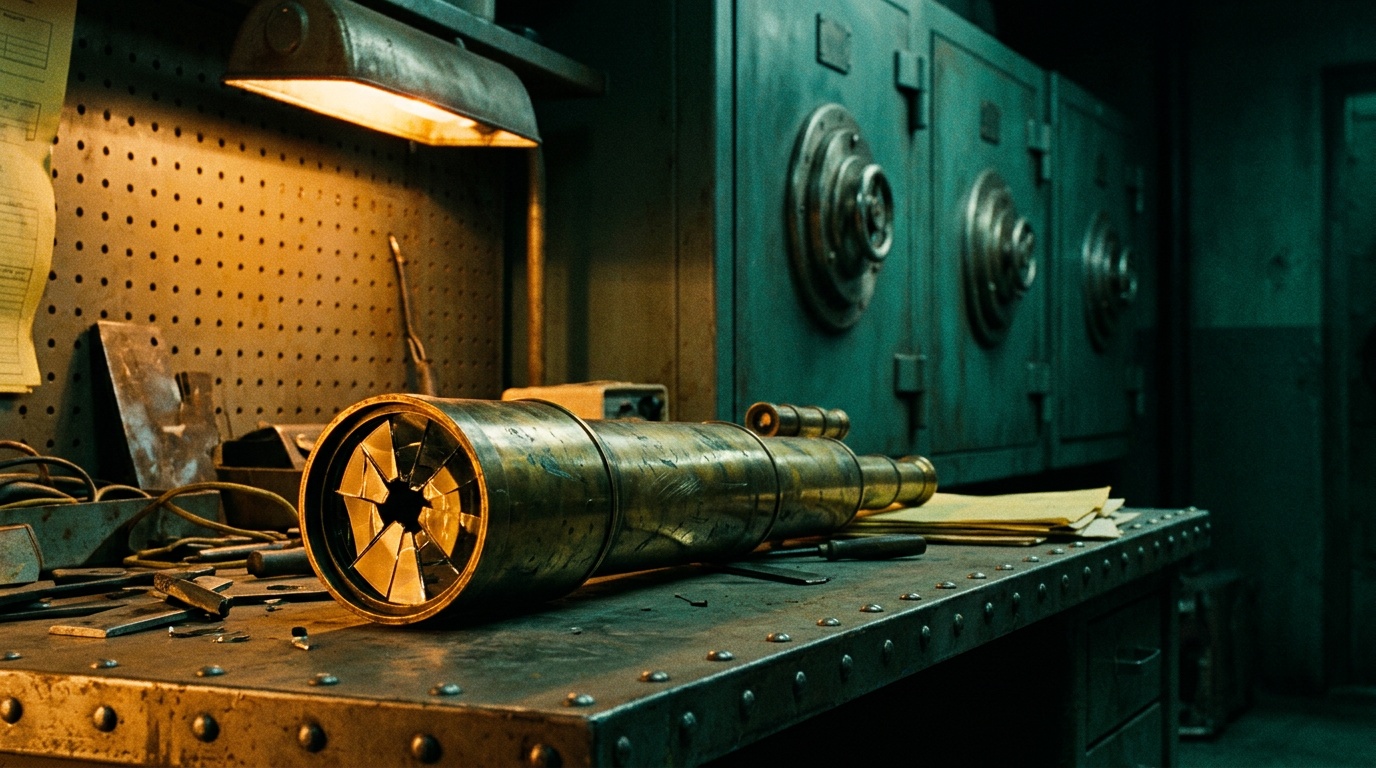
The Ban on Lenses Hides the Truth
THE ARGUMENT
The silo's prohibition on magnification technology is a designed suppression mechanism embedded at the point of original construction, not a rule that evolved in response to a threat. Judicial destroys rather than confiscates because the object's survival is itself the danger, and its classification alongside data drives containing suppressed information about the outside world reveals that authorities already know what magnified observation would expose. The ban does not prevent harm from a specific use; it prevents a specific population from reaching a specific conclusion about the world they were sealed inside.
How This Theory Works
A ban enforced with destruction rather than confiscation, applied equally to surgical tools and suppressed data drives, is not a safety regulation. It is an information architecture built into the silo's original design. Judicial does not confiscate Hanna's device because confiscation would allow the object to survive, be studied, be replicated. The smashing is the policy.
Hanna's purpose for the device sharpens the stakes. She built a magnifier to examine a rabbit's heart, hoping to develop surgical techniques she could apply to people. The authorities' response makes no distinction between benign scientific inquiry and subversive investigation. That refusal to distinguish between uses implies the ban is not about the harm any specific use might cause but about the capacity for magnified observation itself. A system that classifies life-saving cardiac research as a red-level threat is not protecting its residents. It is protecting something from its residents.
The characters inside the silo cannot explain the rule. They respect it or fear it, but neither Hanna nor those around her can articulate why it exists. That gap between enforcement and justification is where the theory lives. A ban with no publicly stated rationale, enforced with destruction rather than confiscation, points toward a secret the authorities cannot afford to let residents accidentally discover.
The classification confirms the threat model. Judicial's briefing places magnification devices in the same threat category as the hard drive containing suppressed information about the world outside. Lenses and forbidden data are understood by Judicial to pose the same kind of danger, which means the authorities already know what a sufficiently magnified view might show. The rule exists not to prevent a crime but to prevent a conclusion. And the enforcement has been consistent across decades, reaching back to Juliette's childhood, which means whatever a lens might reveal has been structurally true for that entire span of time. The silo was not built with a secret that later needed hiding. It was built with the hiding already designed in, which means the people who drew the original plans knew exactly what they were concealing and from whom, and they made a deliberate choice about which lives were worth protecting and which were only worth managing.
Is this theory convincing?
Key Evidence
Judicial Smashes the Device
When Hanna surrenders her unsanctioned magnification device during the Judicial raid, the agent does not confiscate it but destroys it on the spot in front of the family.
No Explanation for the Rule
Characters in the episode acknowledge that magnification beyond a certain point is illegal but cannot explain the rationale behind the prohibition, suggesting the reason is deliberately withheld.
Medical Use Still Banned
Hanna's magnifier was built for cardiac surgery on a rabbit, with the intent to develop life-saving techniques for people in the silo, yet Judicial treats this humanitarian application as a red-level threat.
Raid Targeting Unsanctioned Relics
Judicial's briefing frames the search as targeting unsanctioned Relics, placing magnification technology in the same threat category as the hard drive Juliette is carrying.
Childhood Memory of Judicial Search
Juliette's flashback to watching Judicial tear apart her family's quarters as a child establishes that this enforcement has been consistent across decades, suggesting institutional rather than incidental suppression.
This theory was evaluated using Theory Atlas editorial standards, including evidence review, narrative fit, and competing interpretation analysis. Learn how Theory Atlas evaluates theories →
Other Theories for S1E08
Bernard and Sims Share the Same Shadow
IT and Judicial are a single fused apparatus sharing real-time intelligence and pre-assigning institutional roles before any enforcement action begins, meaning the procedural structures citizens might appeal to have never functioned as checks at all.
Lukas Knows: From Witness to Whistleblower
Lukas Kyle will be forced into active resistance not by courage but by the authorities' own miscalculation: the moment they threaten his mother to ensure his silence, they remove the only condition keeping him passive.
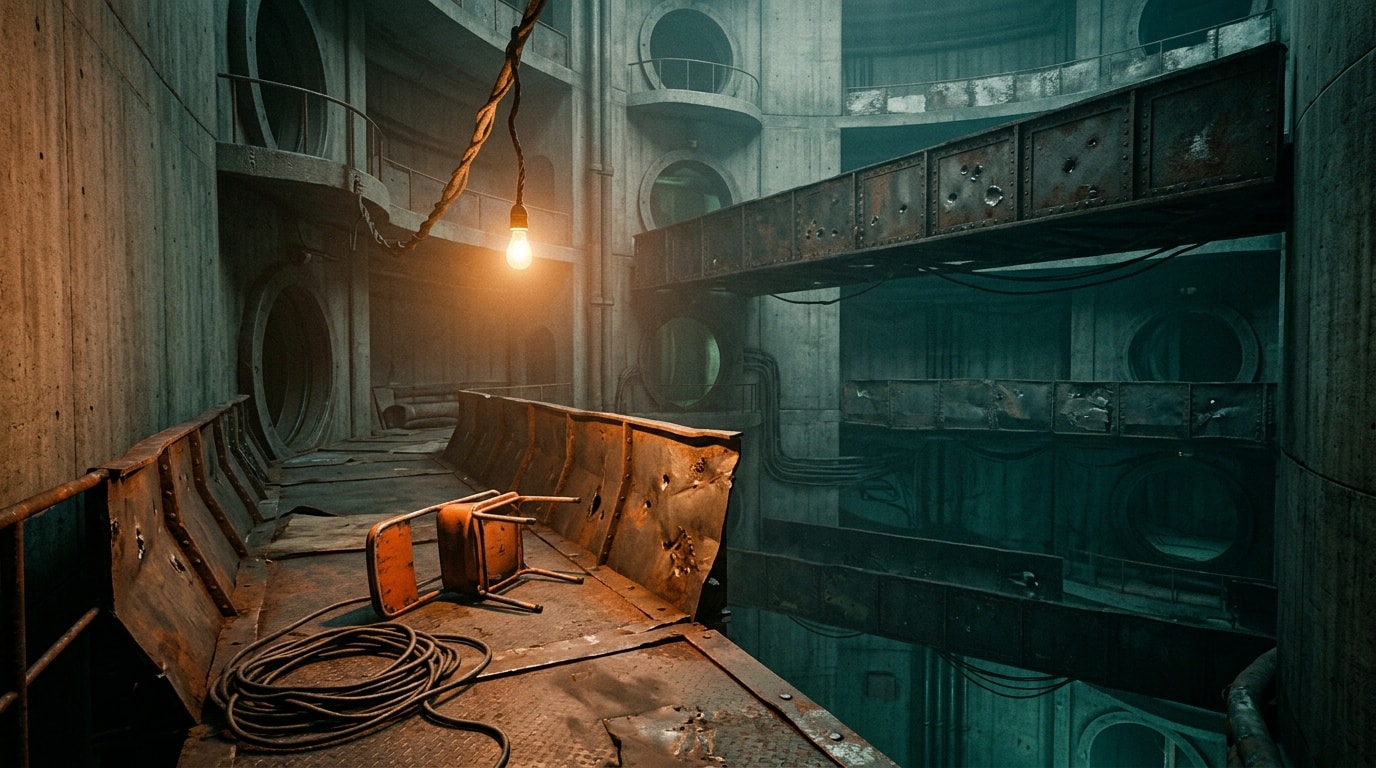
Juliette Lands on an Interior Bridge
Juliette survives her stairwell vault by landing on one of the bridge platforms connecting the silo's staircase to its outer rings, a survival built into the production design rather than inserted as a convenience.
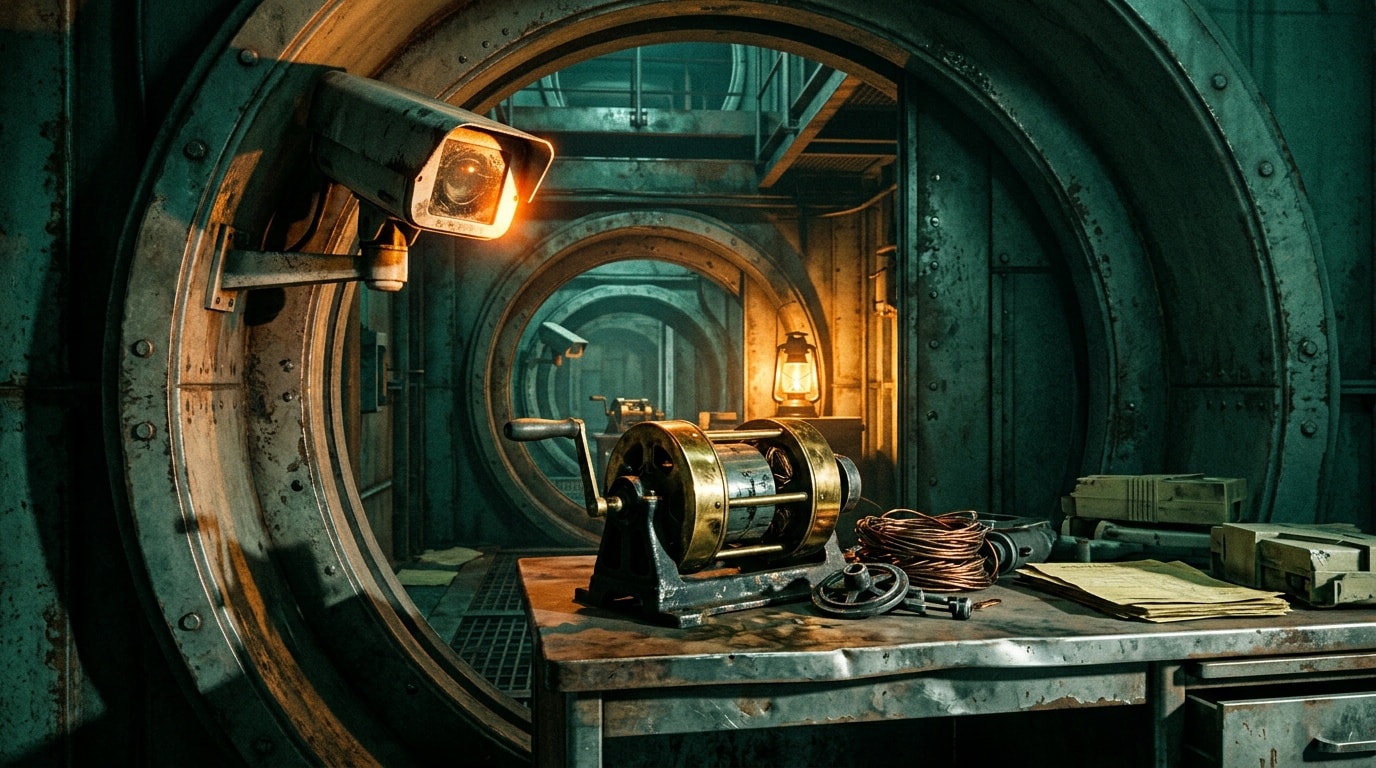
Juliette's Camera Revelation Seeds Future Uprising
Lukas will be the one to trigger collective uprising, not Juliette, because Juliette transferred rebellion-grade knowledge to someone the surveillance system had no reason to monitor before it was too late to stop the transfer.