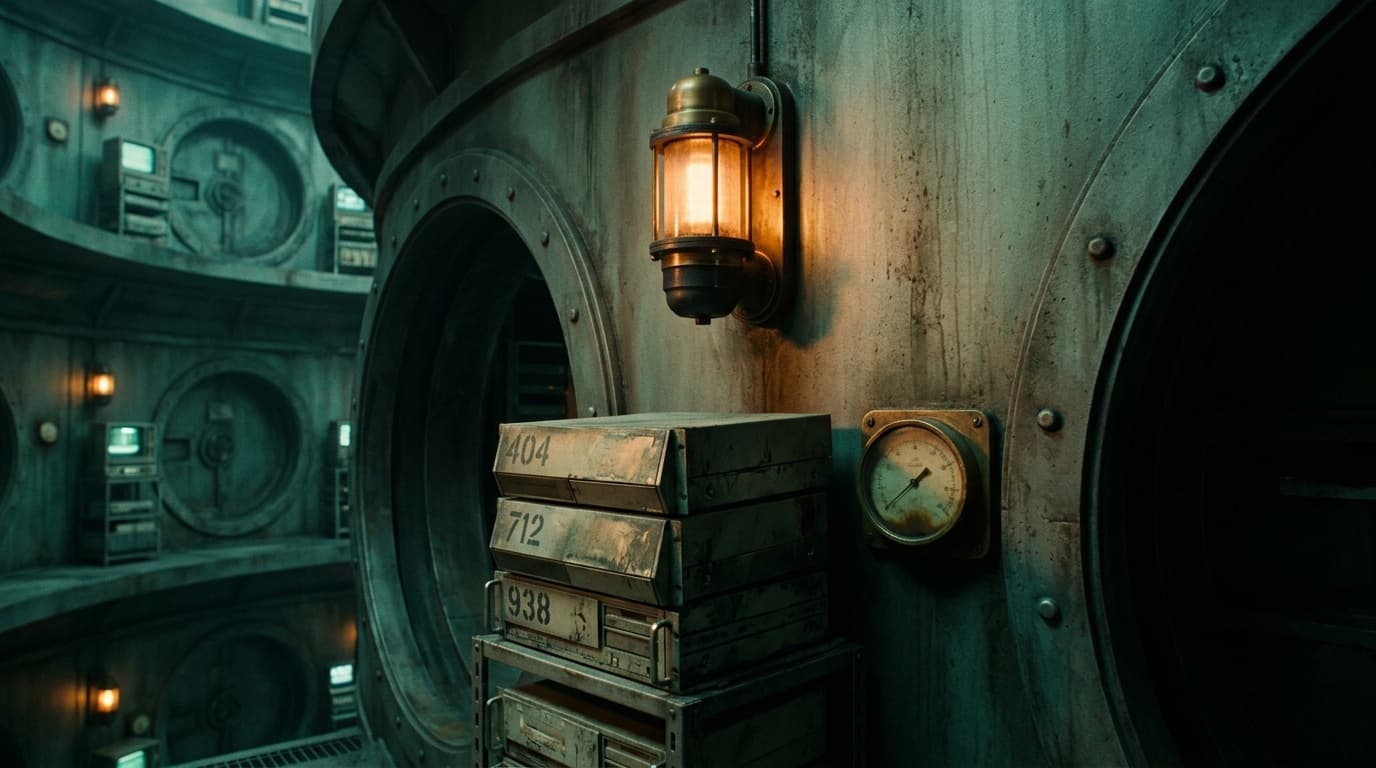
Number 18 Marks a Larger Hidden Network
Plausibility Score
(?)Convinced
(?)#874
of 1000 theories
Theory Ranking
(?)READER VERDICT
Is this theory convincing?
Trend builds after 10 votes.
Be among the first to weigh in.
THEORY ASSESSMENT
The episode actively and repeatedly foregrounds the number 18 as a shared identifier across Bernard's device and the hard drive, which supports the theory's core premise, but the specific interpretation that it designates a silo within a larger network requires inference the episode does not directly confirm.
STORY CONTEXT
Fifty silos on that screen. Are they neighbors, rivals, or part of a synchronized experiment? Theories here cover inter-silo communication, shared oversight, and what happens when one goes dark.
ACTIVE SIGNALS
This theory ranks among the most-contested in the Theory Atlas catalog — a grounded competing reading meaningfully challenges the dominant interpretation.
WHY THIS MATTERS
If 18 designates a silo inside a managed network, then the inhabitants' belief in their own singular survival is a constructed fiction, and Bernard's authority is not his own but delegated from a system designed to keep them contained. The control structure they live under is not leadership. It is middle management.
ALTERNATE INTERPRETATION
The tracker reading treats the device as a surveillance tool tied specifically to the hard drive, meaning 18 is an artifact catalog number rather than a silo designation. Under this interpretation, the flash alerts Bernard that a specific dangerous relic has been activated or accessed, with no necessary implication of other silos existing. This reading fits the episode's mechanics cleanly and is the more conservative of the two. What it cannot resolve is why Bernard monitors the device personally rather than through standard administrative channels, or why the hard drive Wilkins died protecting carries the same number as a tool Bernard treats as private. The tracker reading explains the search. It does not explain the device.
Adjacent Reading — Not a Competing Theory
Other Theories for S1E09
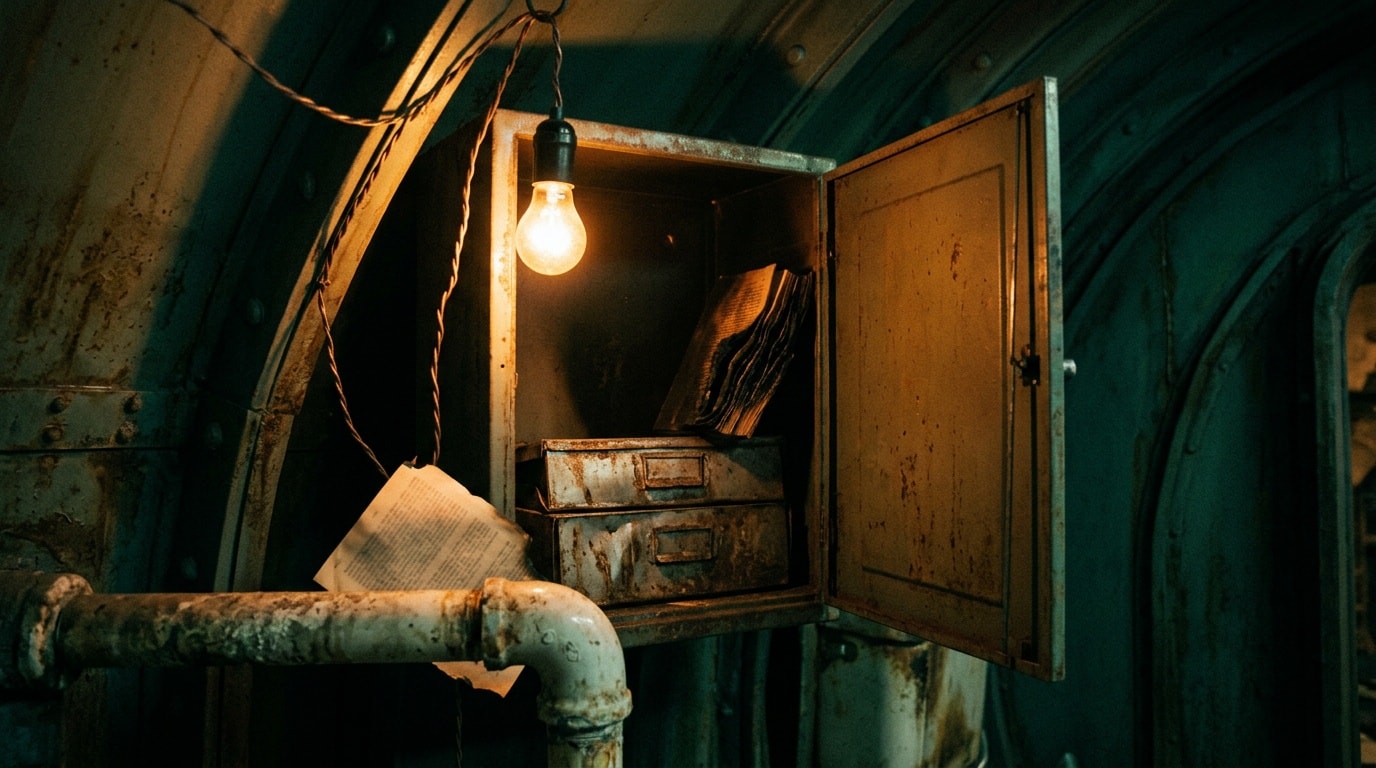
Billings Burns the Book, Keeps the Truth
Billings burns the Georgia book to perform institutional compliance while tearing out and retaining a single page -- an act that reveals he has already concluded the institution does not deserve to know everything he knows.
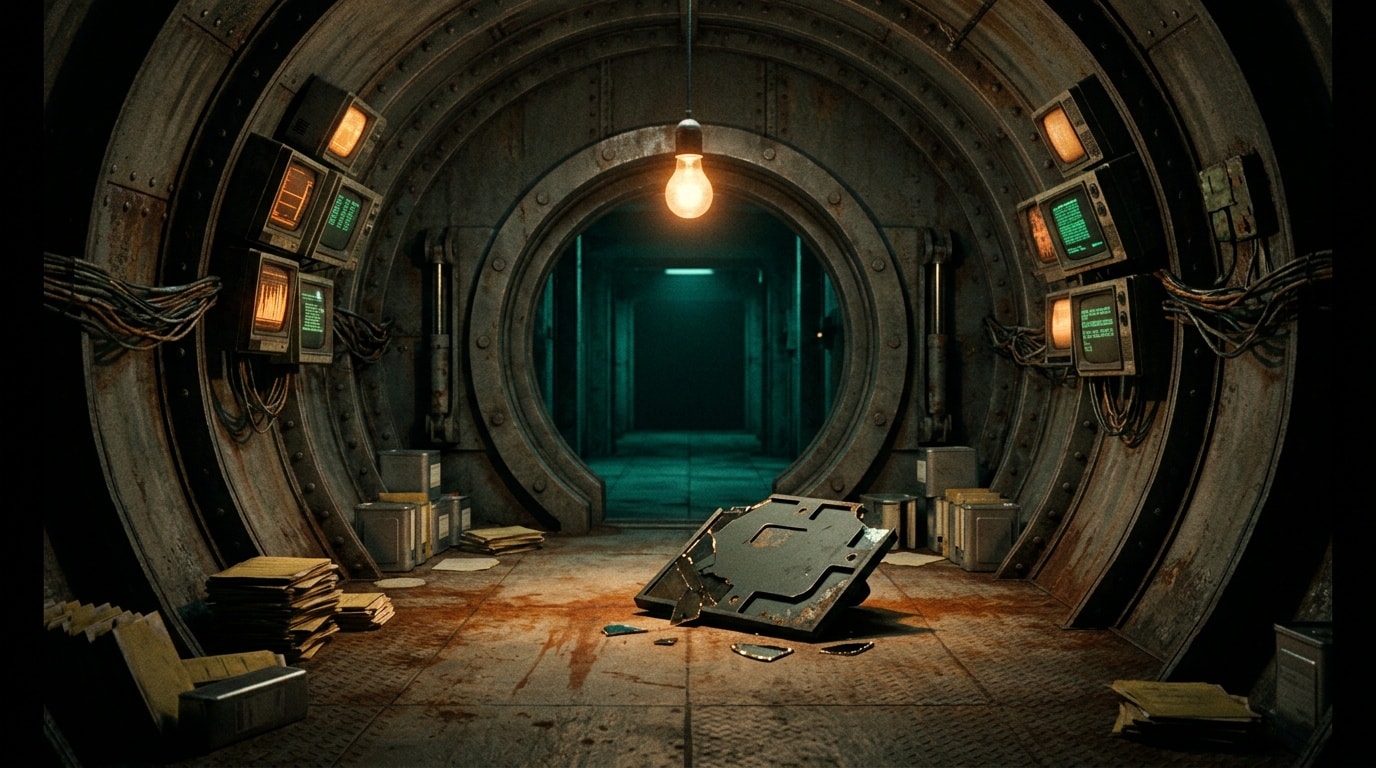
The Mirror That Watched Back
Someone installed a two-way mirror in Juliette's apartment without her knowledge, and the missing vent cover is the specific detail that places the modification outside her own doing, because an occupant running her own surveillance operation has no reason to conceal construction work from herself.
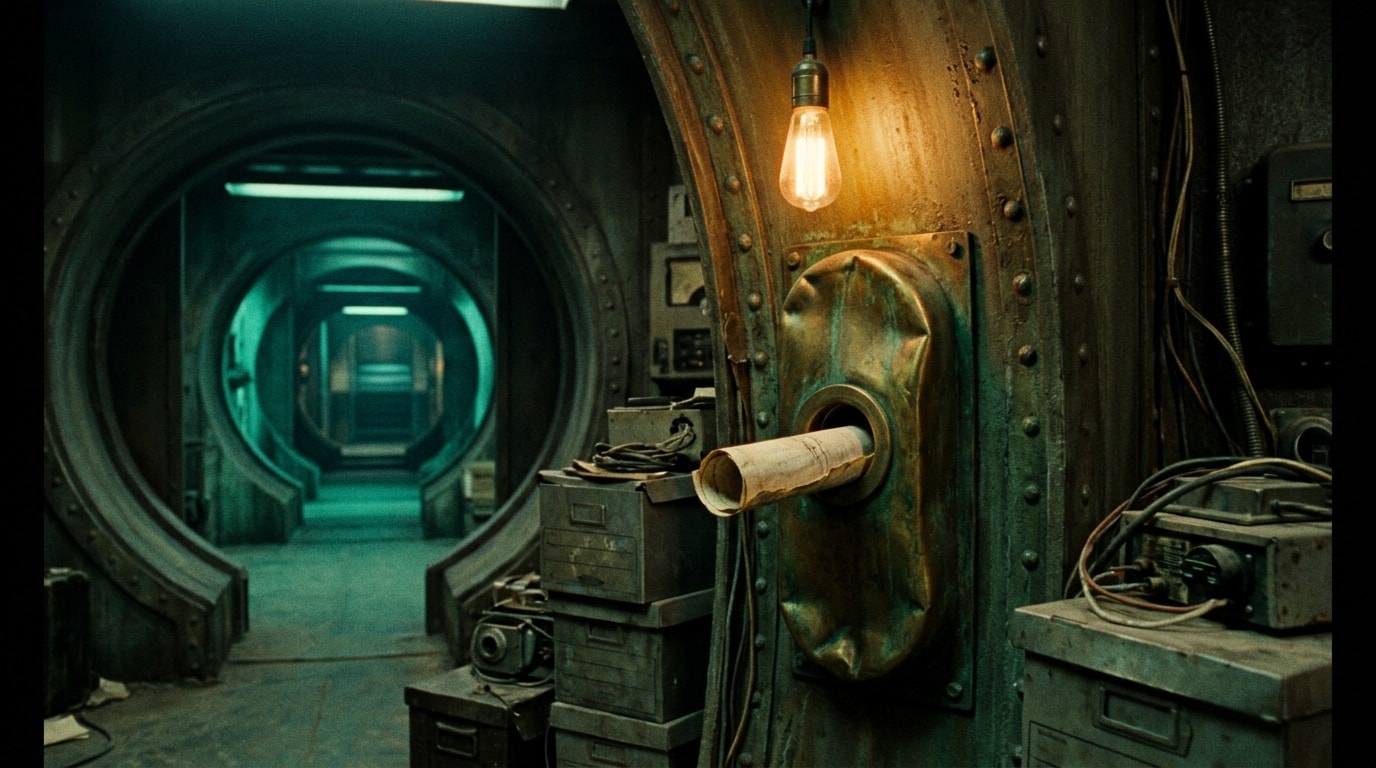
The Sims Family's Quiet Play for Power
The Sims family is running a dual-track survival strategy premised on Bernard Holland's removal, not his continuation.