
Bernard Knows More About Silo 17
THE ARGUMENT
Bernard's knowledge of Silo 17 is sourced from a covert inter-silo intelligence channel that has operated outside the visible administrative structure for at least 25 years, and his public dismissal of Silo 17 as defunct is an active suppression protocol rather than an honest assessment. The specificity of his claim, anchored to a personal timestamp rather than any institutional report, reveals that this channel is ongoing and that Silo 17 remains a managed subject within it. His administrative authority is not the basis of his intelligence function; it is the cover story for it.
How This Theory Works
Bernard's administrative authority is not the source of his knowledge about Silo 17. It is the cover for it.
The tell is in the precision. When Bernard anchors Silo 17's collapse to a personal timestamp rather than an institutional report, he is using the language of someone who was paying attention at a specific moment and has carried that certainty ever since. That is not how you speak about something you learned secondhand from a status filing. Institutional reports on silo-to-silo status do not appear anywhere in the visible administrative structure. Bernard's certainty requires a different source.
The timestamp itself sharpens the argument. Meadows left the shadow role roughly 25 years ago, which means Bernard is placing Silo 17's collapse at least that far back. A silo administrator holding confident, detailed knowledge about another silo's internal collapse over a 25-year window implies access to a channel that has been running continuously, quietly, and outside any structure that would be visible to the people he governs.
What he does with that knowledge is equally revealing. He publicly frames Silo 17 as defunct and irrelevant, actively shaping what Meadows and others expect Juliette to find. If he genuinely believed the silo was inert and posed no complications, there would be no reason to manage the framing at all. The dismissal is deliberate. He is not describing Silo 17 so much as closing off the conversation about it.
This is where the cross-purposes conflict becomes structurally ironic. Bernard and Meadows are not operating in opposition so much as they are operating on entirely different maps. Meadows is making decisions about Juliette based on the picture of Silo 17 that Bernard has supplied to her: defunct, irrelevant, not worth pursuing. Bernard is supplying that picture precisely because he knows it to be incomplete. The information asymmetry is not incidental. It is the mechanism. Meadows cannot question the picture because the picture is the only thing she has been given, and Bernard's position as the source of authoritative information inside the silo means there is no institutional pathway through which she could obtain a competing account. The architecture of the command structure, the very chain that makes Bernard's assessments credible to Meadows, is what makes it impossible for her to detect that she is being managed. They are not working at cross-purposes in a way either of them can see, because the institution has made Bernard's knowledge look like institutional knowledge rather than something he holds privately and selectively shares.
These details point toward a specific unconfirmed claim: Bernard has a long-running, covert channel of information about the broader silo network, and Silo 17 is a live subject within it. His certainty about its history is not bureaucratic memory. It is intelligence. Bernard's administrative role is downstream of that intelligence function rather than independent from it. He is not head of IT because the position suits his skills. He occupies it because it provides the most defensible cover for the one function he has actually been performing for decades: controlling what the people inside this silo know about every silo, including their own.
Is this theory convincing?
Key Evidence
Bernard's Precise Death Timeline Claim
Bernard tells Meadows that Silo 17 has been dead since before he made her his shadow, anchoring the claim to a personal reference point rather than general institutional knowledge.
Meadows Shadow Role as Timestamp
Because Meadows quit as Bernard's shadow approximately 25 years ago, his statement places Silo 17's collapse at least that far back, implying he has held this specific knowledge for decades.
Bernard Frames Silo 17 as Defunct
Bernard describes Silo 17 as defunct to others, actively shaping their expectations about what Juliette might encounter there, even as his own language suggests he knows its full history.
Knowledge Beyond Normal Command Structure
The specificity and confidence of Bernard's claims about another silo's internal history suggest access to information channels that would not be available through standard administrative reporting.
Dismissal Serving a Control Function
Bernard's insistence that Silo 17 is empty and irrelevant functions to discourage anyone from taking Juliette's disappearance there seriously, which aligns with a pattern of information management throughout his tenure.
This theory was evaluated using Theory Atlas editorial standards, including evidence review, narrative fit, and competing interpretation analysis. Learn how Theory Atlas evaluates theories →
Other Theories for S2E03

Meadows Already Knew Juliette Never Volunteered
Meadows' complicity in Juliette's death was present before any investigation concluded, revealed by her use of procedural questioning as a tool to map others' suspicions rather than to find facts.

One Walk Outside Ignites Silo 18
The rebellion in Silo 18 is organized around a coerced expulsion that its own authorities have already documented as such, meaning the people risking their lives under Juliette's name are fighting for a story that could be dismantled by a single official disclosure.
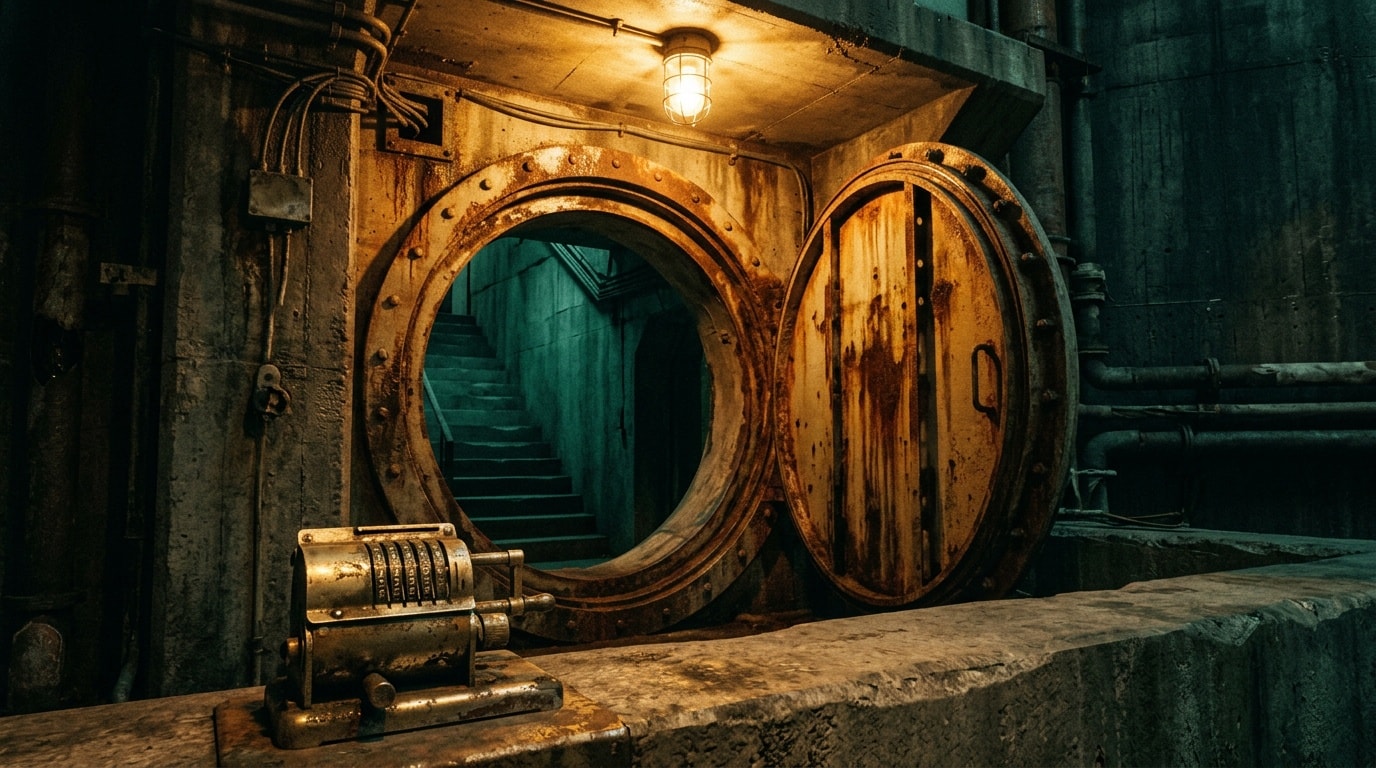
History Repeating: Silo 18 Mirrors Silo 17
The escalation sequence running through Silo 18 is a structural mechanism the silo system uses to process and eliminate compromised populations, not a failure of authority to maintain order.

Meadows' Home Videos Hide Pre-Silo Secrets
Meadows is a generational custodian of suppressed pre-silo history, holding home videos with timestamps that predate the silo civilization and that were preserved through deliberate inheritance rather than institutional assignment.

The Poison Outside Is Deliberately Deployed
The toxic atmosphere outside the silos is a controllable mechanism deployed as the system's outermost enforcement layer, not a fixed environmental condition the silos passively shelter behind.