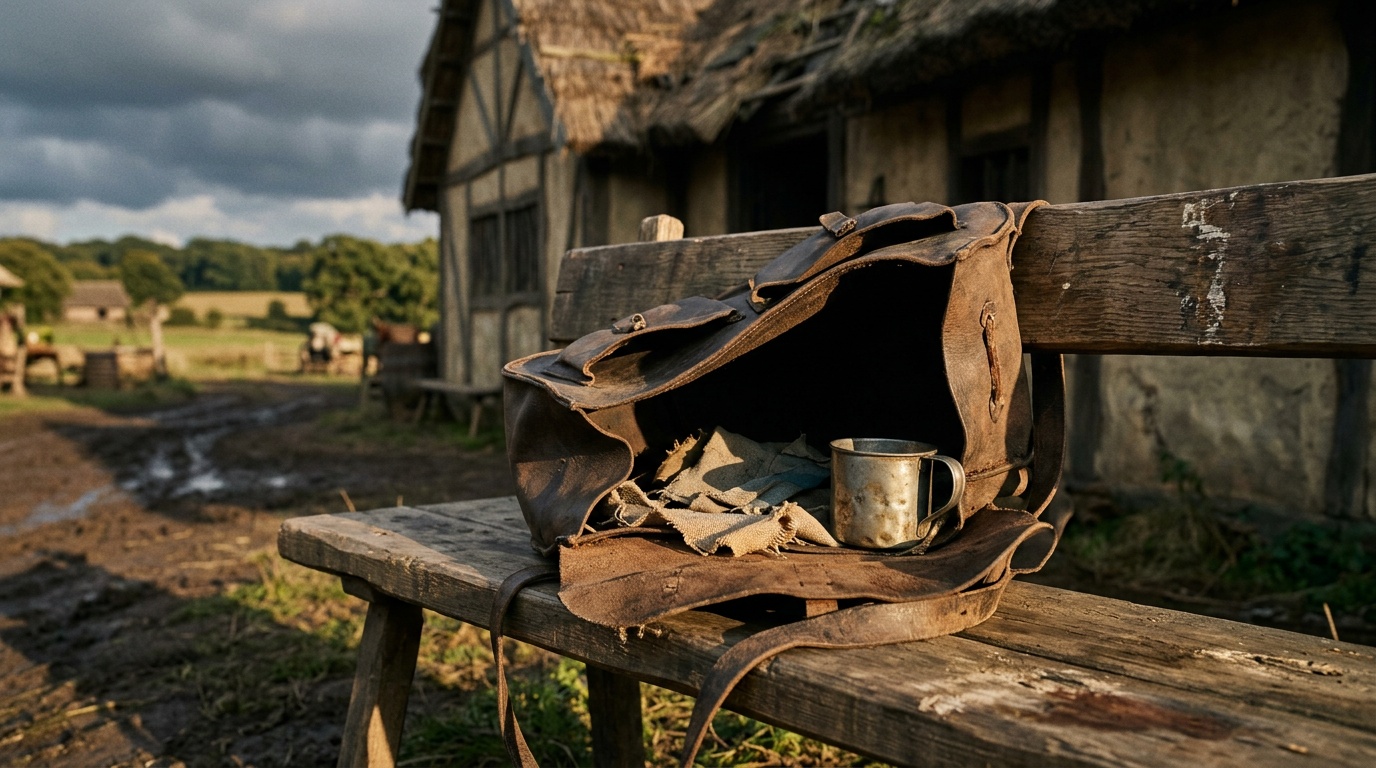
Honoring Arlan and Erasing Him Are the Same Act
THE ARGUMENT
Dunk is not grieving Ser Arlan so much as constructing him: converting a drunken hedge drifter whom every lord he served has already forgotten into a model of quiet chivalry, because that construction is the only foundation Dunk's claim to knighthood can stand on. But the show's structural argument runs deeper than psychology. The nobility has no mechanism for remembering men without houses or heraldry, which means Dunk has been conscripted as Arlan's sole surviving record whether he wants the role or not. The theory's sharpest claim is that these two operations, honoring the dead and replacing them with a more useful fiction, are not in tension below a certain station. They are the same act.
How This Theory Works
The flashbacks do not illustrate Dunk's narration. They contradict it. When Dunk speaks of Arlan, he produces a man of quiet dignity, a mentor whose example is worth following into a world that will never fully receive him. What the visual record shows is a man who slept under hedges, drank heavily, chased women, and died of an infected arm wound in the rain on a road to a tournament he would never reach. The show places this footage alongside Dunk's spoken account as counterpoint, not confirmation. The visual evidence wins every time: not because the narrative is cruel to Dunk, but because it is honest about what the footage contains.
The great lords' collective amnesia is the world's verdict on the man Dunk is eulogizing, and the episode frames it as exactly that. Florent, Hayford, Leo Longthorn Tyrell: every house Arlan bled for at Redgrass Field and in a lifetime of hedge-road service returns a blank when the name is offered. This is not a plot obstacle. It is a structural diagnosis. The nobility does not forget hedge knights by accident. It forgets them because it is not built to remember them: no house obligated to carry the name, no heraldry anyone must maintain, no written record institutionally required. Baelor Breakspear's ability to place Arlan is a character trait, an act of personal attention that marks Baelor as exceptional, and the show uses that exceptionalism to prove the rule. Baelor remembers, and what he remembers is a correction. Four lances, then unhorsed. He does not confirm a legend. He deflates one, gently, while remaining kind, which is the sharpest possible version of the episode's argument: even the one lord who bothered to notice Arlan noticed less than Arlan led Dunk to believe.
Dunk can apply clear-eyed judgment when the subject is himself. When Egg presses him, he acknowledges without much resistance that the lords are his betters in wealth, power, and training. He knows where he stands in the hierarchy. The refusal to apply equivalent judgment to Arlan is therefore not a cognitive failure but an architectural one. Arlan is the foundation of Dunk's claim to knighthood. If Arlan was a forgotten hedge drinker who died poorly in the mud after a lifetime of service no one will record, then the model Dunk is following was never real, and Dunk himself becomes knighthood's most credulous victim rather than its next exemplar. The show places all the contradicting evidence in front of him and then shows him look away. What it has not resolved is whether he looks away because he cannot see it or because, at some level, he already has and has decided that the construction is necessary anyway.
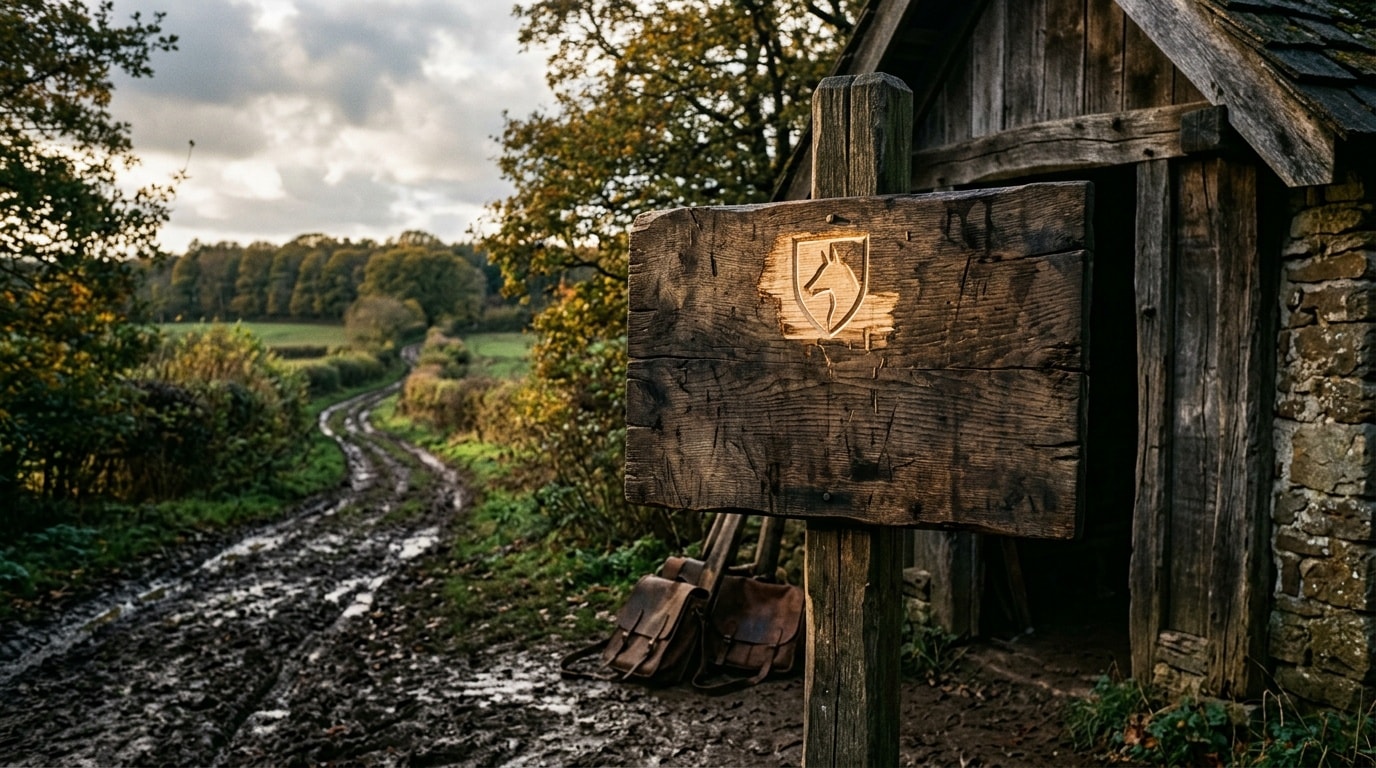
Egg's challenge at the camp, whether Arlan was truly a great knight if no one remembers him, is not a philosophical puzzle. It is the moment the structural argument becomes explicit. Dunk has no answer that survives the evidence, and the episode does not give him one. What it gives him instead is the order to repaint the shield. He cannot legally carry Arlan's arms. The old man's symbol must go, and what replaces it will be Dunk's own. But every deed Dunk performs under those new arms will have been made possible by Arlan, and none of that credit will follow the name. The shield's repainting is the visual confirmation of the theory's core mechanism: the student carries the master forward by covering him over.
This is where the psychological and structural layers become inseparable. Dunk needs a mythologized Arlan because the real one cannot support the weight of his inheritance. The nobility's structural amnesia means Dunk is Arlan's sole surviving record regardless of whether he chose the role. And the version of Arlan he carries, already reshaped by grief, by need, by the gap between flashback and narration, is not preservation. It is supersession. What Dunk will transmit through his conduct at Ashford and beyond is not Arlan's actual life but the version of Arlan that Dunk required him to have. The real man recedes permanently behind the proxy. The show presents this not as a personal moral failure but as the standard operation of memory below the threshold of written history: honoring the dead and erasing them are, beneath a certain station, the same act, performed simultaneously, by the only person left who is still paying attention.
Is this theory convincing?
Key Evidence
Flashback Contradicts Dunk's Narration
Dunk narrates Arlan as a great knight while the flashback simultaneously shows Arlan as a slovenly wandering soldier who slept under hedges, drank, and chased women, creating a direct visual contradiction of the spoken account.
No Lord Remembers Arlan
Every great lord Arlan served, including Florent, Hayford, and Leo Longthorn Tyrell, fails to remember him, which the episode frames as the world's collective assessment of his actual significance.
Baelor Corrects the Lance Count
Baelor confirms jousting against Arlan but specifies he broke four lances before being unhorsed, implicitly correcting whatever inflated version of the story Dunk had received from Arlan himself.
Dunk Admits Lords Are His Betters
When Egg challenges him, Dunk acknowledges that the lords are his betters in wealth, power, and training, showing he can apply clear-eyed judgment to his own position but refuses to apply it to Arlan.
Arlan Dies Without a Champion's End
Arlan dies from an infected wound worsened by rain on the road to Ashford, a death that contradicts every element of the heroic knightly death Dunk's romanticized version of him would have warranted.
Dunk's Doubt About His Own Prospects
Dunk wonders internally whether great knights can come from humble origins like his own, noting that Arlan lived nearly sixty years without ever becoming a champion, which links his idealization of Arlan directly to his anxiety about his own future.
This theory was evaluated using Theory Atlas editorial standards, including evidence review, narrative fit, and competing interpretation analysis. Learn how Theory Atlas evaluates theories →
Other Theories for S1E02
Two Princes, One Kingdom's Soul
Baelor and Aerion are not contrasting personalities but competing philosophies of what royal power is for, and the show is using Dunk as the instrument through which that competition is decided.
Donnel's Crabber Story Conceals Inherited Wealth
Ser Donnel's self-presentation as a humble crabber's son who rose to the Kingsguard through merit is a deliberately incomplete truth: his family owned half the crabbing fleets in Westeros, meaning wealth cleared the same path for him that highborn blood clears for others.
Maekar's Sons Are His Succession Gambit
Maekar has already lost the succession argument inside the royal family, and the Ashford tournament is his last available move to reverse a judgment that has already been made.
Aerion's Contempt Signals Dunk's Targaryen Enemy
Aerion Targaryen is not building toward a physical confrontation with Dunk.
Egg Knows Too Much About Blackfyres
Egg's knowledge of Kingsguard personnel and the Blackfyre Rebellion is not compatible with any lowborn or even minor highborn upbringing.