Vault-Tec Sold Suicide as a Feature
THE ARGUMENT
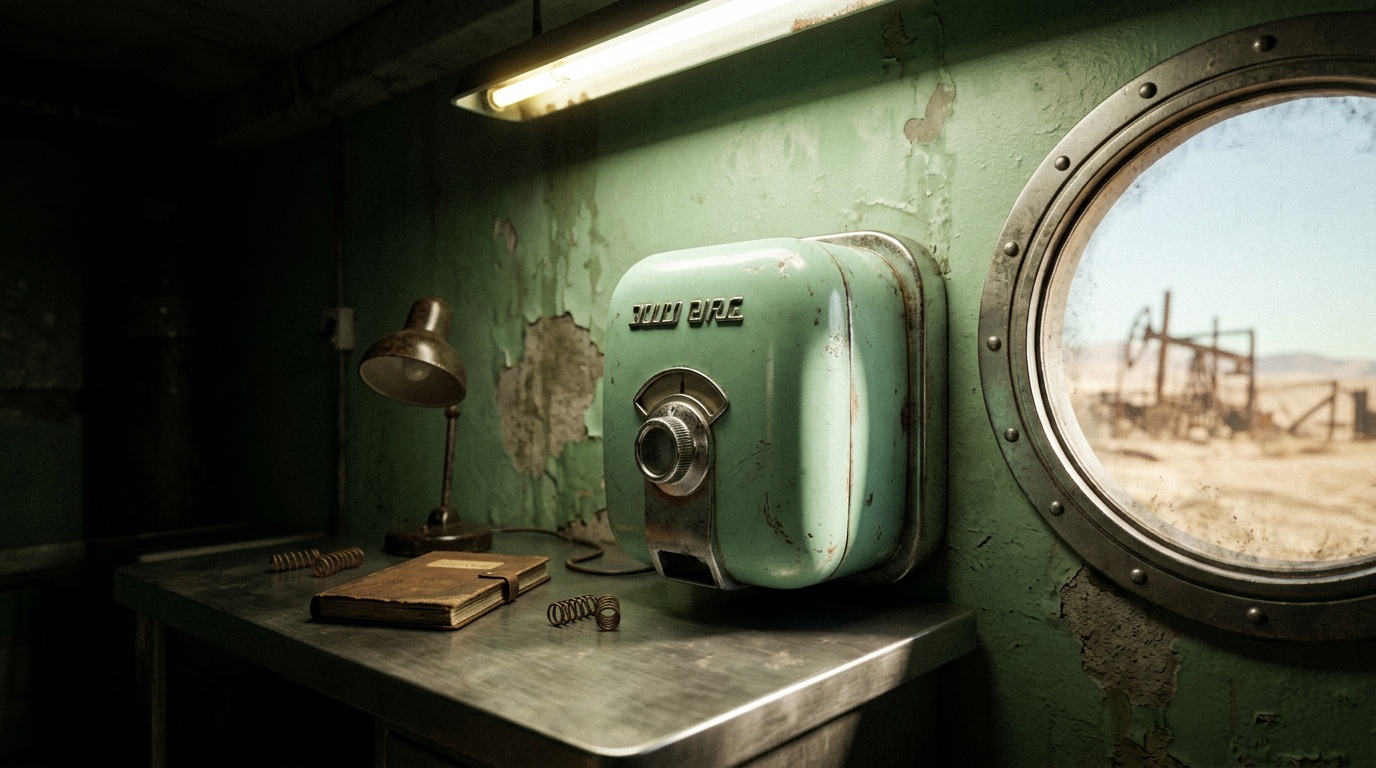
Vault-Tec built a tiered corporate protocol that assigned branded suicide pills to people it had already determined would not receive vault access, transforming mass death into a managed product offering rather than an abandonment. The 'Plan D' designation proves a structured decision hierarchy in which lethal distribution was a planned downstream step, not an afterthought. The company did not leave the unvaulted to die on their own terms. It completed the transaction.
How This Theory Works
Vault-Tec built a distribution chain for lethal products targeting people it had already decided would not survive. A grieving family improvising a final act would not be holding a product labeled 'Vault-Tec Plan D.' The label proves a pre-war corporate decision to produce, package, and deliver lethal doses to a segmented population. The family Lucy finds did not choose to die outside Vault-Tec's involvement. They died inside it.
The designation 'Plan D' carries the coldest implication of the evidence. Plans are numbered because there are other plans. If Plan D is a suicide contingency, then Plans A, B, and C represent prior tiers of corporate response, with vault admission presumably somewhere in the hierarchy above it. Vault-Tec decided in advance who merited a shelter and who merited a branded poison. The pills were not charity. They were product placement on the worst day in human history.
The distribution detail closes the argument only if you follow it to its structural end: Vault-Tec had to know where these people were. You do not build a supply chain for a lethal product without a customer list. The family in the ruins was not a random recipient. Someone at Vault-Tec had their address, assessed their vault eligibility, declined to offer them a space, and then sent them Plan D instead, completing the transaction. Ma June's framing of the vaults as a hole in the ground for rich folks understates the mechanism. The vaults were not simply reserved for the wealthy while others were abandoned. The others were followed up with. Vault-Tec did not ignore the people it wrote off. It serviced them. The system was not indifferent to the surplus population. It was designed around them.
Is this theory convincing?
Key Evidence
Branded Suicide Pill Bottle
Lucy discovers a long-dead family beside a bottle explicitly labeled 'Vault-Tec Plan D,' indicating the pills were a manufactured and distributed Vault-Tec product rather than a personal or improvised choice.
Tiered Protocol Naming Convention
The 'Plan D' designation implies the existence of Plans A, B, and C, suggesting Vault-Tec had a structured corporate hierarchy of responses to nuclear catastrophe, with suicide as a named and numbered option.
Pills as Final Option for Unreachable Vaults
The family's location in open ruins far from any vault suggests the pills were distributed to people who had no realistic path to vault safety, framing Plan D as a product for those Vault-Tec had already written off.
Ma June's Condemnation of the Vaults
Ma June tells Lucy the vaults were 'a hole in the ground for rich folks to hide in while the rest of the world burned,' which corroborates the reading that Vault-Tec actively stratified survival access and left most people to die.
This theory was evaluated using Theory Atlas editorial standards, including evidence review, narrative fit, and competing interpretation analysis. Learn how Theory Atlas evaluates theories →
Other Theories for S1E02

Wilzig Was Moldaver's Operative, and His Head Is the Delivery Vessel She Commissioned
Wilzig's departure from the Enclave was not an escape Moldaver reacted to but an extraction she orchestrated, with Ma June's Sundries functioning as a pre-arranged waypoint in her network.
Lucy's Vault Morality Will Not Survive
Wilzig's warning that Lucy will become 'a different animal' is a structural prediction about identity collapse, not a metaphor for danger: her Vault-bred values are pre-adaptation traits the surface will select against, and her arc is the gradual dissolution of the person who left Vault 33.
CX404 Is an Enclave Weapons Asset
CX404 is a purpose-bred Enclave combat asset whose handler was switched, not a companion animal with unusual training.

Wilzig's Briefing Came From Moldaver's Network, and Moldaver's Network Got It From Lucy's Mother
Wilzig's unprompted recognition of Lucy by name, vault, and family detail was not observation — it was intelligence, assembled by Moldaver's network before the two ever met.