The Tunnels Are a Ledger, and Victor Is Already in It
THE ARGUMENT
The objects accumulating in the underground tunnels (a wedding dress, a wheelchair, a bicycle, a ventriloquist dummy) form a systematically curated record of human intake organized by vulnerability type and life stage, not incidental debris. The creatures have maintained this ledger across a timeline longer than any living resident can account for. Victor's collapse upon seeing the dummy is not a fear response but an act of recognition: he has always known the tunnels are a record of persons taken, and he has always known the dummy confirms he is in it.
How This Theory Works
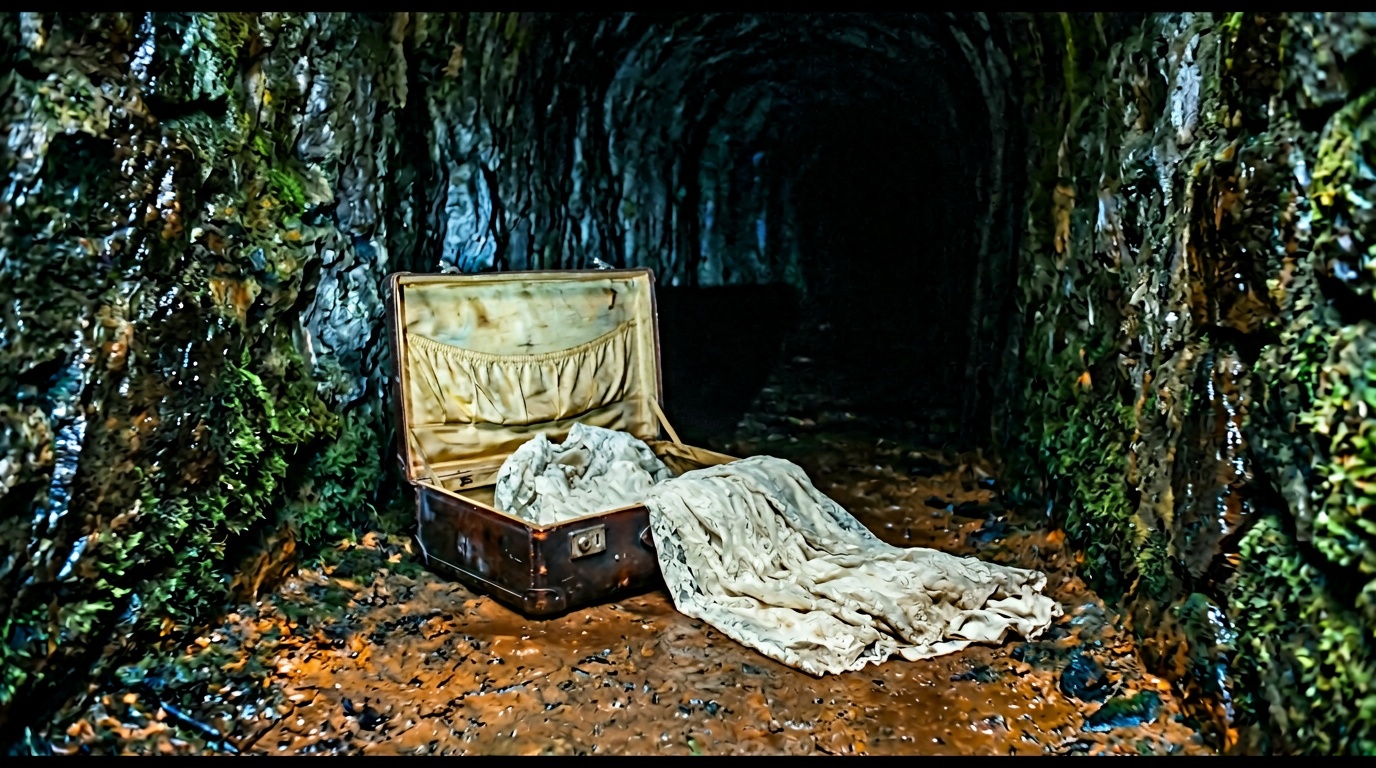
The tunnels do not contain random artifacts. A wedding dress stored intact inside a suitcase, a wheelchair, a bicycle, and a ventriloquist dummy represent distinct human categories and life transitions: a bride, someone who could not move under their own power, a child, and whatever the dummy maps onto, which the show has not yet disclosed but which Victor understands precisely. These objects do not suggest a creature that collects indiscriminately. They suggest a system that selects across specific categories of human vulnerability at specific life stages, and has been doing so long enough to accumulate a cross-section of human experience the current colony's residents cannot explain by their own memories.
The central unresolved question, and the show must eventually answer it, is whether the tunnels function as a holding space or a disposal site. If the objects arrived with their owners and the owners are still present somewhere in the system, the caverns are a kind of dormant inventory. If the objects are what remain after the owners were processed, they are a graveyard organized by type. The evidence does not resolve this, and that ambiguity is not a gap in the argument: it is the argument's dramatic engine. The wedding dress preserved inside a suitcase implies a deliberate act of retention, not casual accumulation. Something down there wanted that dress kept. Whether keeping it means the bride is also kept, or only her trace, is the question the tunnels hold open.
The ventriloquist dummy is the synthesis's pivot point because it operates simultaneously on two layers the other objects do not. Like the wheelchair and the bicycle, it slots into the object taxonomy as a childhood artifact marking a specific human category and life stage. But unlike those objects, the same dummy has appeared through the town's supernatural signaling system: Jade watches it materialize in Colony House beside the recurring symbol before both vanish. The dummy exists in both registers. It is a physical artifact in the creatures' cavern and an active element in the town's symbolic vocabulary, which means it is not merely catalogued. It is in circulation. The creatures are not storing it passively. They are using it.
Victor's collapse is the theory's load-bearing evidence, and it only makes sense if the dummy is not strange to him. He had been the composed, knowledgeable guide through dangerous terrain; his survival instincts are the one thing the show has established he possesses in abundance. The dummy ends all of that. He curls into a corner and cannot recover; Tabitha, the newcomer, is forced to take the lead at the fork. Whatever the dummy signifies overrides his survival instincts because survival instincts respond to threat. What breaks them is not threat. It is recognition. He is not encountering a frightening object. He is encountering proof of something he already knew and has been navigating around for longer than any other person in the colony has been alive.
This reframes everything Victor does before the breakdown. His knowledge of tunnel routes and symbols, his willingness to guide Tabitha, his long survival in a town that has consumed everyone around him: none of this reflects independent capability. It reflects permission. The creatures have held onto the one object that can dissolve him, and they have held it in the one place he has always had to navigate. His freedom to move through their underground, to accumulate the knowledge that makes him valuable to survivors, may not be a function of skill or luck. It may be a condition the creatures set and have always retained the power to revoke. The dummy is not debris that happens to remind him of something painful. It is leverage, deliberately maintained, for a specific man the creatures know is still out there, still guiding people, still withholding whatever the dummy represents, and still carrying that debt.
Is this theory convincing?
Key Evidence
Wedding Dress Inside Tunnel Suitcase
Tabitha discovers a suitcase in the underground tunnels containing a white wedding dress, a personal and ceremonially significant item with no obvious explanation for its presence among sleeping creatures.
Wheelchair Found in Caverns
A wheelchair was observed among the objects collected in the underground caverns, suggesting a mobility-impaired or elderly person was brought there at some point.
Bicycle Among Creature Belongings
A bicycle was found among the objects in the tunnels, an item associated with children, raising the possibility that young people have passed through or been held in the underground space.
Creatures Sleeping Surrounded by Objects
The sleeping creatures are found surrounded by a collection of human items, implying a deliberate accumulation of belongings rather than random clutter.
Victor's Fear at the Tunnel Fork
Victor becomes paralyzed with fear when he encounters the sleeping creatures and their collected objects, insisting this is not the path the Boy in White directed him to take, which implies the creature den was not supposed to be witnessed.
Preserved Dress Suggests Intentionality
The wedding dress is stored in a suitcase rather than scattered or damaged, which distinguishes it from incidental debris and points toward a deliberate act of collection or preservation.
This theory was evaluated using Theory Atlas editorial standards, including evidence review, narrative fit, and competing interpretation analysis. Learn how Theory Atlas evaluates theories →
Other Theories for S2E01
The Town Reacts: A Conscious, Punishing Force
The town does not simply trap its residents.
The Town Sorts, Not Just Traps: A Population System with a Targeting Layer
The town operates as self-sustaining infrastructure with two interlocking functions: a macro-level population cycle that recruits new arrivals on its own schedule to maintain occupancy, and a micro-level targeting apparatus that identifies and grooms specific individuals for a deeper role within that system.
The Well's Unknown Rescuer Knows the Creatures
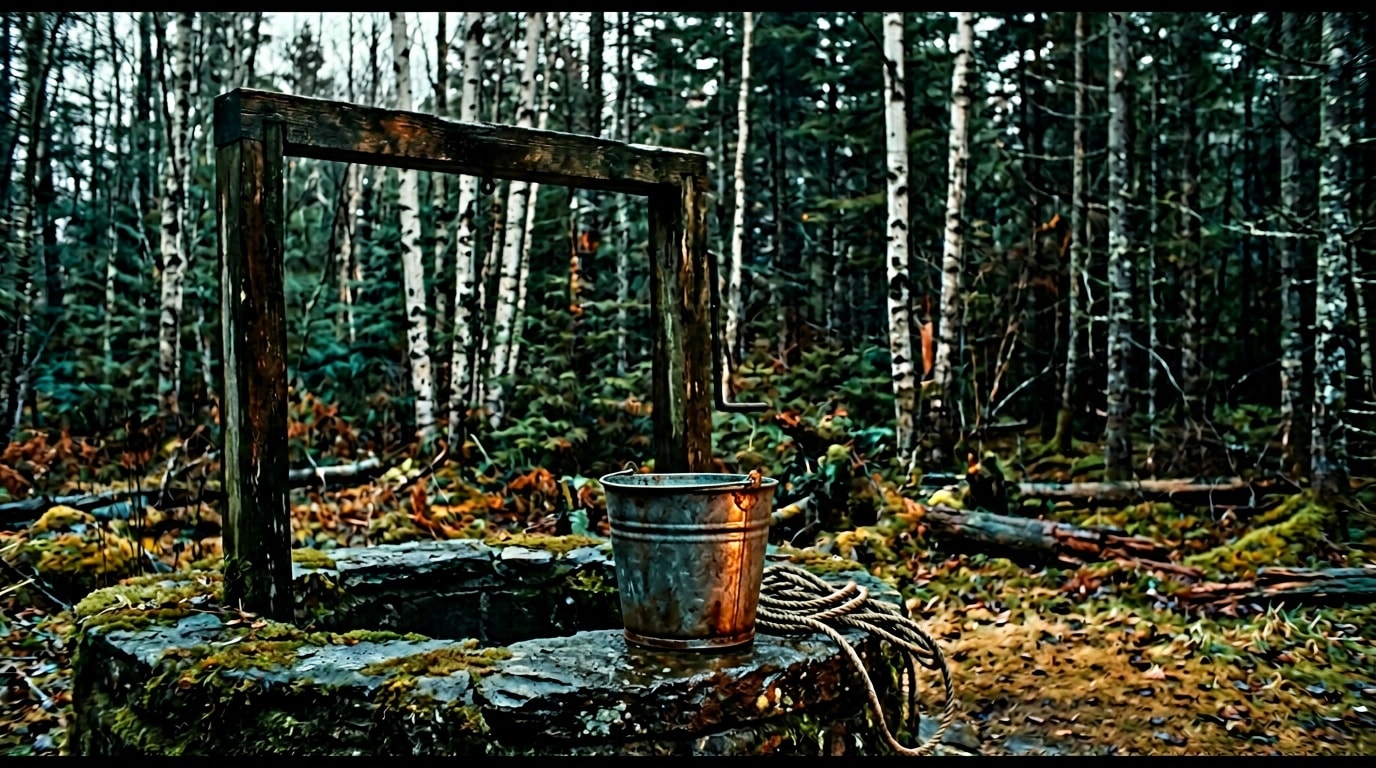
The unknown figure at the well is not a survivor operating outside the town's logic but an actor already embedded within it, using Boyd's desperation to secure something the town's governing force requires from a new arrival.
Elgin Knows This Place Already
Elgin's immediate shift from recognition to command to physical collapse on arrival suggests his nervous system had already categorized Town before his conscious mind engaged, pointing toward a prior exposure or a supernatural bond with the place that other passengers do not share.
The Town Runs a Closed Cycle: Containment Above, Reconstitution Below
Every structural limit the town imposes on its residents (the asymmetric floor collapse, the directionally filled hole, the shaking that arrives precisely when excavation resumes) is automatic maintenance of dormancy conditions in the caverns below, not punishment for rule-breaking.
Visions, Not Dreams, Shape Season Two
The town in FROM delivers intrusions calibrated to each recipient regardless of their familiarity with its dangers, using Boyd's corrupted bell-ringing vision and Elgin's pre-conscious arrival panic as parallel evidence that the mechanism operates independent of knowledge or consent.
Something Is Being Kept in the Dark
The creatures beneath the town are running a staged process with the caged figures in their tunnels, not simply holding captives.