Visions, Not Dreams, Shape Season Two
THE ARGUMENT
The town in FROM delivers intrusions calibrated to each recipient regardless of their familiarity with its dangers, using Boyd's corrupted bell-ringing vision and Elgin's pre-conscious arrival panic as parallel evidence that the mechanism operates independent of knowledge or consent. What makes this structural rather than incidental is that the calibration appears to be surveillance: the town uses what it already knows about each person, whether accumulated over years or absorbed at the moment of arrival, to shape the intrusion's form. Season 2 is not asking whether altered states are meaningful. It is establishing that the town is already watching before anyone knows to be watched.
How This Theory Works
The town does not need a foothold in someone's history to get inside their head. That is the claim Boyd's opening vision and Elgin's arrival panic jointly force into view, and it is the claim the show appears to be building toward in Season 2.
Boyd's vision exploits the one behavior he performs as a protective act. His hand begins to shake as he moves through his nightly bell-ringing routine. He drops the bell. He wakes at the bottom of the dry well. The sequence has the texture of a dream but the specificity of a transmission: the town has taken the exact pattern he repeats to keep people safe and corrupted it from the inside. The Bob Dylan track playing across the jukeboxes is not incidental atmosphere. 'A Hard Rain's A-Gonna Fall' frames the sequence as prophetic, a warning delivered in the form of the warning itself being destroyed. The town did not reach for a random image. It reached for the image that would cost Boyd the most.
Elgin's panic on the bus operates by different means but produces the same outcome. He has no prior exposure to Fromfield, no conditioning the place could have learned from, nothing that would give it leverage over him. Yet he is already screaming and demanding the driver turn around before he has processed a single thing about where he is. He later calls it a bad dream. The show does not correct him, but his reaction precedes any information that could have caused it. Something reached him before conscious understanding was possible.
The parallelism does not merely establish a recurring motif. It reveals the mechanism, and the mechanism has a second layer. Boyd's vision is drawn from years of accumulated behavior the town has had time to observe. Elgin's panic arrives at the moment of crossing the threshold, which means the town assessed him fast enough to be precise before he had said a word. If the town is a conscious, monitoring presence, the intrusions are not spontaneous emissions. They are targeted outputs, and the targeting requires intake. The town must be reading its subjects continuously, cataloguing what each person protects, fears, or suppresses, then deploying that information at the moment of maximum exposure.
This reframes what the visions are doing narratively. Boyd's years of survival offer no protective advantage over Elgin's total ignorance because experience does not close the channel the town uses. Both men are reached at the same structural moment, the threshold before a dangerous act, and both are reached through whatever they already carry. The show is not building toward characters learning to read warnings more accurately. It is building toward the recognition that legibility is not the problem. The town communicates with equal precision to the person who knows everything and the person who knows nothing, which means knowledge itself is irrelevant as a defense. The only variable is what the town has found worth using against you.
Is this theory convincing?
Key Evidence
Boyd's Vision Before the Well
Boyd performs his nightly bell-ringing routine while Dylan's 'A Hard Rain's A-Gonna Fall' plays on the diner jukeboxes, his hand shakes, and he drops the bell before waking at the bottom of the dry well, suggesting the sequence was a vision rather than a memory of real events.
Dylan Song as Ominous Frame
The specific choice of 'A Hard Rain's A-Gonna Fall' playing during Boyd's vision invites a thematic reading of the sequence as prophetic or warning in nature rather than a simple dream.
Boyd's Trembling Hand Signals
Boyd's hand begins shaking and he drops the warning bell at the moment the vision begins to destabilize, a physical detail that distinguishes the sequence from ordinary dreaming and implies an external intrusion.
Elgin Panics Before Conscious Understanding
Elgin begins screaming and demanding the driver turn around before he has any information about the town's dangers, and later attributes his state to a bad dream, suggesting he received some form of pre-conscious warning upon arrival.
Two Characters, Same Structural Experience
Boyd's disorienting vision and Elgin's arrival panic function as parallel events on opposite ends of the episode's first act, establishing a recurring pattern in which altered states precede danger rather than follow it.
This theory was evaluated using Theory Atlas editorial standards, including evidence review, narrative fit, and competing interpretation analysis. Learn how Theory Atlas evaluates theories →
Other Theories for S2E01
The Town Reacts: A Conscious, Punishing Force
The town does not simply trap its residents.
The Town Sorts, Not Just Traps: A Population System with a Targeting Layer
The town operates as self-sustaining infrastructure with two interlocking functions: a macro-level population cycle that recruits new arrivals on its own schedule to maintain occupancy, and a micro-level targeting apparatus that identifies and grooms specific individuals for a deeper role within that system.
The Well's Unknown Rescuer Knows the Creatures
The unknown figure at the well is not a survivor operating outside the town's logic but an actor already embedded within it, using Boyd's desperation to secure something the town's governing force requires from a new arrival.
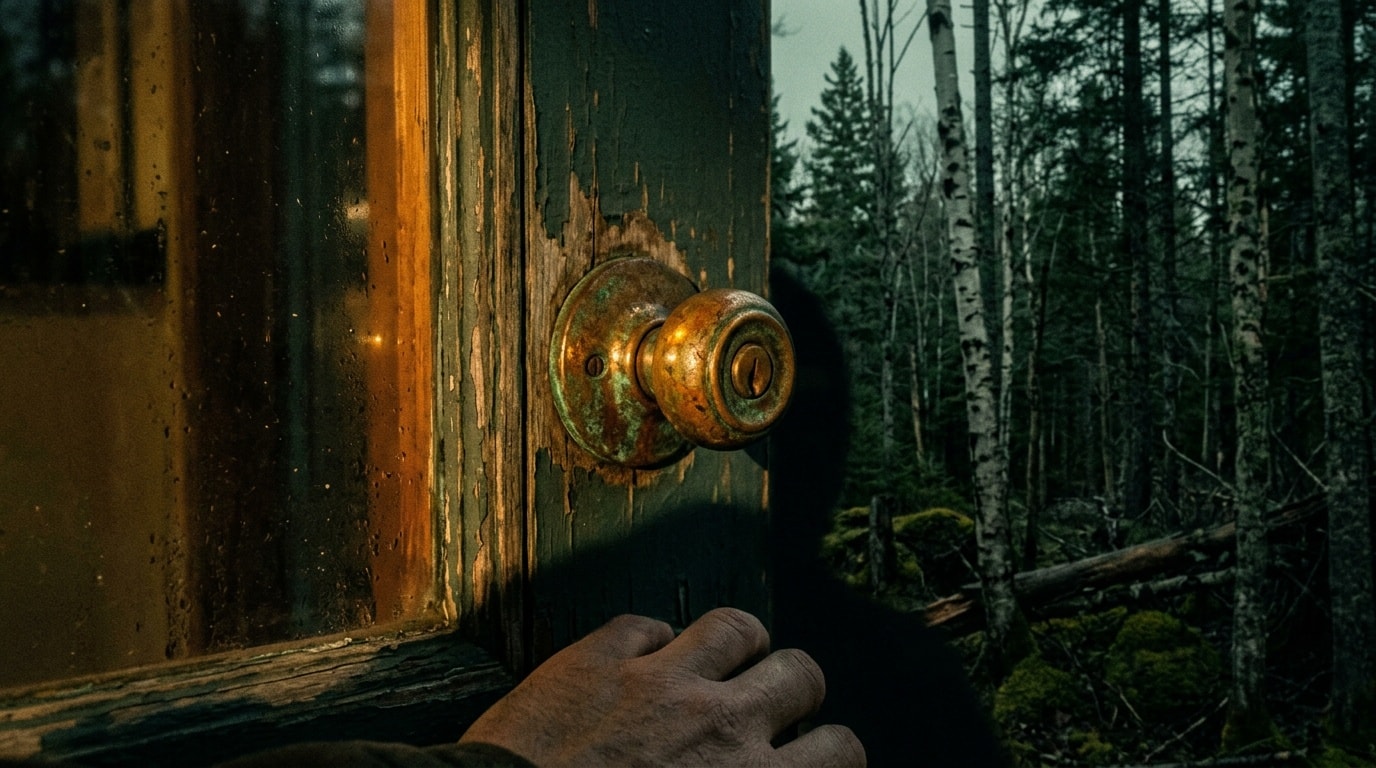
Elgin Knows This Place Already
Elgin's immediate shift from recognition to command to physical collapse on arrival suggests his nervous system had already categorized Town before his conscious mind engaged, pointing toward a prior exposure or a supernatural bond with the place that other passengers do not share.
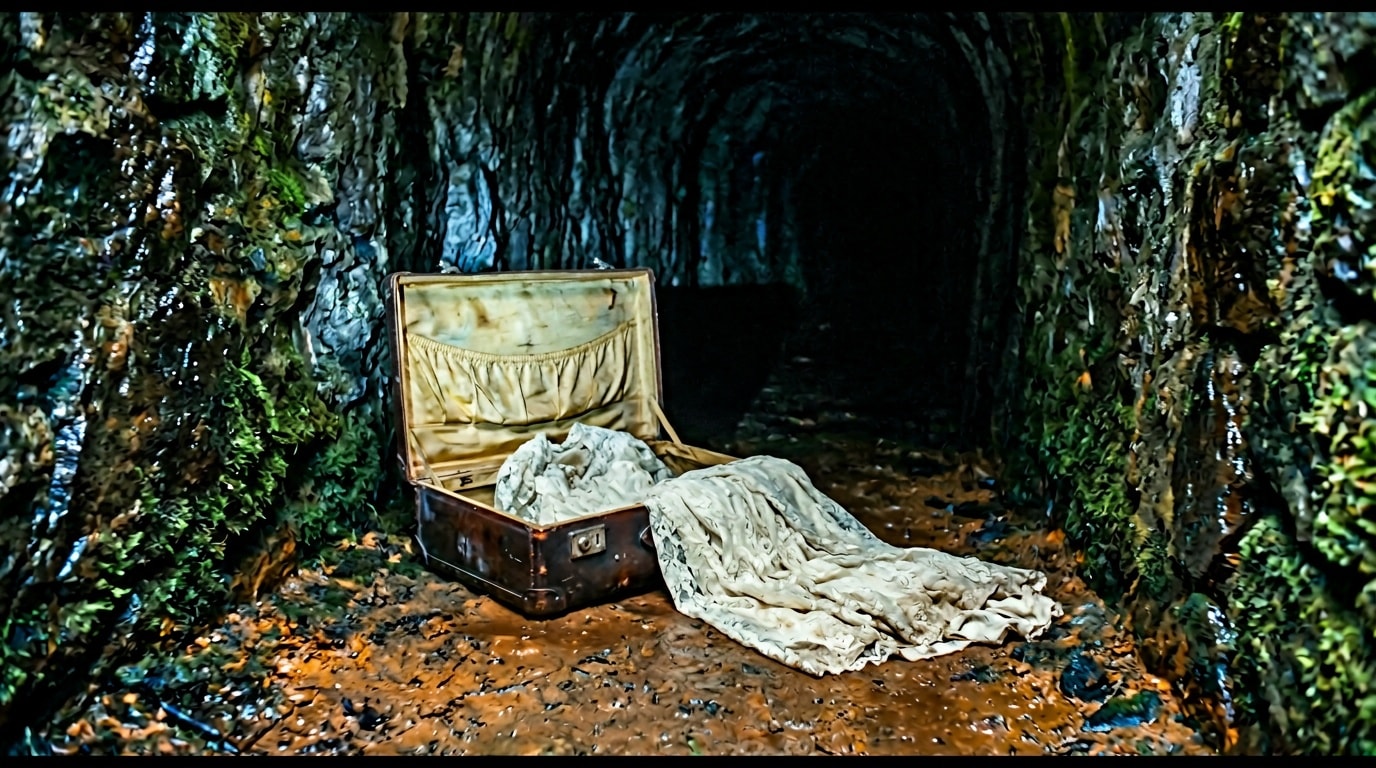
The Tunnels Are a Ledger, and Victor Is Already in It
The objects accumulating in the underground tunnels (a wedding dress, a wheelchair, a bicycle, a ventriloquist dummy) form a systematically curated record of human intake organized by vulnerability type and life stage, not incidental debris.

The Town Runs a Closed Cycle: Containment Above, Reconstitution Below
Every structural limit the town imposes on its residents (the asymmetric floor collapse, the directionally filled hole, the shaking that arrives precisely when excavation resumes) is automatic maintenance of dormancy conditions in the caverns below, not punishment for rule-breaking.

Something Is Being Kept in the Dark
The creatures beneath the town are running a staged process with the caged figures in their tunnels, not simply holding captives.