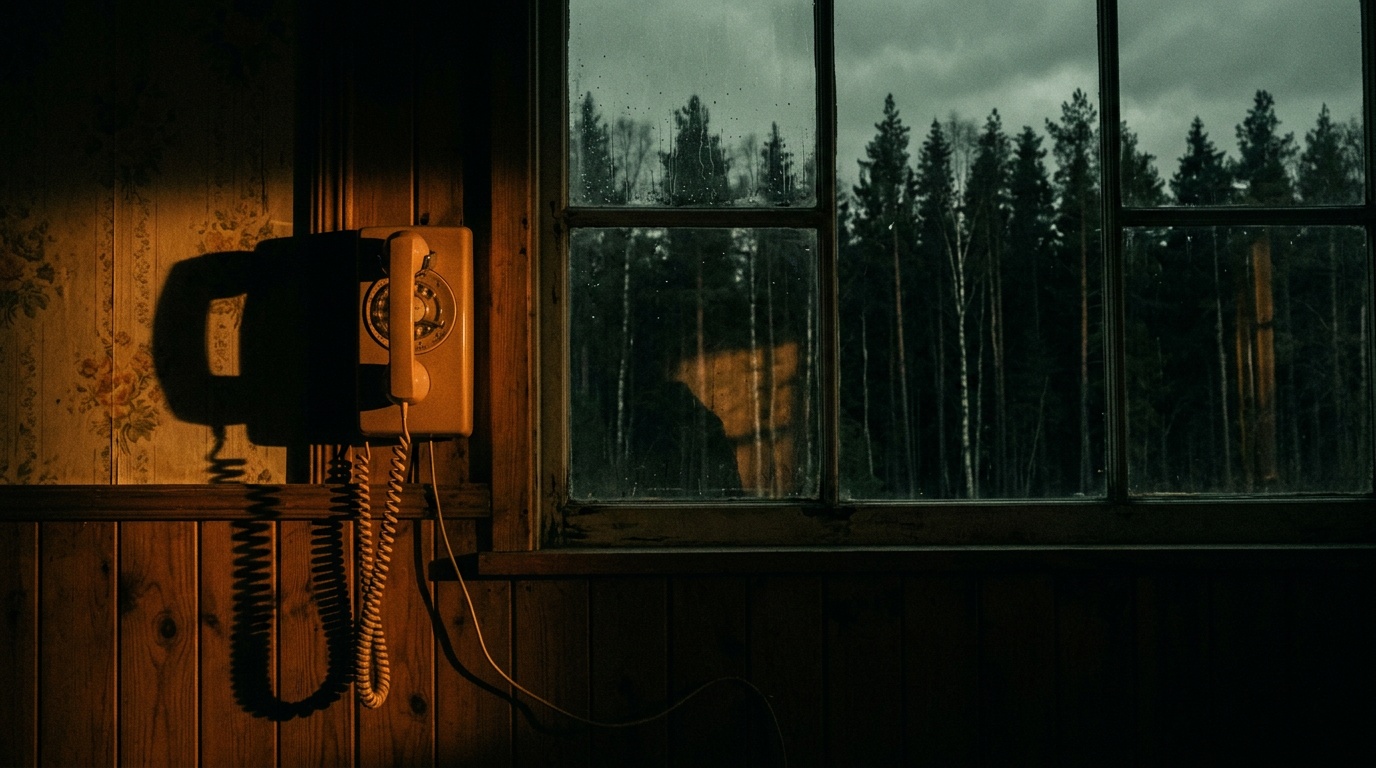
The Phone Voice Knows the Town's Rules
THE ARGUMENT
The voice on Jim's phone has synchronized, insider knowledge of the town's nighttime danger threshold and real-time awareness of where his children are, which places it inside the town's organizing system rather than outside it. Its protective framing is not evidence of goodwill but evidence of a strategic requirement that Jim's children survive, at least for now. The voice is not a rescuer. It is a participant in the same structure that traps the colonists, currently running an agenda that Jim's family's survival serves.
How This Theory Works
The voice on Jim's phone is not a warning from outside the town's logic. It is a demonstration of position within it. An entity that knows the precise nighttime threshold, knows where Julie and Ethan are before Jim does, and chooses disclosure over exploitation is not acting from goodwill. It is acting from a position that makes harm currently inconvenient or prohibited.
The framing of the call as help is the detail that cuts deepest. The creatures do not offer help. They do not negotiate. Whatever distinguishes the voice from the creatures is not moral standing but operational constraint or strategic calculation. The voice needs Jim's children alive, which is not the same as wanting them safe. That distinction has not been pressed by the theory and it should be.
The convergence of Boyd's bell with the voice's warning is not coincidence to be filed away. It is evidence that the voice is synchronized with the town's actual danger architecture, not approximating it from the outside. Entities outside the system approximate. Entities inside it know. The voice knows. That means the voice does not exist in opposition to what traps the colonists. It exists as a feature of the same structure, one that has its own objectives within the system and is currently managing Jim toward an outcome those objectives require.
Jim hanging up on the second call is the only moment in the sequence where his behavior reflects something other than pure crisis response. He acts on the first call's warning, which means the warning worked. He refuses the second call, which means he registered that being helped by that voice is not a neutral event. His instinct is correct. The voice being right about the danger does not make it safe to continue receiving its guidance.
Is this theory convincing?
Key Evidence
Voice Names Specific Nighttime Deadline
The voice tells Jim that Julie and Ethan should not be outside so close to dark, using a specific temporal warning that matches the town's known danger cycle rather than offering a vague threat.
Voice Claims Protective Intent
The voice explicitly tells Jim that it wants to help him and that he needs that help, framing the call as an act of assistance rather than intimidation.
Boyd's Bell Confirms Timing
Boyd rings the warning bell at almost the same moment the voice issues its warning, confirming the voice's nighttime deadline matches the town's actual danger threshold rather than being a fabricated detail.
Children Located Before Jim Acts
The voice warns Jim about Julie and Ethan being outside before Jim himself knows where they are, suggesting the voice has independent awareness of the children's location.
Jim Hangs Up on Second Call
When the phone rings a second time, Jim hangs up immediately, suggesting the first call's warning registered as credible enough to act on but too unsettling to continue engaging with.
This theory was evaluated using Theory Atlas editorial standards, including evidence review, narrative fit, and competing interpretation analysis. Learn how Theory Atlas evaluates theories →
Other Theories for S3E03

Khatri's Warning Is the Trap's Final Layer
The creatures identified Boyd as Fromville's central stabilizing figure and engineered Tian-Chen's death as a precision extraction, designed to strip him of the discipline and risk-calculus that made him effective and replace both with grief as a steering mechanism.

Miranda's Entanglement Made Camden Captive Territory
The Township did not abduct Tabitha's family at random; it completed a process begun years earlier when Miranda first received contact through the original bottle tree installation.

Miranda's Bracelet Proves the Township Followed Tabitha
The Township planted Tabitha-specific artifacts inside Henry's life before Tabitha arrived, which means the trap does not begin at the town limits and Tabitha has not crossed any real boundary.

Fatima's Baby Feeds on Decay, Not Life
Fatima's pregnancy was initiated by the Township for a purpose, and the fetus's demand for decomposing matter over living food is evidence that what is gestating inside her is not biologically human.

Jade Sees What Others Cannot
Jade is being deliberately recruited by the Township's deeper architecture, not merely afflicted by it, and the spiked man's physical grab marks the moment passive transmission became active demand.

The Forest's Bear Trap Was No Accident
The bear trap that catches Kristi was placed to function as the final step in a behavioral sequence the forest itself initiated, suggesting the Township can engineer outcomes by directing both psychology and terrain.

The Totems Were the First Talismans
The totems at the Log Cabins are an earlier iteration of the talisman system, built by prior inhabitants who failed to escape and left the infrastructure standing for the next cycle of trapped residents.

Victor's Suitcase Holds More Than Stories
Victor is not visiting Sara; he is collecting on a forgiveness he extended strategically, using the blanket fort ritual to deliver something he retrieved from a buried cache in a disclosure Sara cannot refuse without reopening the debt his forgiveness created.