
Alicent Knows She Built a Lie
THE ARGUMENT
Alicent has privately concluded the Green succession was built on a misreading of Viserys's final words, and her search through historical texts is an attempt to find external justification for a war she suspects was started on a lie. Her continued support of Aegon is therefore not a conviction but a choice, one she makes while suspecting it is wrong. This reframes the entire Green cause not as legitimate succession but as willful self-deception that Alicent maintains with full awareness of the alternative.
How This Theory Works
Alicent is not searching for evidence that Viserys chose Aegon. She is searching for evidence that the choice was at least defensible, which is a fundamentally different act. Her request to Grand Maester Orwyle is not the question of a queen confident in her cause. It is the question of someone who already suspects the answer and needs an authority figure to either confirm or deny it. When Orwyle demurs, saying Viserys never discussed succession with him, Alicent does not press. She does not need more information. She already knows.
Her turn to historical texts compounds this reading. She is consulting them to find Aegon the Conqueror's dream, the same prophetic thread Viserys tried to pass to Rhaenyra, hoping to locate some larger frame in which Aegon II's reign can be cast as inevitable rather than manufactured. When Larys suggests that politics rather than conviction may have driven Viserys's apparent late-reign ambivalence, Alicent does not argue. She accepts it as the most honest explanation available. Her admission that both sides will believe what they want to justify their actions is not resignation. It is confession.
The sharpest implication of her behavior is that Alicent has settled into a posture that requires no truth to sustain it. She scolds Aegon not to help him become a better king but to discharge her frustration at having installed one she does not believe in. The doubt is no longer an active crisis; it has calcified into something more corrosive. She will not defect, she will not recant, and she will not stop the war. The most damning thing the evidence supports is that Alicent is not a true believer who has lost her faith. She is a woman who concluded the cause was wrong and chose to continue it anyway, which means every death the Dance produces is one she has privately authorized without conviction.
Is this theory convincing?
Key Evidence
Alicent Questions Orwyle on Viserys
Alicent directly asks Grand Maester Orwyle whether Viserys truly intended Aegon as his heir, and when Orwyle admits Viserys never discussed succession with him, she does not pursue the question further, suggesting she already feared the answer.
Searching Viserys's Historical Tomes
Alicent is found reading the same books Viserys once obsessed over, specifically searching for references to Aegon the Conqueror's dream and the Song of Ice and Fire, suggesting she is trying to locate external justification for the Green claim rather than trusting the claim itself.
Fatalistic Admission to Larys
Alicent tells Larys that Rhaenyra's supporters and Aegon's supporters will each believe what they want to justify their actions in the coming conflict, a statement that frames the Green cause as motivated reasoning rather than legitimate succession.
Larys Observes the Moon Tea
Larys notices the cup of moon tea on Alicent's table and stealthily implies awareness of her affair with Criston Cole, a detail that positions Alicent as someone managing private moral failures while publicly defending a political cause she no longer fully trusts.
Harsh Rebuke of Aegon's Competence
Alicent scolds Aegon for believing the crown alone makes him wise, and expresses disappointment that he has not learned silently from his advisors, a rebuke that reads less as maternal guidance and more as the frustration of someone who understands she placed an inadequate king on a throne she is no longer certain he deserved.
Larys Reframes Viserys's Choice as Pragmatic
Larys suggests to Alicent that history, not genuine conviction, would have told Viserys how Westeros would respond to Rhaenyra's succession, and Alicent accepts this framing without resistance, implying she finds it more credible than the alternative that Viserys freely chose Aegon.
This theory was evaluated using Theory Atlas editorial standards, including evidence review, narrative fit, and competing interpretation analysis. Learn how Theory Atlas evaluates theories →
Other Theories for S2E04
Alys Rivers Used Harrenhal's Curse as a Targeting System
Daemon's psychological collapse at Harrenhal is not ambient; it is coordinated.
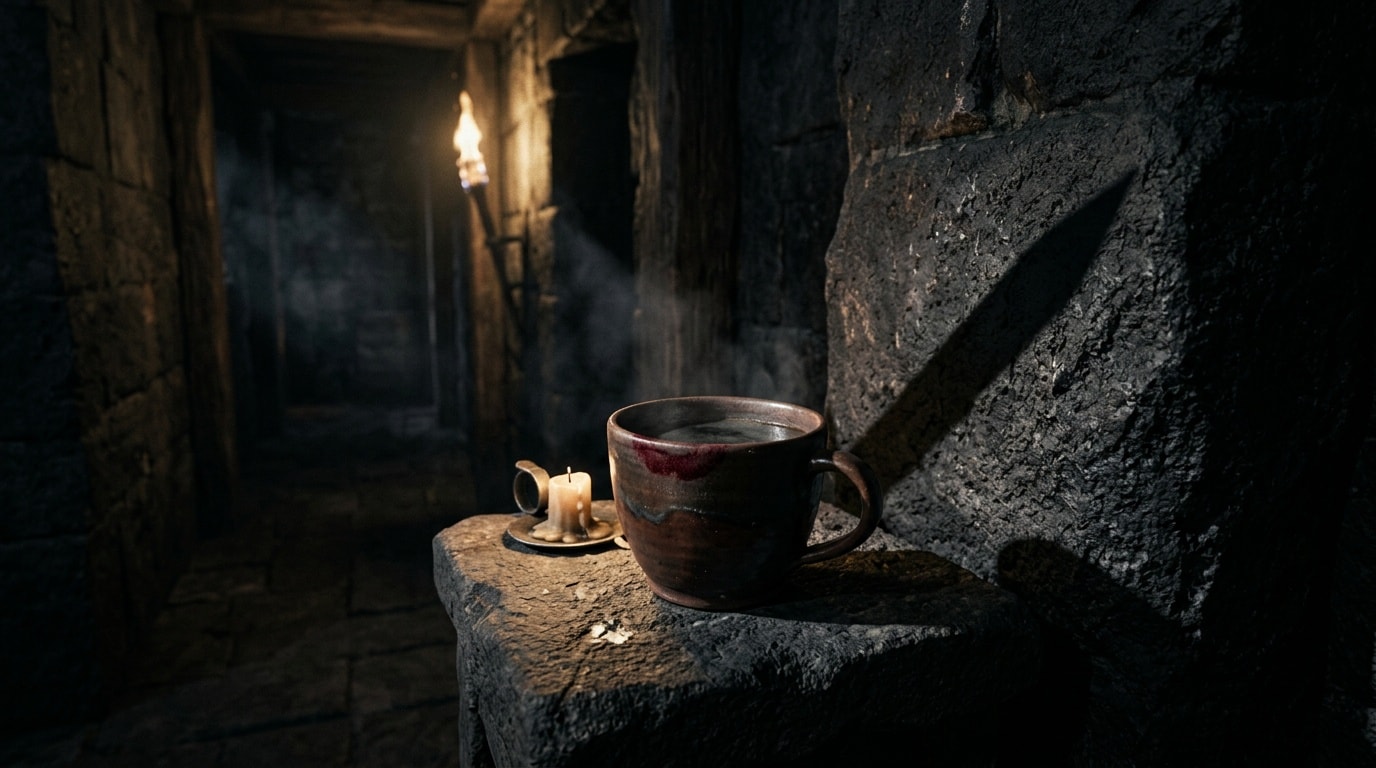
Larys Holds the Cup Over Alicent
Larys Strong is hoarding knowledge of Alicent's affair with Criston Cole as leverage rather than weaponizing it immediately, and his deliberate restraint is the tell.
Larys Surrendered Harrenhal to Destroy Daemon
Larys Strong surrendered Harrenhal not as a military failure but as a targeted psychological operation, using the castle's cursed deterioration to destroy Daemon's mind while preserving House Strong's wealth outside the Blacks' reach.
Aemond Secured the Perfect Witness, But Not the One He Thinks He Has
Aemond engineered Aegon's incapacitation at Rook's Rest through a sequence of private coordination with Criston Cole, a staged Small Council announcement, and dragonfire directed at both Sunfyre and Meleys once Aegon was committed past retreat.
Alicent's 'Nothing' Sends Aegon to War
Alicent's dismissal of Aegon is not background noise before the battle at Rook's Rest.
Daemon's True Enemy Has Always Been Rhaenyra
Daemon's participation in the Dance of Dragons is not loyalty to Rhaenyra but a sustained attempt to win a posthumous argument with Viserys, using her victory as proof that her elevation over him was the error.
Rhaenys Chose Death Over Retreat
Rhaenys chose her death at Rook's Rest with full tactical awareness, not because she misjudged the engagement but because she had already decided not to leave it.