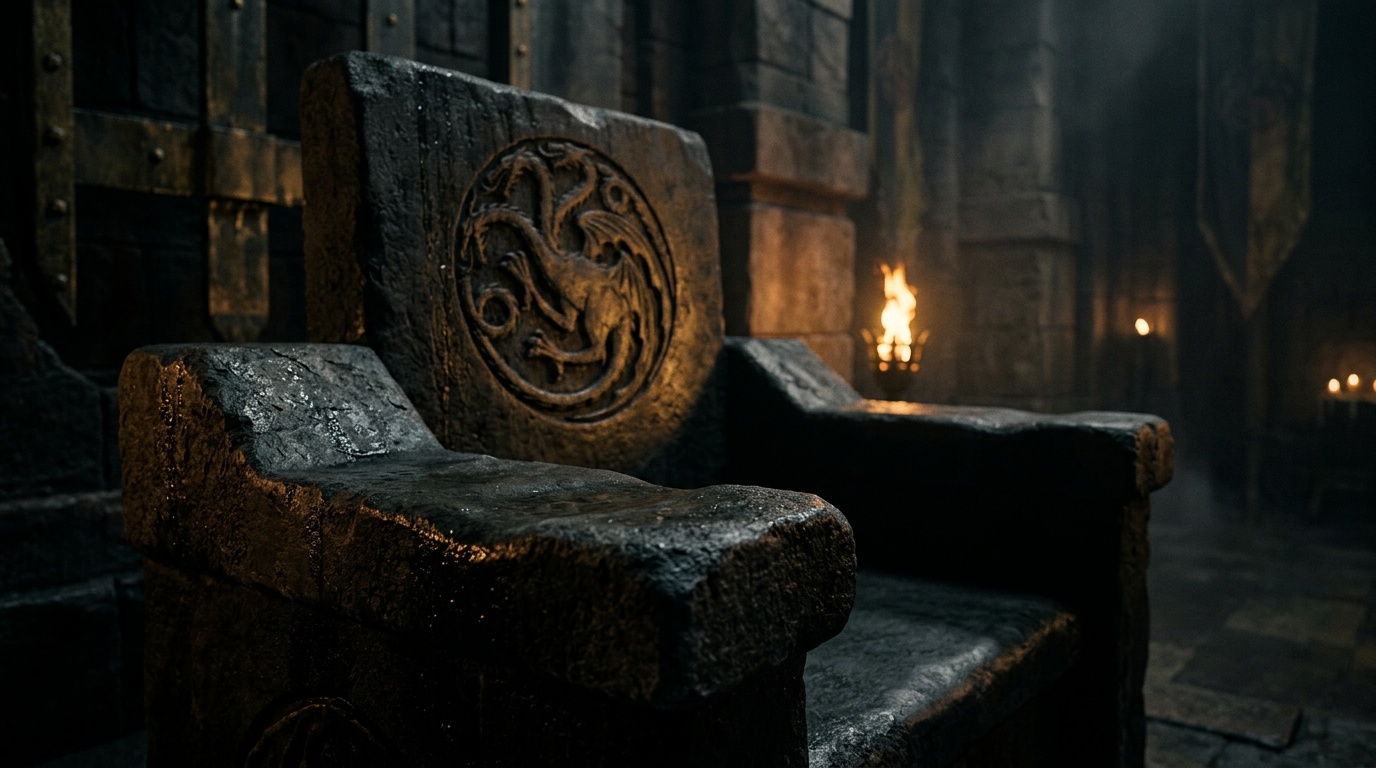
Daemon's True Enemy Has Always Been Rhaenyra
THE ARGUMENT
Daemon's participation in the Dance of Dragons is not loyalty to Rhaenyra but a sustained attempt to win a posthumous argument with Viserys, using her victory as proof that her elevation over him was the error. The dream at Harrenhal does not surface ambivalence; it surfaces the founding grievance of his psychology and resolves it, in his own unconscious, with her execution. His war effort on her behalf is structurally compromised not by divided allegiance but by the fact that she was never the point.
How This Theory Works
Daemon does not want Rhaenyra on the Iron Throne. He wants what placing her there would retroactively prove: that Viserys was wrong to choose her over him. That is the sharpest truth the theory approaches and does not fully commit to. The dream does not reveal a man torn between love and resentment. It reveals a man whose loyalty was never loyalty at all, but a long-running attempt to invert the original verdict. If Rhaenyra wins, Daemon wins the argument with his dead brother. If she loses, or if Daemon is the one who destroys her, the verdict stands in a different form but the obsession is the same. The founding grievance is not a complication of his loyalty. It is the engine of his entire participation in this war.
The Aemond hallucination in Harrenhal's corridors sharpens this. Daemon follows a figure he believes is his nephew, a genuine enemy, only to find it wears his own face. Harrenhal produces no external threats for him to channel his aggression toward. It returns everything inward. He cannot fight a reflection. The castle strips away the one mechanism Daemon has always depended on: an opponent outside himself who justifies his rage and absorbs the violence that originates elsewhere. Alys Rivers confirms the mechanism when she names the contradiction of serving a queen he once doted on as a girl, articulating the dissonance the dream already exposed and that Daemon has no framework to resolve.
The dream does not depict ambivalence. It depicts execution. The subconscious resolution to the founding grievance is not reconciliation with Rhaenyra; it is her beheading. Which means that if Daemon ever reaches a moment in this war where Rhaenyra's victory is no longer useful to the argument he is prosecuting against Viserys's memory, his unconscious has already rehearsed what comes next.
Is this theory convincing?
Key Evidence
Rhaenyra's Accusation in Dream Dialogue
In the dream, young Rhaenyra tells Daemon directly that he wants to destroy her because Viserys loved her more than he loved Daemon, naming the resentment as the core of his psychology.
Daemon Beheads Dream Rhaenyra
The dream does not end in reconciliation or ambivalence; Daemon executes young Rhaenyra with his sword, suggesting his unconscious resolution of the resentment is violent elimination rather than acceptance.
Aemond Figure Reveals Daemon's Own Face
Daemon pursues what he believes is Aemond through Harrenhal's halls, only to discover the figure shares his own face despite Aemond's hair and eyepatch, suggesting his enemy is internal rather than external.
Alys Rivers Names the Contradiction
Alys Rivers prods Daemon about how conflicted he must feel serving a queen he once doted on as a girl, articulating the psychological dissonance the dream has already dramatized.
Harrenhal Strips External Resistance
With no genuine military opposition at Harrenhal and political difficulties blocking him from raising armies, Daemon is left without an external adversary to absorb his aggression, turning his psychological distress inward.
Dream Recurs Across Multiple Nights
The sleep disruption and hallucination occur across multiple nights at Harrenhal, indicating the psychological disturbance is sustained rather than a single anomalous event.
This theory was evaluated using Theory Atlas editorial standards, including evidence review, narrative fit, and competing interpretation analysis. Learn how Theory Atlas evaluates theories →
Other Theories for S2E04

Alicent Knows She Built a Lie
Alicent has privately concluded the Green succession was built on a misreading of Viserys's final words, and her search through historical texts is an attempt to find external justification for a war she suspects was started on a lie.
Larys Holds the Cup Over Alicent
Larys Strong is hoarding knowledge of Alicent's affair with Criston Cole as leverage rather than weaponizing it immediately, and his deliberate restraint is the tell.
Alys Rivers Used Harrenhal's Curse as a Targeting System
Daemon's psychological collapse at Harrenhal is not ambient; it is coordinated.
Larys Surrendered Harrenhal to Destroy Daemon
Larys Strong surrendered Harrenhal not as a military failure but as a targeted psychological operation, using the castle's cursed deterioration to destroy Daemon's mind while preserving House Strong's wealth outside the Blacks' reach.
Aemond Secured the Perfect Witness, But Not the One He Thinks He Has
Aemond engineered Aegon's incapacitation at Rook's Rest through a sequence of private coordination with Criston Cole, a staged Small Council announcement, and dragonfire directed at both Sunfyre and Meleys once Aegon was committed past retreat.
Alicent's 'Nothing' Sends Aegon to War
Alicent's dismissal of Aegon is not background noise before the battle at Rook's Rest.
Rhaenys Chose Death Over Retreat
Rhaenys chose her death at Rook's Rest with full tactical awareness, not because she misjudged the engagement but because she had already decided not to leave it.