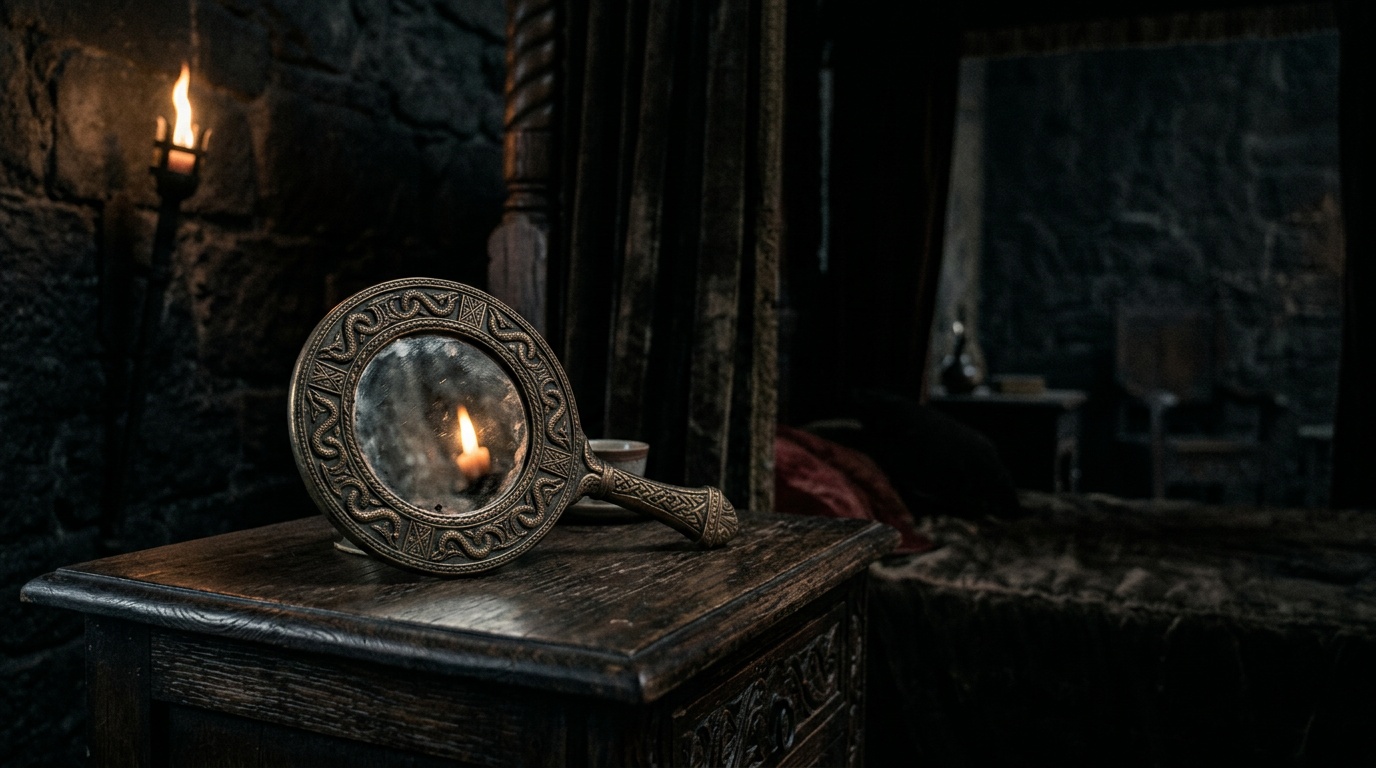
Aegon Remembers Everything and Fears Aemond
THE ARGUMENT
Aegon is performing amnesia about Rook's Rest because he remembers enough to know Aemond tried to kill him, and saying so while bedridden and surrounded by Aemond's allies would finish the job. His visible fear during Aemond's interrogation, combined with Larys's warning that only makes sense if Aegon possesses dangerous knowledge, establishes that the silence is strategic rather than medical. Aegon is not confused about what is happening around him. He is bartering his silence for survival.
How This Theory Works
Aegon's amnesia claim is not a symptom of his injuries. It is a calculated lie from a man who understands that his brother wants him dead and that the Red Keep offers him no protection.
The fear visible in Aegon's eyes during Aemond's interrogation is the theory's core evidence. A man who genuinely remembered nothing would have little reason to be terrified by questions about events he cannot recall. A man who does remember, and who understands what those memories imply about his brother's intentions, has every reason to perform blankness. The body contradicts the words, and that contradiction is the tell.
The interrogation is structured to extract a confession. Aemond applies physical pressure to fresh wounds. That is not the behavior of someone who believes the amnesia is real. It reads as pressure designed to crack a story Aemond suspects is fabricated. Larys Strong, who does not make moves without calculation, then visits Aegon separately to warn him that Aemond intends to kill him. Larys offering that warning to a man who remembers nothing and poses no threat would make no sense. He is warning Aegon because Aegon is a threat, specifically because of what he witnessed.
What Aegon most likely remembers is that Vhagar was present at Rook's Rest and that Aemond made choices during that battle that left his king burning in the sky. Saying so aloud, in a Red Keep where Aemond has removed Alicent from the Small Council and rules in all but name, would be to sign his own death warrant. The amnesia is the only armor Aegon has. He has correctly identified that the truth is more dangerous to him than his wounds.
The harder claim the evidence supports is this: Aegon is not merely surviving passively behind a lie. He is waiting. His begging Larys for help is not panic but negotiation. He is trading his silence for extraction, offering Larys the leverage of a king who remembers fratricide in exchange for a route out of reach of the man who committed it. The amnesia performance is not weakness. It is the opening position in a transaction.
Is this theory convincing?
Key Evidence
Fear in Aegon's eyes during interrogation
When Aemond enters Aegon's chambers and questions him about Rook's Rest, Aegon's visible fear contradicts his verbal claim of total amnesia, suggesting the memory is present and the denial is strategic.
Aemond applies pressure to wounds
Aemond interrogates his bedridden brother by pressing on his injuries, a method that reads as coercive pressure rather than a fraternal check-in and implies Aemond does not believe the amnesia claim.
Larys warns Aegon of lethal threat
Larys visits Aegon privately and warns him that Aemond intends to kill him, a warning that only makes sense if Aegon possesses dangerous knowledge worth suppressing rather than being a harmless amnesiac.
Aegon begs Larys for help
Upon receiving Larys's warning, Aegon begs for assistance, indicating he understands the threat to his life and is actively trying to survive it rather than being confused about what is happening around him.
Aemond's consolidation of power
Aemond removes Alicent from the Small Council and overrides Criston Cole's military objections in the same episode, establishing a pattern of neutralizing any voice that could challenge his account of Rook's Rest.
Amnesia as the only available shield
With Aemond holding effective control of the Red Keep and no protective figures remaining on the Small Council, claiming no memory of Rook's Rest is Aegon's only defensible position while he remains physically incapacitated.
This theory was evaluated using Theory Atlas editorial standards, including evidence review, narrative fit, and competing interpretation analysis. Learn how Theory Atlas evaluates theories →
Other Theories for S2E06
Mysaria Weaponizes Hunger Against the Greens
Mysaria is running a coordinated two-stage operation that inverts the political meaning of Rhaenyra's own blockade: her agents seed the taverns of Flea Bottom with messaging that Aemond feasts while commoners starve, then food boats arrive under Rhaenyra's banner to ensure relief is credited to the Blacks.
Aemond's Purge Is Larys's Harvest: How Absolute Rule Builds Its Own Blind Spot
Aemond is not filling a power vacuum; he is deliberately manufacturing one, removing every institutional check on his authority in a sequence too coherent to be reactive.
Seasmoke Runs a Two-Condition Screen the Crown Cannot Pass
Seasmoke's selection logic requires both Velaryon blood and the absence of presumptive claiming: a dual criterion that operates entirely outside royal authority.
Aemond's Coldness Is Childhood Wound, Not Politics
Aemond does not know that his removal of Alicent is a personal sentence.
Alys Rivers Killed Grover Tully on Purpose
Alys Rivers orchestrated Grover Tully's death to manufacture a political outcome she had already promised Daemon as prophecy, converting herself from counselor to hidden architect of the Riverlands campaign.
Dragon Seeds Will Undermine Rhaenyra's Legitimacy
Rhaenyra's dragon seed program will succeed militarily while simultaneously destroying the ideological premise of her claim.
Rhaena Is Being Handed Sheepstealer
Lady Jeyne Arryn's 'alas, still wild' is an invitation, not a warning, and Rhaena is the intended recipient.
Otto Hightower Is Deliberately Staying Away
Otto Hightower's silence across every channel simultaneously is not absence but strategy: he has privately concluded that the Green cause under Aemond is unrecoverable, and he is preserving his distance from that failure so he can negotiate or reattach himself to whatever outcome survives.