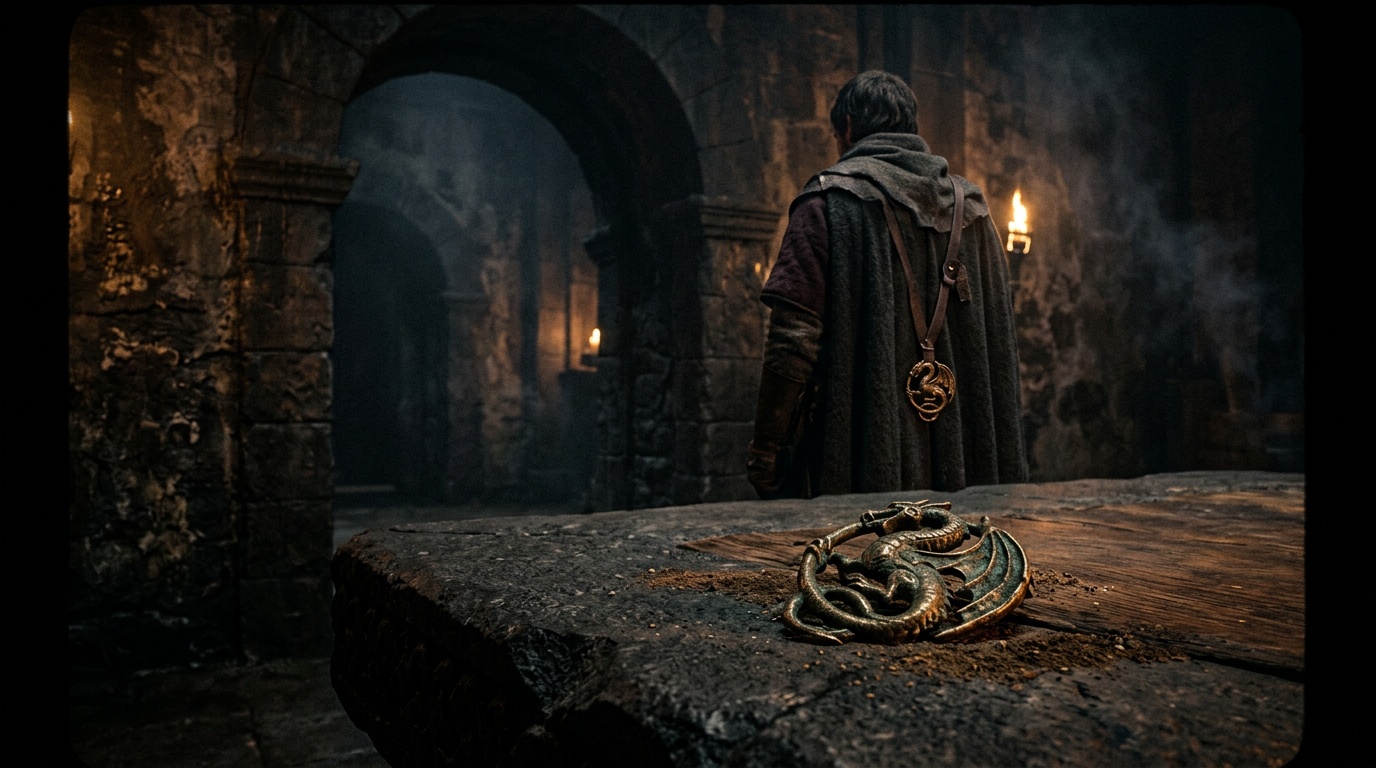
Dragon Seeds Will Undermine Rhaenyra's Legitimacy
THE ARGUMENT
Rhaenyra's dragon seed program will succeed militarily while simultaneously destroying the ideological premise of her claim. By treating Targaryen blood as a recruitable resource rather than an exclusive dynastic marker, she concedes the argument that separates legitimate succession from usurpation, and the seed riders who survive the war will hold dragons she cannot reclaim. The show has not yet weaponized this contradiction against her, but the structural conditions for it are already in place.
How This Theory Works
Rhaenyra's recruitment of thin-blooded Valyrian descendants as dragonriders is a philosophical concession the show has not yet addressed directly. If any person carrying a trace of Targaryen blood can bond with a dragon, then the exclusivity of Targaryen rule collapses as a principle. Rhaenyra's entire justification for the throne rests on the precedent that Viserys named her heir and that legitimate succession runs through her line. The dragon seed program implicitly argues the opposite: that the blood is diffuse, available, and transferable to anyone who carries enough of it.
The desperation driving this decision is visible in how Rhaenyra frames it to Stefan Darklyn. She acknowledges she is in an impossible situation, that recruiting outside the immediate family is something never attempted before, and that this is a departure from established practice rather than a routine wartime adjustment. That framing matters. When a queen admits she is attempting something unprecedented out of desperation, she is also admitting the precedent she is setting. Mysaria's framing reinforces this: she describes the pool of dragon seeds as a resource to be mined, not a carefully controlled dynastic privilege. That is not the language of monarchy. That is the language of logistics.
The sharpest edge of this theory is what it does to Rhaenyra's post-war position if she wins. A successful dragon seed program produces riders who are not her children, not her blood in any meaningful dynastic sense, but who now hold living dragons. Every dragon bonded to a seed rider is a dragon outside her direct control. Adam of Hull's successful bonding is the first data point in what could become a map of distributed dragonpower that survives the war independent of her line. Rhaenyra is not just recruiting soldiers. The program that saves her throne may be the same program her enemies use to argue she never deserved it.
Is this theory convincing?
Key Evidence
Rhaenyra's unprecedented recruitment admission
Rhaenyra explicitly describes the recruitment of non-full-blooded Targaryens and those with thin Valyrian blood as dragon riders as something 'never attempted before,' marking the program as a deliberate break from dynastic precedent.
Stefan Darkly's failed claiming attempt
The program's opening attempt with Stefan Darkly fails, establishing that the process is experimental and dangerous, and that Rhaenyra is proceeding despite uncertainty about outcomes.
Adam of Hull's successful dragon bond
Following Stefan Darkly's failure, Adam of Hull successfully bonds with a dragon, confirming the program can work and that dragonpower is now being distributed outside the immediate Targaryen family line.
Rhaenyra's impossible situation framing
Rhaenyra tells Stefan Darklyn she finds herself in an impossible situation, with Aemond and Vhagar representing an unmistakable military advantage that she cannot counter through existing means.
Mysaria's suggestion to expand the search
After Stefan Darkly's failure, Mysaria proposes seeking more people of Rhaenyra's royal blood, framing the dragon seed pool as a resource to be mined rather than a carefully controlled dynastic privilege.
This theory was evaluated using Theory Atlas editorial standards, including evidence review, narrative fit, and competing interpretation analysis. Learn how Theory Atlas evaluates theories →
Other Theories for S2E06
Mysaria Weaponizes Hunger Against the Greens
Mysaria is running a coordinated two-stage operation that inverts the political meaning of Rhaenyra's own blockade: her agents seed the taverns of Flea Bottom with messaging that Aemond feasts while commoners starve, then food boats arrive under Rhaenyra's banner to ensure relief is credited to the Blacks.
Aemond's Purge Is Larys's Harvest: How Absolute Rule Builds Its Own Blind Spot
Aemond is not filling a power vacuum; he is deliberately manufacturing one, removing every institutional check on his authority in a sequence too coherent to be reactive.

Seasmoke Runs a Two-Condition Screen the Crown Cannot Pass
Seasmoke's selection logic requires both Velaryon blood and the absence of presumptive claiming: a dual criterion that operates entirely outside royal authority.
Aemond's Coldness Is Childhood Wound, Not Politics
Aemond does not know that his removal of Alicent is a personal sentence.
Alys Rivers Killed Grover Tully on Purpose
Alys Rivers orchestrated Grover Tully's death to manufacture a political outcome she had already promised Daemon as prophecy, converting herself from counselor to hidden architect of the Riverlands campaign.

Rhaena Is Being Handed Sheepstealer
Lady Jeyne Arryn's 'alas, still wild' is an invitation, not a warning, and Rhaena is the intended recipient.

Aegon Remembers Everything and Fears Aemond
Aegon is performing amnesia about Rook's Rest because he remembers enough to know Aemond tried to kill him, and saying so while bedridden and surrounded by Aemond's allies would finish the job.

Otto Hightower Is Deliberately Staying Away
Otto Hightower's silence across every channel simultaneously is not absence but strategy: he has privately concluded that the Green cause under Aemond is unrecoverable, and he is preserving his distance from that failure so he can negotiate or reattach himself to whatever outcome survives.