The Weirwood Shows Daemon His True Role
THE ARGUMENT
The weirwood vision does not persuade Daemon through loyalty or love but through erasure: it shows him a future in which he is structurally absent, and Helaena confirms that absence is his role. Rhaenyra's reign is not a personal or political destination but a single link in a chain running from the Dance of Dragons to Daenerys and the rebirth of dragons, a chain the vision makes Daemon witness without placing him inside it. The show has confirmed what Daemon saw but has not settled whether his interpretation of his own dispensability is the vision's intended instruction or its cruelest accident.
How This Theory Works
Daemon's submission to Rhaenyra is not a political calculation or a romantic reconciliation but the result of a forced confrontation with his own absence from history. The weirwood does not show him a reason to back Rhaenyra because she is right or strong or his wife. It shows him the full arc: the Three-Eyed Raven, the White Walkers, fields of dead dragons, and finally Daenerys Targaryen with three living hatchlings. Rhaenyra on the Iron Throne appears within that sequence, framed not as a personal victory but as one link in a chain of necessity. The vision's logic, if taken seriously, positions the Dance of Dragons as prologue to something far larger, and Daemon as a mechanism within it rather than a protagonist of it.
The specific contents of the vision are what make this theory precise rather than impressionistic. Brynden Rivers becoming the Three-Eyed Raven is a figure from centuries after Daemon's own time. The White Walkers are further still. Daenerys's dragons are further still. The show is placing Daemon inside a timeline he cannot survive, cannot control, and cannot comprehend except as a pattern. When Helaena appears and tells Daemon he now knows the full story and his role in it, the episode is explicit that the vision was instructional, not merely visionary. The question the theory presses is what Daemon concluded his role actually is. He bends the knee. He does not proclaim himself king despite having an army that would follow him. The vision appears to have answered something he could not refuse.
The sharpest implication sits in what the vision omits. Daemon does not see himself in it. There is no Daemon in the landscape of dead dragons, no Daemon alongside Daenerys, no Daemon beside the Three-Eyed Raven. A man who has spent his entire life demanding to be seen and recognized is shown a future in which he does not appear. Helaena's words confirm that this absence is the point: he now knows his role. That role is to bend the knee, deliver the Riverlands, and make Rhaenyra's reign possible, not to inhabit any part of what follows. The vision does not redeem Daemon or punish him. It eliminates the question of his primacy by revealing that the story never required him to matter beyond this single act of removal.
This is where the theory's most uncomfortable pressure lands. The institution of dynastic ambition, the entire system of Targaryen kingship that Daemon has pursued across his life, is here revealed to be generating its own irrelevance automatically. The Dance of Dragons, which the dynasty's logic produces as each claimant presses their claim, is not a failure of the system. It is the system functioning correctly, consuming dragons and Targaryens alike, thinning the bloodline, until Daenerys can hatch three eggs from stone in fire. The dynasty's attempt to preserve itself through succession conflict is precisely what makes the dragons extinct and then possible again. Daemon is not being asked to transcend that system. He is being asked to complete one of its necessary transactions and then disappear from the ledger.
Is this theory convincing?
Key Evidence
Weirwood Vision of White Walkers
Daemon touches the weirwood tree and sees a White Walker leading an army of wights, placing an existential northern threat within his direct line of sight centuries before it emerges.
Daenerys With Three Dragon Hatchlings
The vision includes Daenerys Targaryen with Drogon, Viserion, and Rhaegal as hatchlings, connecting the survival of dragons in Daemon's era to their rebirth generations later.
Brynden Rivers as Three-Eyed Raven
Daemon sees Brynden Rivers becoming the Three-Eyed Raven, a figure who will not exist for centuries, establishing that the vision spans far beyond any personal or political horizon Daemon could act within.
Field of Dead Dragons
The vision shows a landscape of dead dragons and thousands of dead people, framing the Dance of Dragons as part of a longer catastrophic pattern rather than an isolated dynastic conflict.
Rhaenyra on the Iron Throne
Within the same visionary sequence as the White Walkers and Daenerys, Daemon sees Rhaenyra seated on the Iron Throne, positioning her reign as a necessary step in the larger chain.
Helaena's Confirmation of Full Story
Helaena appears in Daemon's vision and states that he now knows the full story and his role in it, explicitly framing the vision as instructional and his subsequent submission as a consequence of what he learned.
Daemon Bends the Knee Immediately After
Immediately following his weirwood vision, Daemon bends the knee to Rhaenyra alongside the entire Riverlord army, abandoning the kingship path Ser Alfred Broome had just offered him.
This theory was evaluated using Theory Atlas editorial standards, including evidence review, narrative fit, and competing interpretation analysis. Learn how Theory Atlas evaluates theories →
Other Theories for S2E08
Alicent's Surrender Is a Confession: She Is Trading Aegon's Life to Protect the One Child She Never Fully Broke
Alicent's secret journey to Dragonstone is not a peace overture but a surrender negotiation in which she offers Rhaenyra a bloodless throne in exchange for her own survival, and accepts Aegon's death as the price without refusal.
Helaena Is a Reliable Narrator, and That Is Why Both Clauses Must Be Believed
Helaena's accusation that Aemond burned Aegon at Rook's Rest is not grief or suspicion but a prophetic verdict, and the show has deliberately structured the scene to establish her accuracy before she names the God's Eye as the precise location of Aemond's death.
The Green Man Staged Daemon's Vision to Document the Three-Eyed Raven's Emergence
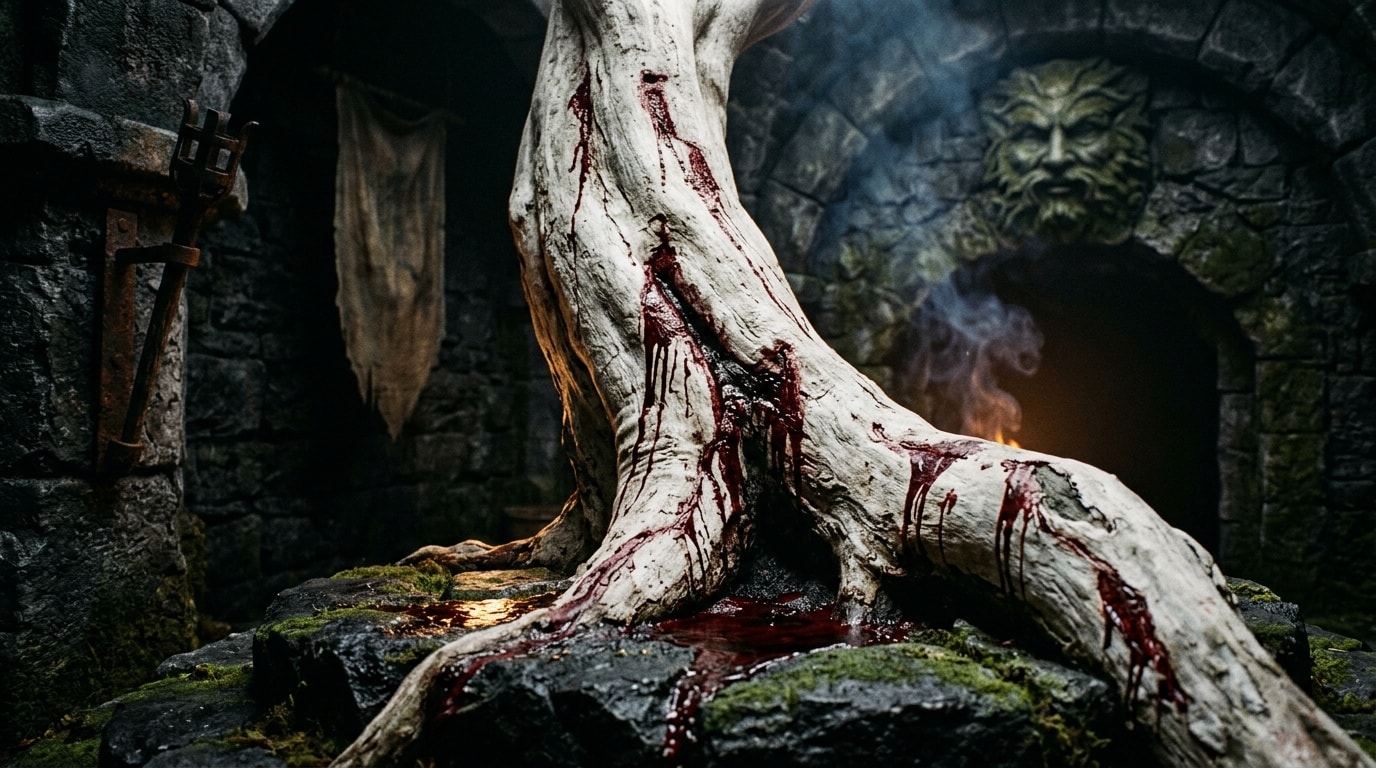
The horned figure that vanishes behind Harrenhal's heart tree immediately before Daemon's vision is a Green Man, an ancient guardian of the weirwood network, whose presence signals that the vision was a managed transmission rather than a passive haunting.
Larys Uses Aegon as His Escape Insurance
Larys Strong is using Aegon as a portable claim to the Iron Throne, a bargaining asset to be held in reserve in Braavos while the war consumes every other player.
Rhaenyra's Strike Will Cost Her the Peace
Rhaenyra's strike on Lannisport and Oldtown will fracture her coalition before it can win the war, because the dissent already on record at her own war council signals that the civilian casualties her dragonriders inflict will delegitimize her claim faster than any military victory can secure it.
Broome Tried to Flip Daemon Against Rhaenyra
Ser Alfred Broome attempted to flip Daemon against Rhaenyra at Harrenhal, and Daemon's decision to reject him privately rather than deliver him to Rhaenyra's custody left the treason alive inside the Black host.
Alicent's Peace Offer Conceals a Trap
Alicent's peace offer is a coordinated delay designed to neutralize Rhaenyra's dragon advantage while the Triarchy fleet and Green armies reach their positions, with the three-day deadline functioning as a military clock rather than a surrender condition.
Aemond's Rage Is Impotence Disguised as Power
Aemond's destruction of Sharp Point is not a military calculation but a psychological confession: turned back at Dragonstone and unable to strike what actually threatens him, he incinerates a defenseless city to restore a self-image that the war has already begun to destroy.