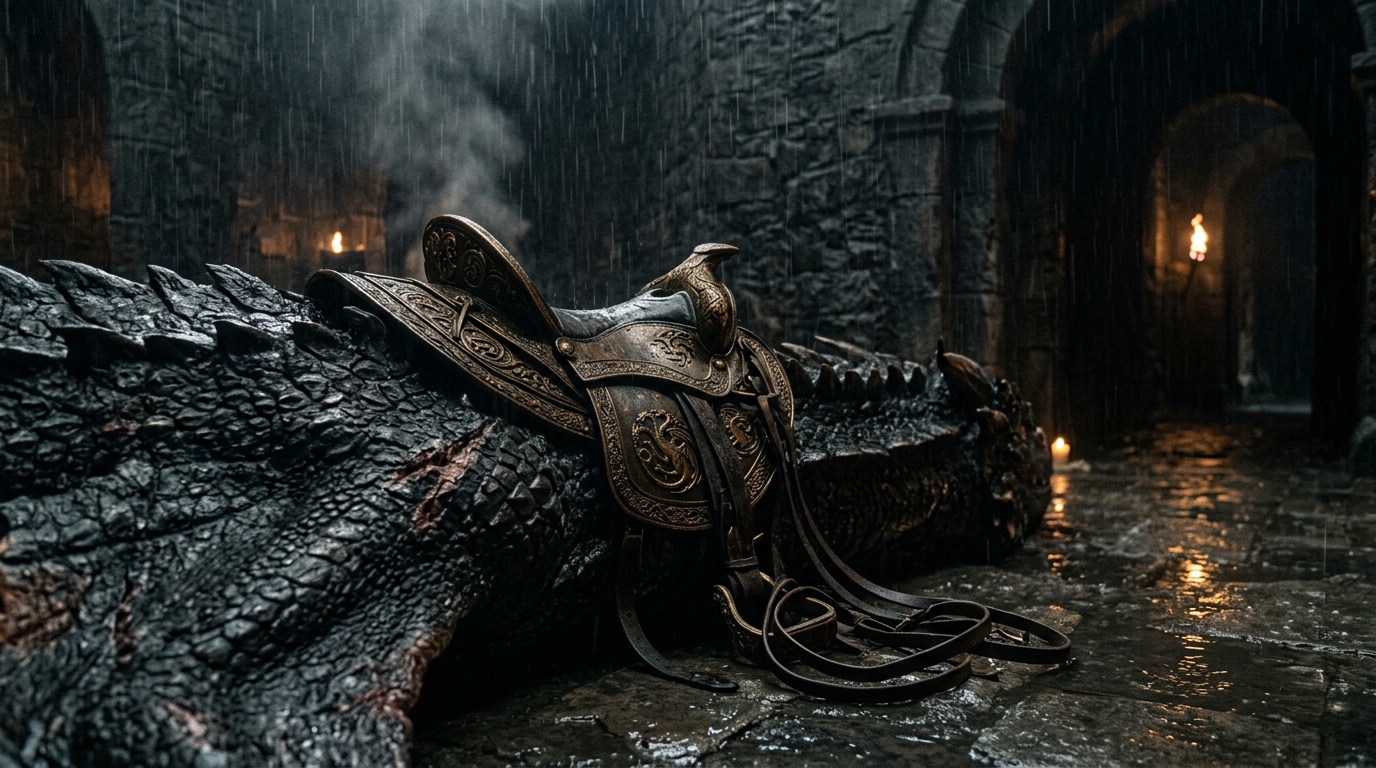
Sheepstealer's Loyalty Ends Where Battle Begins
THE ARGUMENT
Sheepstealer has not accepted Rhaena as a rider but as a dependent, which means the bond is structurally incapable of producing combat control regardless of how much time they spend together. The indiscriminate burning of allied ships and the attack on Moondancer at the Battle of the Gullet are not failures of training but the inevitable output of a dragon operating outside any command hierarchy, carrying a rider whose need to have a dragon prevented her from recognizing that the hierarchy was never established. Rhaena did not claim Sheepstealer. He claimed her, and he fights accordingly.
How This Theory Works
Rhaena's bond with Sheepstealer cannot mature into reliable combat control because Sheepstealer has not accepted her as a rider at all. He has accepted her as a dependent. That distinction is the structural fault beneath every catastrophe at the Battle of the Gullet, and the show has not said it plainly.
The bonding mechanism the show chose is the tell. In the books, Nettles earned Sheepstealer's trust by bringing him sheep daily, positioning herself as provider and thereby installing herself in a functional authority role. Here the dynamic is inverted: Sheepstealer brings Rhaena the sheep, roasted and shared. He has adopted her. A dragon that has adopted a rider as a ward rather than recognized a rider as a master is not operating within any command hierarchy, and no amount of singing or shared meals can install one after the fact. Rhaena is not training a wild dragon into a weapon. She is a passenger whom the dragon has decided to carry.
The battle confirms this with precision. Moondancer and Vermax were raised alongside humans and other dragons, giving them behavioral architecture for coordinated engagement. Sheepstealer has lived his entire life as a solitary predator. That animal, thrown into its first naval battle, burns what moves. It has no framework for distinguishing Triarchy ships from Velaryon vessels, and Rhaena has no command depth to impose one. Sheepstealer attacks Moondancer and kills Corlys's own men. Rhaena is not directing any of this. She is present.
What the show has not said, but every scene implies, is that Rhaena's compromised judgment is the precondition for all of it. Her lifelong insecurity about not having a dragon has made her incapable of honestly evaluating whether the bond is battle-ready, because she needs it to be battle-ready too badly to find out. She did not claim a dragon. She accepted one that claimed her, and then took it to war because the alternative was admitting the distinction mattered. The show has given Rhaena a dragon. It has given Sheepstealer a ward he will protect on his own terms, by his own rules, against targets of his own choosing.
Is this theory convincing?
Key Evidence
Sheepstealer Returns Unbidden With Sheep
After dumping Rhaena on a mountain cliff, Sheepstealer returns on his own initiative with a roasted sheep and shares it with her, establishing a bond driven by the dragon's choice rather than the rider's command.
Indiscriminate Fire on Allied Ships
During the Battle of the Gullet, Sheepstealer burns both Triarchy and Velaryon vessels without discrimination, killing Corlys's own men because Rhaena has no effective control over the dragon's targeting.
Sheepstealer Attacks Sister Baela's Dragon
Sheepstealer turns on Moondancer during the battle, attacking Rhaena's own sister's dragon despite the familial and factional connection, demonstrating the bond imposes no loyalty hierarchy on the wild dragon.
Solitary Dragon Lacks Battle Conditioning
Unlike Moondancer and Vermax, which were raised around humans and other dragons, Sheepstealer has lived as a solitary wild animal his entire life, giving him no behavioral framework for distinguishing ally from enemy in a coordinated engagement.
Rhaena Sings to Calm Dragon
Rhaena sings to Sheepstealer to calm him after being thrown, suggesting her primary tool for managing the dragon is emotional appeal rather than the commanding authority a trained rider would exercise.
Inverted Provider Role in Bonding
The bonding mechanism reverses the expected dynamic: instead of Rhaena bringing Sheepstealer sheep to earn his trust, the dragon brings her sheep and roasts it for her, positioning Rhaena as the dependent rather than the authority.
Lifelong Insecurity Driving Dangerous Choice
Rhaena's compulsive pursuit of Sheepstealer is framed as the culmination of a lifelong insecurity about not having a dragon, suggesting her judgment about the bond's readiness is compromised by how badly she needs it to succeed.
This theory was evaluated using Theory Atlas editorial standards, including evidence review, narrative fit, and competing interpretation analysis. Learn how Theory Atlas evaluates theories →
Other Theories for S3E01
Aemond Names Himself King, Not Regent
Aemond has declared himself king outright rather than regent, using Aegon's flight from King's Landing as invented legal cover for a throne seizure he has long pursued.
Jace's Treason: Son Supplants Queen
Jace does not believe Rhaenyra is capable of leading the war, and the imprisonment at the Battle of the Gullet is the operational proof: he converted the Queen's Guard into his instrument and removed the queen from command on strategic grounds he judged for himself.
Alicent's Two-Son Operation: How She Weaponized One Child to Sell Another
Alicent executed a single premeditated strategic operation with two interlocking parts: she weaponized Aemond's emotional dependency on her — a dependency she spent years building — to remove him and Vhagar from King's Landing as the military precondition for surrender, then delivered Aegon to Rhaenyra's justice as the political transaction that would buy survival for herself, Helaena, and Jaehaera.
Rhaena Riding Sheepstealer Erases Nettles
By replacing Nettles with Rhaena as Sheepstealer's rider, the show has permanently closed the narrative slot reserved for a dragon bond that Targaryen lineage cannot explain.