Carol Cannot Refuse What She Cannot Survive
THE ARGUMENT
Carol's resistance to the Collective is not ideological but a lifelong refusal to be witnessed yielding, the same reflex that made her dismiss the aurora in Norway while letting it fill her eyes when she thought no one was looking. The show's structural irony is that her independence costs the Collective more labor than acceptance would, and her grief over Helen converts every act of Collective service into proof that the world absorbed her loss without feeling it. The nuclear weapon confirmation does not give Carol leverage over the Collective; it destroys her last rationalization for staying outside something she is already softening toward.
How This Theory Works
Carol's lifelong reflex is to hold beauty at arm's length before it can cost her something, and that reflex predates the outbreak, predates the Collective, predates Helen's death. It is a stable feature of her character, not a response to circumstance. The Norway flashback is not backstory. It is the diagnosis. She dismisses the aurora as a screensaver while Helen is enchanted by it, and then, when she believes no one is watching, her eyes open and fill with reflected light. She is capable of yielding. She simply refuses to do it where it can be witnessed or named.
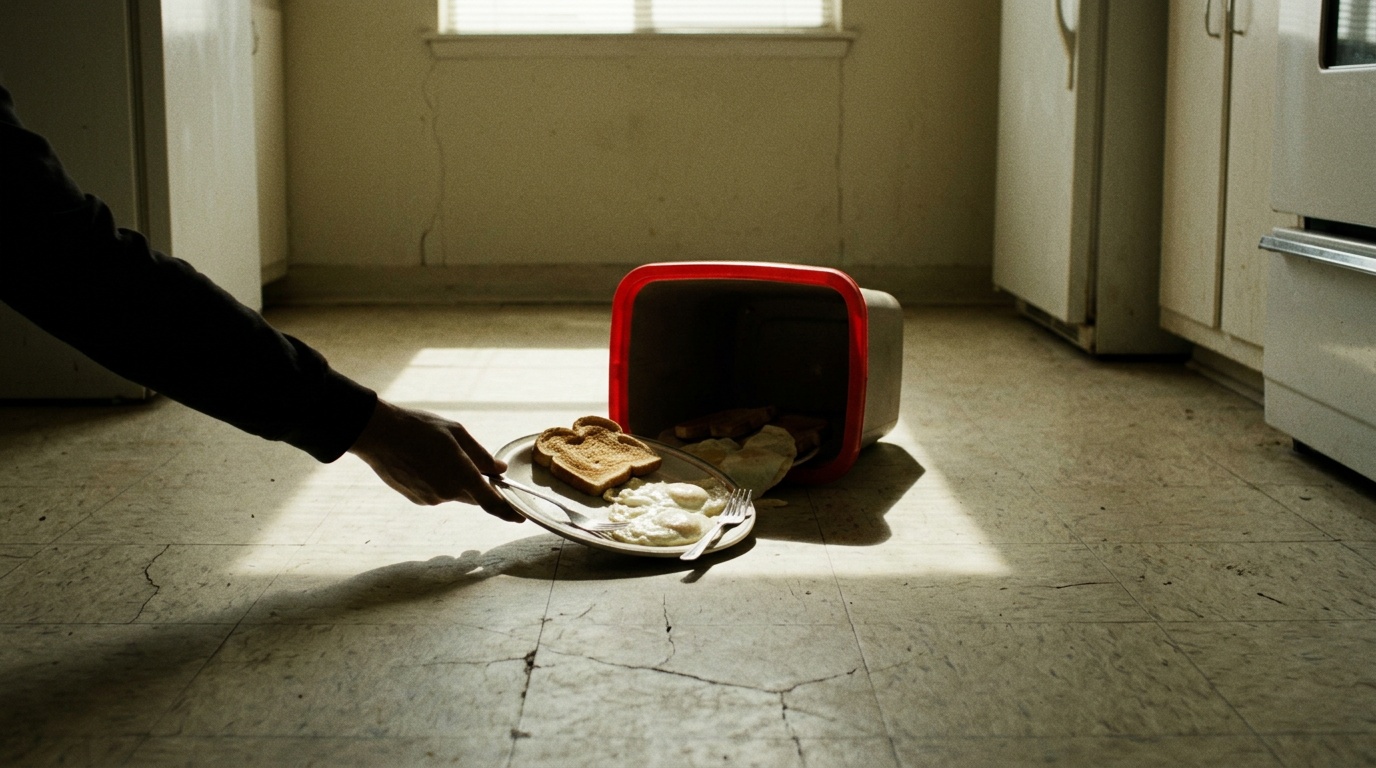
This is what drives every act of resistance that follows. Throwing away the delivered breakfast, demanding to shop in an empty supermarket, insisting she does not want to be waited on: none of it is ideological. It is the same move she made on the hillside. The structural irony the show constructs around this reflex is precise. Carol's insistence on independence forces the Collective to expend more labor on her behalf than passive acceptance ever would. Her autonomy is subsidized by the very system she is performing resistance against.
Helen's death sharpens this into something more exposed. When the massage gun arrives, Carol does not grieve. She demands the Collective scrub Helen from their shared memory entirely, framing her emotional response as a territorial claim: only she gets to remember Helen. But the demand reveals what it is trying to conceal. She cannot bear that a world which absorbed Helen into its hive structure feels no corresponding loss. The fury is not about intrusion. It is about the impossibility of private grief inside a system built on shared experience. She is trying to own something the Collective has already distributed.
The grenade reframes all of it. Carol's sarcastic request is a test she does not expect to pass, and when Zosia delivers a live explosive, the absurdity cracks her open long enough to invite her inside. But the more consequential discovery comes after Zosia is hospitalized. Carol runs escalating tests and receives escalating confirmation: another grenade, a more dangerous weapon, a nuclear device. The Collective cannot refuse her. What this reveals is not that Carol has power over the Collective but that she has lost her last available rationalization for staying outside it. She cannot claim she is protecting herself from something naive or manageable. She now knows exactly what she is softening toward.
And she is softening anyway. She invited Zosia in. She did it knowing the Collective would hand her a nuclear weapon on request. Her own logic, pressed to its conclusion, demands she barricade further or leave entirely. Instead she opened the door, which is exactly what she did on the hillside when she let the aurora into her eyes and hoped Helen was not watching.
Is this theory convincing?
Key Evidence
Food Thrown Away at Doorstep
Carol finds breakfast delivered to her door and immediately throws it away, stating she does not want their assistance, directly dramatizing her refusal to accept Collective service even when it benefits her.
Convoy Summoned for One Shopper
Carol's demand to shop normally triggers a massive Collective response: dozens of workers and a convoy of trucks restock every aisle of Sprouts, illustrating how her independence requires more Collective labor than passive acceptance would.
Massage Gun Triggers Memory Demand
Helen's pre-death gift arrives at Carol's door and immediately destabilizes her; Carol's response is not grief but a demand that Zosia scrub all memories of Helen from the Collective, framing her emotional reaction as a territorial claim over private memory.
Aurora Dismissed as Screensaver
In the Norway flashback, Carol dismisses the aurora borealis as looking like a screensaver while Helen is enchanted, establishing that her resistance to comfort and wonder predates the outbreak and is a stable character trait.
Grenade Delivered Without Hesitation
Carol sarcastically orders a hand grenade and Zosia delivers a live one, revealing that the Collective's compulsion to fulfill her requests overrides any safety calculation and setting up the episode's central structural discovery.
Nuclear Weapon Offer Confirms Deference
After Zosia is hospitalized, Carol escalates her tests until the Collective confirms they would provide a nuclear weapon, making explicit that their inability to refuse her is not incidental but absolute.
Carol Softens Only at Aurora
Despite dismissing the Northern Lights, Carol's eyes open and reflect the aurora after Helen rests beside her, showing that she is capable of yielding but only in singular moments of real connection, a pattern that maps onto her brief softening toward Zosia during their shared drink.
This theory was evaluated using Theory Atlas editorial standards, including evidence review, narrative fit, and competing interpretation analysis. Learn how Theory Atlas evaluates theories →
Other Theories for S1E03

The Compliance Loop: How Carol Is Teaching the Collective to Arm Her
The Collective's inability to parse sarcasm is not a calibration error but a permanent structural failure that applies exclusively to Carol, its one unabsorbable human.
The Paraguayan Who Wants Nothing To Do With Anyone
Manousos Oviedo's 33-hour concealment from the Collective was not accidental survival but a deliberate method, making him the most operationally valuable immune individual Carol could reach and the one person whose knowledge reframes her entire strategy.

Zosia's Shield: Hive Cracks Under Pressure
Zosia's sacrifice and the Hive's hesitation over the nuclear request are not signs of fracture but evidence that the Collective is actively managing Carol rather than simply complying with her.

The Collective Cannot See Its Own Failure Mode Because the Ice Hotel Already Demonstrated It
The Norway flashback is not backstory — it is the show installing its thesis before the Collective appears on screen.