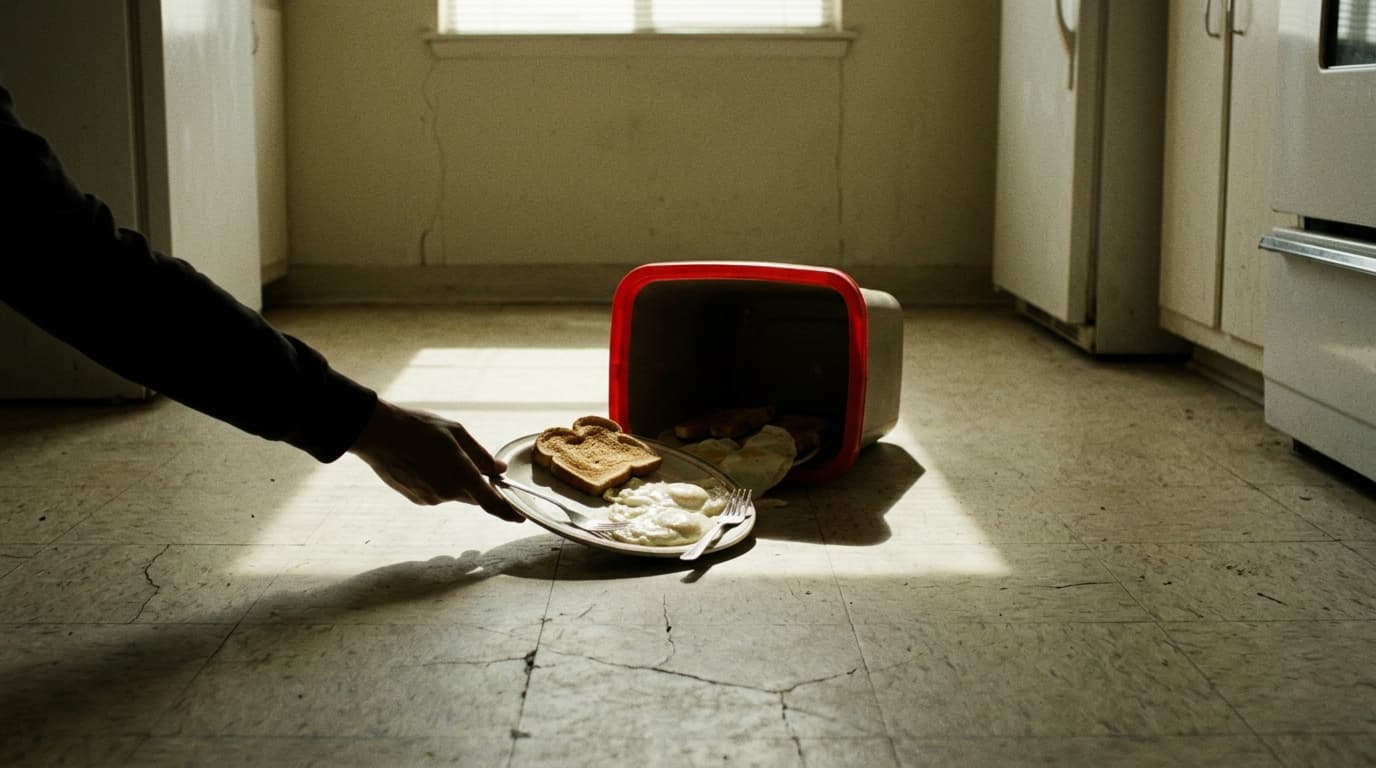
Carol Cannot Refuse What She Cannot Survive
Plausibility Score
(?)Convinced
(?)#277
of 1000 theories
Theory Ranking
(?)READER VERDICT
Is this theory convincing?
Trend builds after 10 votes.
Be among the first to weigh in.
THEORY ASSESSMENT
Every structural beat of the episode, from the Norway flashback establishing Carol's pre-existing resistance to the nuclear weapon test revealing the Collective's absolute deference, directly supports this theory's claim, with no significant gaps requiring speculation beyond what is shown.
STORY CONTEXT
Theories on why Carol alone resists the hive-mind's pull, from genetic anomalies to psychological trauma to something the Collective itself may have engineered.
ACTIVE SIGNALS
This theory ranks among the most-contested in the Theory Atlas catalog — a grounded competing reading meaningfully challenges the dominant interpretation.
WHY THIS MATTERS
The theory exposes the show's core tension: Carol's autonomy is not a freedom the world can accommodate, and her grief has made her incapable of recognizing that the Collective's deference may be the only form of power available to her. If she weaponizes that leverage, her resistance transforms from personal stubbornness into something with planetary stakes.
ALTERNATE INTERPRETATION
A minority reading frames Carol's behavior less as independence-as-character-flaw and more as the product of unprocessed grief. On this view, her refusals are not about self-reliance at all but about the absence of any space in a post-Joining world to mourn. Because everyone else lost someone and no one grieves, Carol's emotional breakdown is structurally invisible, and her resistance is the only language available to her loss. The two readings are not mutually exclusive, but the grief-first framing argues that her independence is a symptom rather than the cause.
Adjacent Reading — Not a Competing Theory
Other Theories for S1E03

The Compliance Loop: How Carol Is Teaching the Collective to Arm Her
The Collective's inability to parse sarcasm is not a calibration error but a permanent structural failure that applies exclusively to Carol, its one unabsorbable human.
The Paraguayan Who Wants Nothing To Do With Anyone
Manousos Oviedo's 33-hour concealment from the Collective was not accidental survival but a deliberate method, making him the most operationally valuable immune individual Carol could reach and the one person whose knowledge reframes her entire strategy.

Zosia's Shield: Hive Cracks Under Pressure
Zosia's sacrifice and the Hive's hesitation over the nuclear request are not signs of fracture but evidence that the Collective is actively managing Carol rather than simply complying with her.

The Collective Cannot See Its Own Failure Mode Because the Ice Hotel Already Demonstrated It
The Norway flashback is not backstory — it is the show installing its thesis before the Collective appears on screen.