Survivor Leverage Is Real but Already Being Measured for a Loophole
THE ARGUMENT
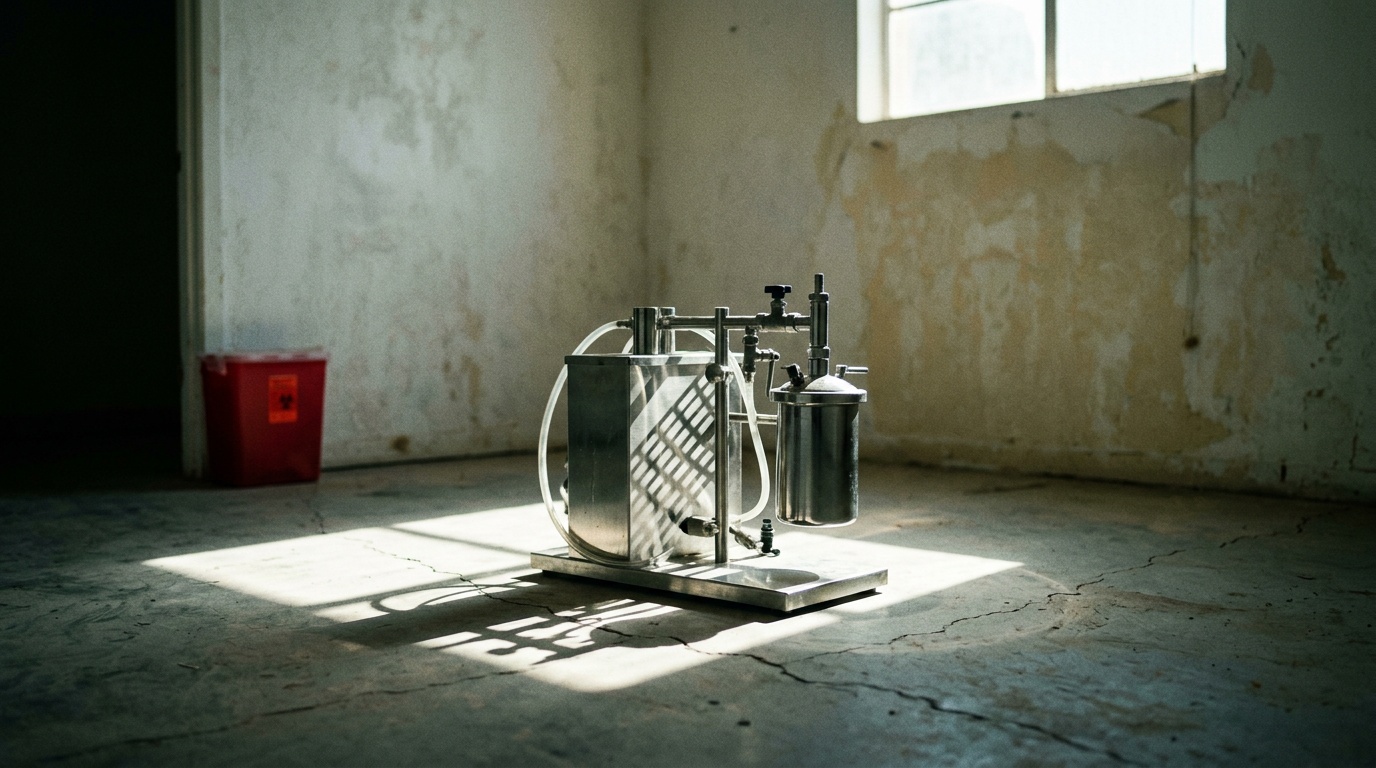
The Others' biological dependence on willing subjects for stem cell extraction gives immune survivors genuine structural leverage — the Collective cannot grow without consent it cannot compel. That leverage is real but potentially fragile: the Others' conspicuously narrow promise to never collect stem cells 'from your body' suggests they are already probing whether externally stored biological material, such as Carol's frozen eggs, can substitute for live extraction and bypass the consent barrier entirely.
How This Theory Works
The consent requirement is not a courtesy the Others are choosing to extend. It is a hard biological ceiling on their power, and the cruel irony is that the Collective's own survival mechanism generates the condition most threatening to its survival. Because the virus must be customized using stem cells harvested through an invasive procedure, physical access to a consenting body is a prerequisite the Others cannot circumvent by force. Every day an immune survivor refuses, the Others' ten-year deadline shortens. The institution designed to perpetuate itself is, through its own internal logic, teaching its targets exactly how to hold it hostage. This is not a dynamic the Others chose. Their biology produced it automatically.
The behavioral evidence supports the structural argument. Koumba's high-roller ease in Las Vegas — lounging in hot tubs while the Others orbit him silently — reads less like naive complacency and more like the posture of someone who grasped, at least intuitively, that he holds a card they cannot take by force. His comfort was informed. The steak episode sharpens the operational picture: the Others cannot kill an animal, but they will prepare it if Koumba does the killing. Their constraints can be routed around through human intermediaries, which means survivors who understand the structure can use refusal as currency, extracting concessions against a deadline the Others feel and the survivors do not. Carol's case makes the strategic logic explicit: when she tells them she will never consent, they respond not with coercion but with patience — warm assurances about her food supply, expressions that the world misses her. They have no other move. Their accommodating language is not politeness. It is the negotiating posture of a collective that cannot take what it needs by force.
Carol's refusal also carries a personal dimension that reinforces rather than complicates the structural argument. Her deepest terror is the erasure of individual identity, a fear rooted in formative experience with forced conformity. Her 'no' to the Others is not only a tactical position. It is the most complete expression of who she is, and the episode treats it as such. What makes her case analytically distinctive is that she refuses in isolation — every other immune survivor has already accepted HDP or conversion — and yet isolation does not weaken her position here. The consent barrier is one of the few levers where standing alone is as effective as standing with a bloc. The twice-weekly Zoom calls among immune survivors point toward something more powerful: if that collective coordinates a unified refusal, the leverage Koumba has been exercising individually scales into something the Collective cannot absorb. The Others' ten-year deadline is not a threat they hold over survivors. It is a threat survivors hold over the Others, and it only grows more acute as the window closes.
The frozen eggs detail is where the theory's optimism about survivor leverage becomes structurally unstable. The Others' formal commitment to Carol covers only stem cells collected directly from her body, and that phrasing was almost certainly not accidental. A collective that controls the world's leading converted scientists, and that acquired this procedure only the day before Diabaté disclosed it, would have both the motive and the technical capacity to immediately investigate whether externally stored biological material — material that contains Carol's DNA but sits entirely outside her body — can substitute for live extraction in the customization process. Carol's disclosure that she froze her eggs was not framed as significant at the time. It sits in the record now, and the Others' unusually narrow contractual language around 'your body' suggests someone in that collective is already measuring the gap between the promise they made and the biology they need. The show has introduced a precise, answerable question: does the conversion procedure require live extraction specifically, or does the biology tolerate stem cells derived from stored material? If the latter, Carol's refusal secured her body while leaving her biology exposed, and the consent barrier she believes she holds is already being mapped for a way around it.
Is this theory convincing?
Key Evidence
Consent Requirement Confirmed On Screen
Diabaté reveals that conversion requires an invasive procedure using the individual's own stem cells, and that the Others cannot perform it without the subject's consent, confirmed as a discovery made only the day before.
Koumba's Carefree Luxury Behavior
Koumba's relaxed, high-roller lifestyle in Las Vegas makes structural sense once the consent requirement is confirmed, suggesting his ease was grounded in knowing the Others could not force his conversion.
Carol and Diabaté Refuse Consent
Diabaté declines to consent and Carol emphatically professes she will never consent, demonstrating that refusal is both possible and currently practiced by survivors.
Steak Preparation as Proxy Action
In an earlier episode, Koumba asked the Others to get him a steak; since they cannot kill the animal, the implication is that if Koumba kills it, they will prepare it, illustrating how the Others' constraints can be navigated through human intermediaries.
Others Face Decade Survival Deadline
The episode confirms the Others will begin dying within a decade without a stabilized food supply, creating escalating pressure on the consent standoff and suggesting it cannot remain static.
Zoom Meetings as Collective Negotiation Space
The immune survivors hold twice-weekly Zoom calls to discuss their situation, pointing to an organized group dynamic where the terms of coexistence, including the consent boundary, are actively being deliberated.
This theory was evaluated using Theory Atlas editorial standards, including evidence review, narrative fit, and competing interpretation analysis. Learn how Theory Atlas evaluates theories →
Other Theories for S1E06
The Only One Who Listened
The Collective permitted Carol's videotape to reach Manousos because his refusal to accommodate was more valuable in motion than in isolation.

His Mother's Voice, His Greatest Resistance
The Others miscalculated when they sent Manousos' biological mother to intercept him during his escape.
The Hive Speaks on 8.613.0
The Others' apparent telepathy is electromagnetic coordination broadcast on a specific radio frequency, 8.
Diabaté's Silence About Carol Is the System Protecting Itself
Diabaté's Vegas arrangement is structurally self-defeating — optimized to eliminate the risk, reciprocity, and surprise that make experience meaningful — and his refusal to leave is not loyalty to Carol but guilt management by a man who already knows her isolation is engineered.
Carol the Unknowing Antagonist
Carol's exclusion from the survivor group is not a circumstance but a verdict: the group collectively determined she is incapable of reaching the conclusion they reached, and they were right.