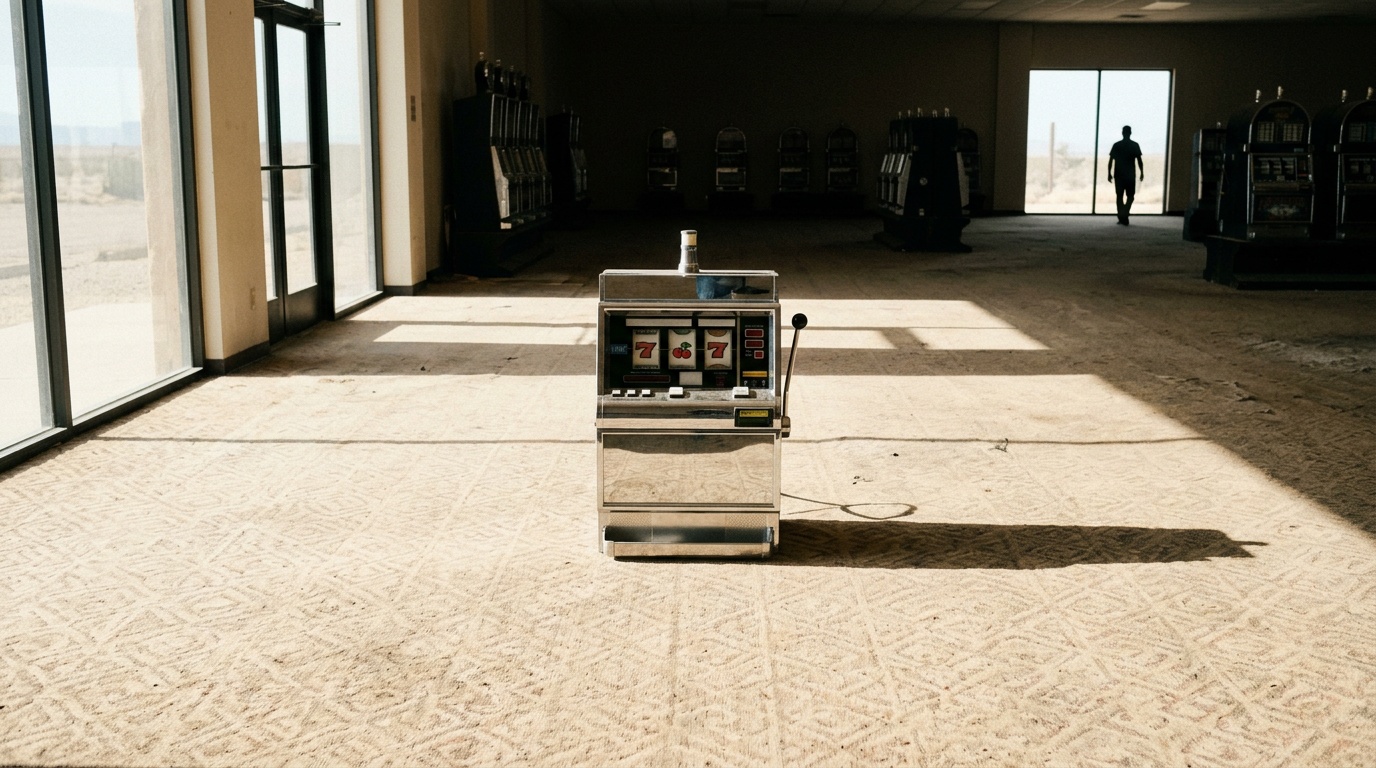
Diabaté's Silence About Carol Is the System Protecting Itself
THE ARGUMENT
Diabaté's Vegas arrangement is structurally self-defeating — optimized to eliminate the risk, reciprocity, and surprise that make experience meaningful — and his refusal to leave is not loyalty to Carol but guilt management by a man who already knows her isolation is engineered. His access to the information Carol has been denied represents the one lever that could disrupt the system, and so far he has chosen not to pull it.
How This Theory Works
Diabaté's Vegas existence is condemned by the same mechanism that sustains it. When he exits a room, the Others immediately drop their performed personas and revert to silent, robotic cleanup — not a design flaw but the system working precisely as intended. The companions are not companions. They are a biological feedback loop with a single input, and when the input leaves, the loop idles. This is the ceiling of the arrangement: a social world that requires his presence to exist cannot produce the kind of relationship that persists, surprises, or pushes back. Diabaté is aware enough of his own individuality to refuse conversion, yet he has constructed a life where every outcome is predetermined in his favor, including the casino table where the Collective allows him to win. Strip risk from gambling and victory becomes arithmetic. His refusal to consent to conversion and his embrace of a consequence-free existence are not in accidental tension — they are the same impulse: a man who wants the form of autonomy while eliminating its exposure to loss.
The avocado toast Carol brings him is the crack in that structure. His genuine reaction to tasting something he has never encountered before stands apart from every other pleasure his arrangement has produced, and the reason is architectural: a system optimized to fulfill prior preferences cannot generate novelty. It can only deliver what Diabaté has already known to want. Carol, operating entirely outside the optimization loop, produces a moment the Collective could not have manufactured. That single detail sets the hard ceiling of his paradise — bounded by his own prior imagination — and it arrives as a side effect of someone else's presence, not as anything the system designed.
What the avocado toast moment also establishes is that Carol is the one authentic relationship available to Diabaté, which makes his knowledge of her situation the sharpest moral charge the evidence supports. Diabaté is already inside the group chats that deliberately excluded her. He has accepted the HDP explanation, is networked into the survivor community Carol has been structurally denied access to, and understands the architecture of her isolation from the inside. When the Others offer to vacate Las Vegas and he refuses — saying he cannot do that to Carol, that they will eventually need to talk — he is not speaking the language of loyalty. He is speaking the language of a man who knows her exclusion is not accidental and has so far said nothing about it. Abandoning Las Vegas would collapse the last thin justification he has for that silence, which means his refusal to let the Others leave is less an act of care than an act of guilt management.
The hotel suite exchange sharpens this further. Carol raises the possibility of proximity to Diabaté and, receiving no warmth, retreats into calling it a joke. Her backtrack is a cover for sincere desire for connection with someone who is, like her, not fully absorbed into the Collective. His non-response is deflection rather than rejection — a meaningful distinction, because rejection would close the door while deflection keeps it ajar while protecting him from having to act. He cannot fully withdraw from Carol without confirming that his expressed concern for her loneliness was always self-serving, and he cannot fully close the distance without converting his private knowledge about her exclusion into something actionable. So he idles, like the Others when he leaves the room.
The deepest charge is that his arrangement is not incidentally exploitative but structurally dependent on the same crisis he refuses to examine. The Others face mass death within a decade from calorie shortage, running on human-derived protein while expending energy and labor on elaborate performances staged for his entertainment. His refusal to convert is framed as a principled defense of autonomy, but the autonomy he is defending is the right to be resourced by people slowly starving to sustain him — without their consent, while he withholds his own. The institution built to give Diabaté everything has therefore produced the one condition it was designed to eliminate: a man so thoroughly insulated from consequence that the only authentic texture in his world arrives as a side effect of Carol's engineered crisis. She is the unoptimized, uncontrolled human connection the Collective's logic is consuming in order to run, and Diabaté knows it. His silence is not ignorance. It is optimization — guilt, like pleasure, safely managed into passivity.
Is this theory convincing?
Key Evidence
Others Revert When Diabaté Leaves
When Diabaté exits the room, the Others immediately stop performing and silently revert to robotic cleanup behavior, revealing that the entire social environment is a staged production that requires his presence to animate it.
Guaranteed Casino Wins Remove Stakes
Diabaté gambles at the high-roller table in a setup where the Collective allows him to win, stripping the activity of the risk and challenge that make victory meaningful in the first place.
Avocado Toast Novelty Moment
When Carol brings Diabaté avocado toast he has never seen before, his genuine reaction to the unexpected experience stands apart from every other pleasure in his arrangement, exposing that the Collective can only deliver fantasies he has already asked for.
Refusal to Consent Despite Comfort
Diabaté refuses conversion even while living in full luxury with the Others serving his every desire, indicating that he values autonomy enough to withhold consent yet has built a life where that autonomy produces no genuine unpredictability.
Hypocrisy on Consent and Harm
Diabaté protects his own right to refuse conversion while calmly accepting the HDP system that processes human remains without the consent of those whose bodies are used, revealing that his concern for autonomy is primarily self-directed.
Others as Programmed Companions
The Collective is biologically programmed to optimize for Diabaté's happiness and will adjust all behavior to serve that objective, making his companions structurally equivalent to AI systems designed to eliminate friction rather than genuine human relationships.
Extravagance Amid Others' Calorie Deficit
The Others are consuming human-derived protein because they face mass death within a decade from calorie shortage, yet Diabaté's fantasy requires them to expend energy and resources on elaborate performances for his entertainment.
This theory was evaluated using Theory Atlas editorial standards, including evidence review, narrative fit, and competing interpretation analysis. Learn how Theory Atlas evaluates theories →
Other Theories for S1E06
The Only One Who Listened
The Collective permitted Carol's videotape to reach Manousos because his refusal to accommodate was more valuable in motion than in isolation.

His Mother's Voice, His Greatest Resistance
The Others miscalculated when they sent Manousos' biological mother to intercept him during his escape.

Survivor Leverage Is Real but Already Being Measured for a Loophole
The Others' biological dependence on willing subjects for stem cell extraction gives immune survivors genuine structural leverage — the Collective cannot grow without consent it cannot compel.
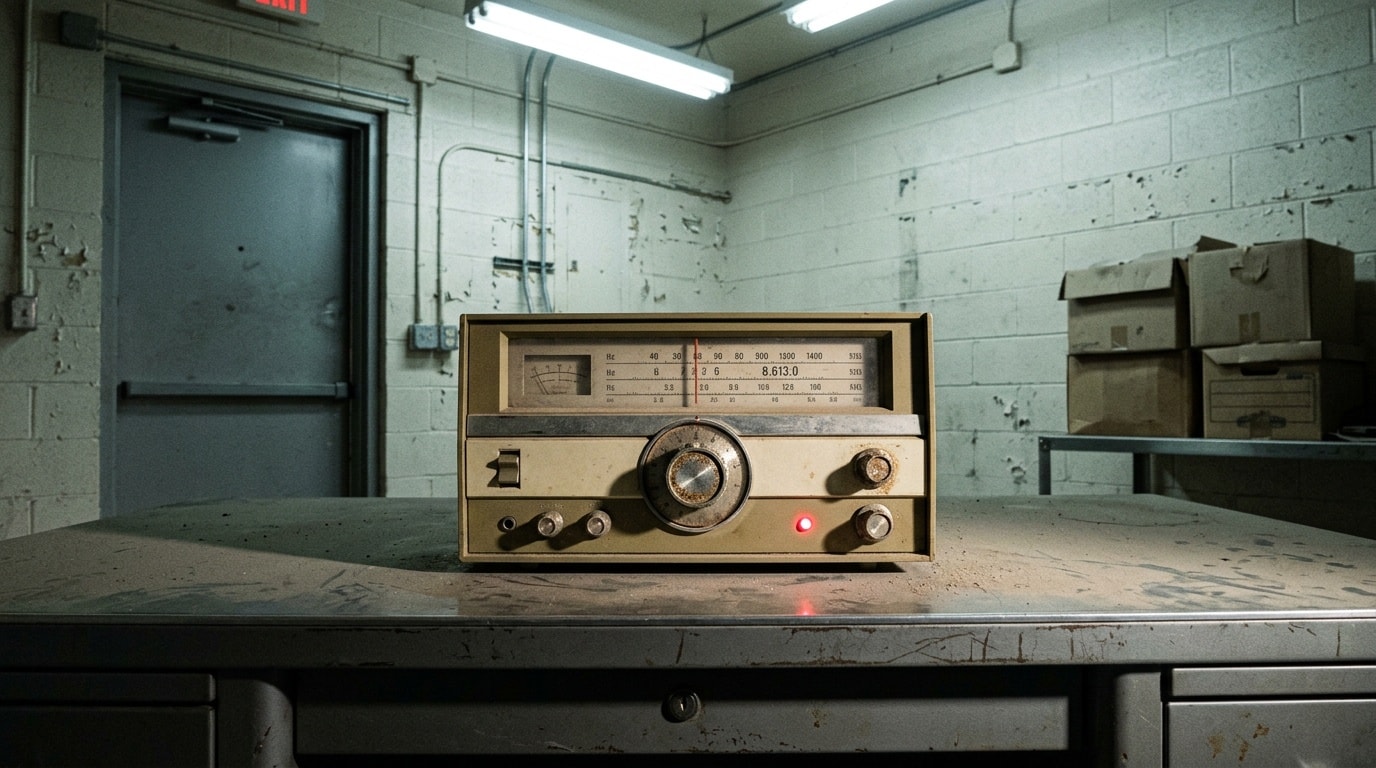
The Hive Speaks on 8.613.0
The Others' apparent telepathy is electromagnetic coordination broadcast on a specific radio frequency, 8.
Carol the Unknowing Antagonist
Carol's exclusion from the survivor group is not a circumstance but a verdict: the group collectively determined she is incapable of reaching the conclusion they reached, and they were right.