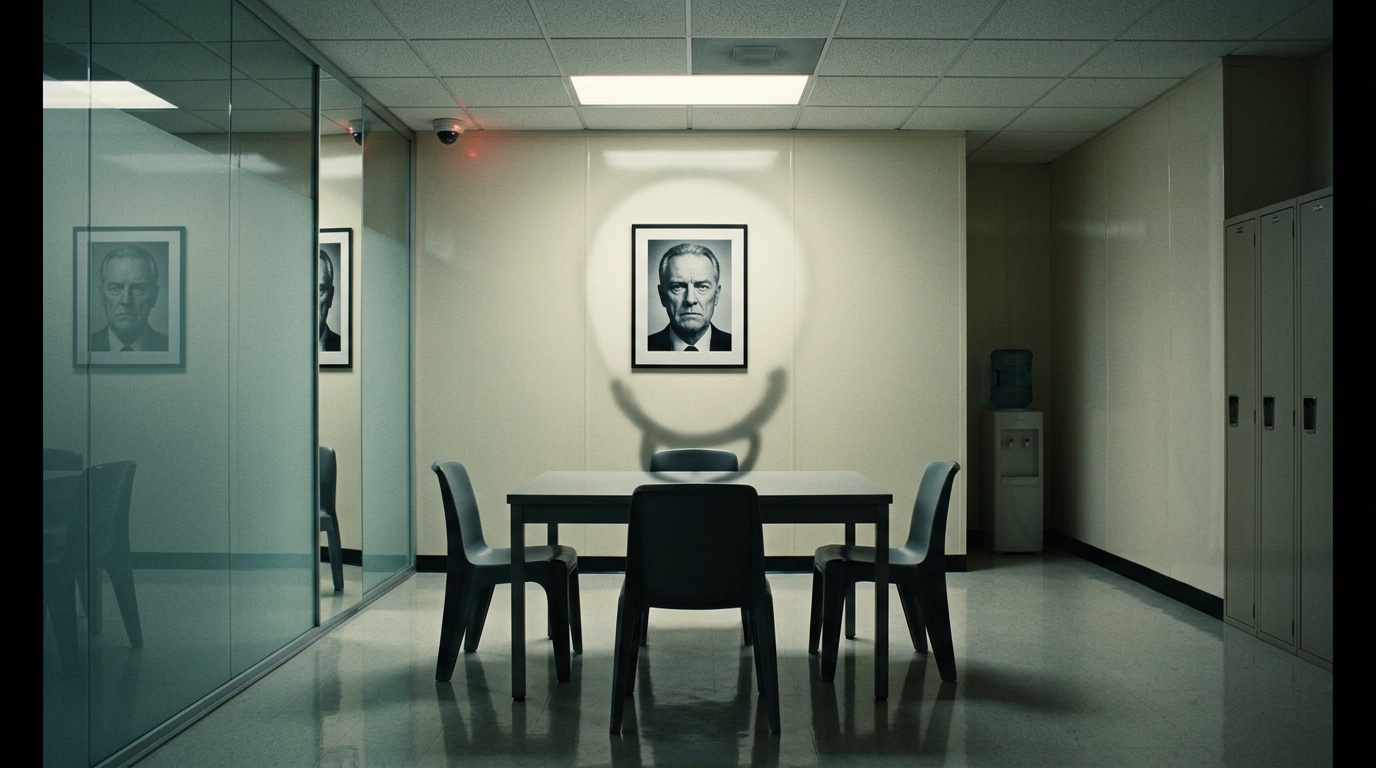
Kier's Philosophy Condemns Lumon's Own Secrecy
THE ARGUMENT
Lumon's leadership did not fail to implement Kier's philosophy of 'illumination beyond all.' They built it as a control doctrine from the start, designed to circulate upward as a loyalty demand while functioning below the severance cut as atmosphere with no content. When Mark applies the creed literally and asks why it does not include him, he is not challenging Lumon's values. He is revealing that the values were always the mechanism.
How This Theory Works
The falsifiable claim here is specific: Lumon's leadership consciously constructed the asymmetry. The philosophy travels up the hierarchy as devotion and stops. Below it, workers receive the language of enlightenment and are denied every condition under which it could mean anything. That gap is not the result of scale, secrecy, or institutional drift. It is load-bearing. The creed requires ignorant recipients to function as intended.
Mark's question exposes this. He does not accuse Lumon of hypocrisy in the loose sense. He takes the philosophy at face value and applies it to himself. 'If the Eagen philosophy is illumination beyond all, why doesn't that include us? Why are we down here still working in the dark?' That move is the one the institution cannot survive through argument. If the creed is a genuine value, the information blackout is a violation of it. If the blackout is necessary, the creed was never a value. Lumon's leadership knows there is no third position, which is why no one attempts to occupy it.
Burt's agreement closes off the charitable reading. A longer-tenured department head from a separate floor and function arrives at the same conclusion without coordination. The convergence is not coincidence. It is a structural product. Lumon continuously generates this contradiction by handing its philosophy to people who are, by institutional design, intelligent enough to notice what is being withheld.
What follows is the argument's sharpest point. Cobel sings a song about Kier. Then MDR loses hallway access. Then Mark goes to the Break Room. The sequence matters because it is a sequence of escalating incapacitation rather than response. Ritual first, then operational restriction, then physical punishment. Leadership reaches for each in turn because none of them is an answer and all of them eliminate the capacity for the question. Lumon does not hold Kier's philosophy. It harvests the philosophy's authority while ensuring no one below a certain threshold is ever illuminated about anything that touches their own condition. The doctrine of enlightenment is, structurally, a doctrine of enforced ignorance. That is not a failure of implementation. It is the implementation.
Is this theory convincing?
Key Evidence
Mark Invokes Kier Against Lumon
Mark directly quotes Lumon's foundational Eagen philosophy, asking: 'If the Eagen philosophy is illumination beyond all, why doesn't that include us? Why are we down here still working in the dark?'
Burt Validates the Contradiction
Burt, O&D's department head and a longer-tenured innie, agrees with Mark's critique, indicating the information blackout is a cross-departmental feature rather than an MDR-specific grievance.
Cobel Sings Rather Than Answers
When confronted with MDR's unauthorized visit and implicitly with Mark's philosophical challenge, Cobel responds by singing a song about Kier rather than engaging the substance of his critique.
Break Room as Philosophical Suppression
Mark is sent to the Break Room immediately after his speech in O&D, framing physical punishment as Lumon's only available answer to a question the institution cannot resolve through argument.
Hallway Privileges Revoked for Inquiry
Cobel strips MDR of hallway access until they hit quota, using operational control to prevent further cross-departmental contact after Mark began asking questions about Lumon's structure.
This theory was evaluated using Theory Atlas editorial standards, including evidence review, narrative fit, and competing interpretation analysis. Learn how Theory Atlas evaluates theories →
Other Theories for S1E06
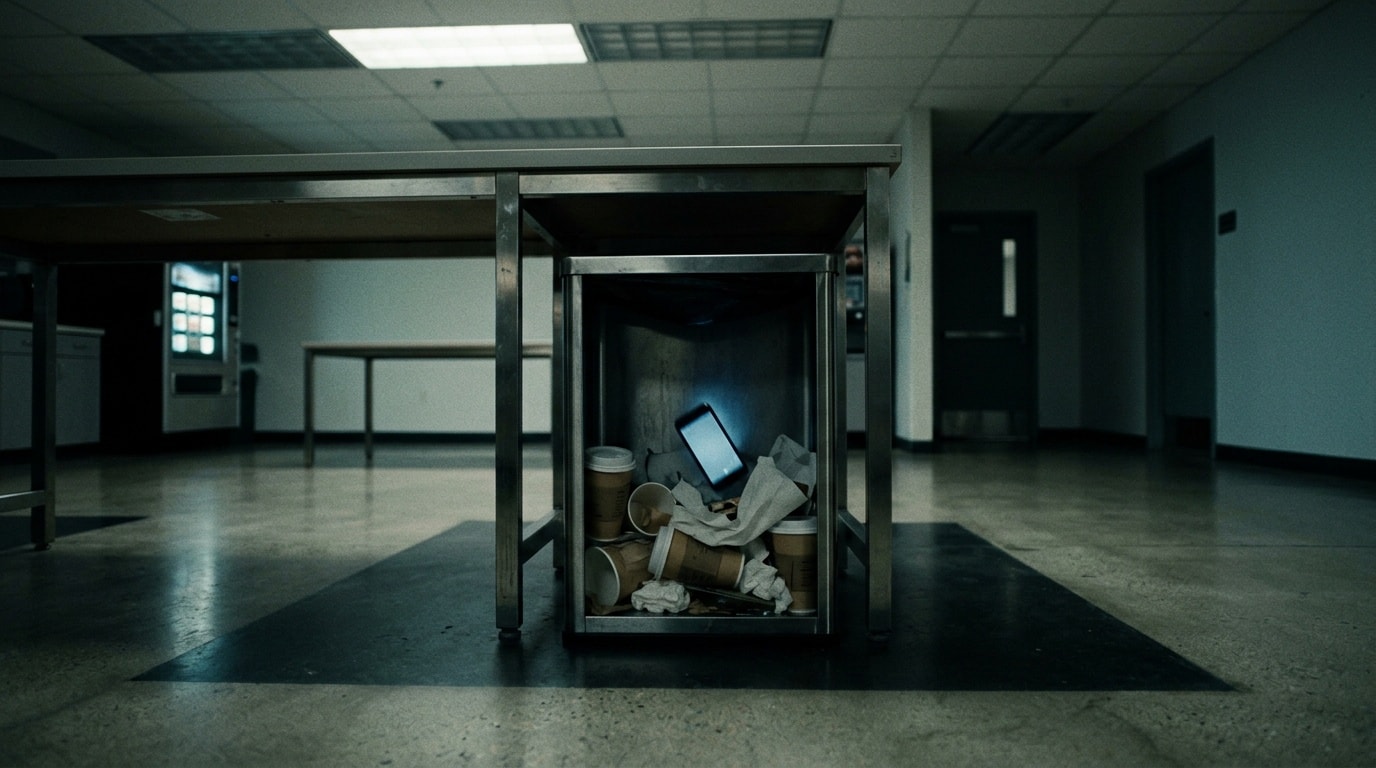
Mark Buries the Evidence to Bury Himself
Mark's outie is as much an obstacle to his own liberation as Lumon is, and the phone disposal proves it: he reviews the missed calls, understands what he is suppressing, and destroys the evidence anyway.
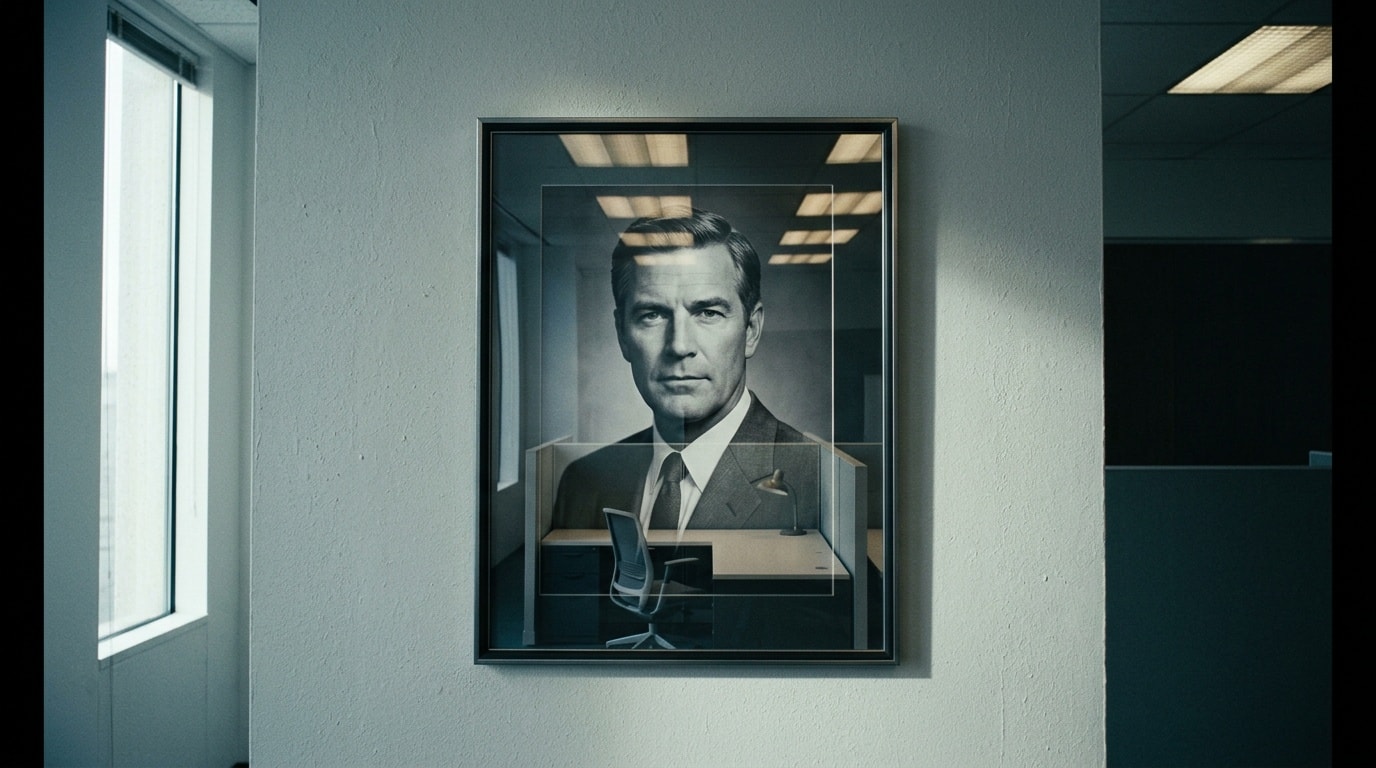
Cobel Serves Kier Before Lumon
Harmony Cobel's obedience to Lumon is conditional on her private judgment that the company remains aligned with Kier's true teachings, making her a theological agent using corporate power rather than a corporate loyalist who happens to be devout.

Mark's Disposal Signals Deliberate Evidence Burial
Mark's disposal of Petey's phone is not evidence destruction but a performance of it: the battery separation, the review of missed calls, and the return to his own curb all indicate someone staging closure while unconsciously ensuring the connection remains traceable.

Lumon Preempts Coordination It Cannot Survive
Lumon's control over its severed employees is not primarily maintained through surveillance and punishment but through designed attention fragmentation: every person with dangerous knowledge is simultaneously obligated to a local, pressing problem that prevents them from pooling that knowledge with anyone else.
Irving's Devotion Accidentally Drives Resistance
Irving's Kier-worship is not a cover for resistance but its accidental engine and its automatic suppressor: he breaches institutional isolation through doctrinal logic and then recants through the same logic, leaving Lumon's control intact.
Dylan's Son Makes Him Lumon's Leverage
Dylan's innie is now structurally the most dangerous member of MDR, not the most compliant, because Lumon's documented leverage over him and his own radicalization were created by the same witnessed moment.

The Arteta Family Is Lumon's Proof of Concept: Capture Looks Like Friendship
Lumon's relationship with the Arteta family operates simultaneously at the macro level of Angelo's legislative advocacy and the micro level of Gabby's deliberate erasure of Devon, and both registers serve the same institutional function.
O&D Is a Conditioning Program With a Leak
Lumon's O&D department is not a manufacturing operation but a physical-conditioning curriculum, and its most portable artifacts, the pictogram cards, are already moving through an active internal smuggling channel financed by an unknown Lumon insider.