
The Silo Rewrote Romeo and Juliet's Ending
THE ARGUMENT
The silo authorities distributed different edited versions of Romeo and Juliet to different silo populations, removing the suicide pact ending in at least one version, and designed the distribution asymmetrically so that the censorship would remain undetectable without cross-silo contact. The exchange between Solo and Juliette is not a continuity error but structural evidence of targeted literary control. If the version each silo received was assigned by class composition, the system was not administering uniform precaution but suppressing the romanticization of death specifically among populations already flagged as volatile.
How This Theory Works
The authorities who built the silos did not merely suppress information about the outside world. They rewrote the interior world as well, editing canonical literature and distributing different versions to different populations so that no single silo could detect the revision without cross-silo contact. The Romeo and Juliet discrepancy is structural proof of this: Solo and Juliette hold different endings to the same text, and neither has any reference point against which to identify which version is authentic, or that two versions exist at all.
The specific choice of Romeo and Juliet is not incidental. It is one of the most recognizable suicide pacts in Western literary culture. During periods of class tension or civil unrest, a love story that ends in voluntary death by two young people becomes an administrative liability, because it offers a romanticized template for death as escape. Removing that ending neutralizes the template. The targeting of this particular text points to an edit chosen for its cultural potency, not a blanket revision policy applied without discrimination.
The self-concealing design of asymmetric distribution is what makes the system more than ordinary censorship. Each silo's residents believe they hold the real text. The divergence only surfaces when residents from separate silos compare notes directly, which the architecture of the silo system was built to prevent. The Romeo and Juliet discrepancy operates by the same mechanism as the outside cameras, the hard drive, and the silo map: cross-silo contact produces rupture, and the rupture reveals that what each population was taught to accept as universal was local and managed.
The question the show has not answered is whether the specific version each silo received was assigned according to its class composition. If lower-class silos received the sanitized ending while others did not, the censorship was not a uniform precaution applied to everyone. It was a targeted intervention applied to the populations considered most likely to act on the romanticization of death as escape, which would mean the system was not built to protect all residents equally but to manage specific populations who were already identified as a threat to stability.
Is this theory convincing?
Key Evidence
Juliette Says Characters Do Not Die
During a conversation with Solo, Juliette states that in her version of Romeo and Juliet the characters do not die, contradicting the canonical tragic ending Solo appears to know.
Solo's Surprised Reaction
Solo's response to Juliette's claim that they do not die registers as genuine surprise, suggesting his version of the text includes the death ending and that the two silos received different copies.
Different Silos, Different Texts
The fact that Solo and Juliette independently learned different versions of the same story points to a system in which literary works were distributed in altered forms across different silo populations.
Suicide Romanticization as Administrative Risk
The theory identifies a specific motive for the alteration: removing a famous suicide pact from a love story reduces the risk that lower-class residents in periods of class conflict would see death as a romantic or noble escape.
Orwellian Rewriting of Cultural Record
The alteration of Romeo and Juliet parallels the kind of systematic historical revision seen in dystopian population-control narratives, fitting the show's broader theme of authorities controlling what residents know and believe.
This theory was evaluated using Theory Atlas editorial standards, including evidence review, narrative fit, and competing interpretation analysis. Learn how Theory Atlas evaluates theories →
Other Theories for S2E05

Camille Sims Runs Her Own Shadow Game
Camille Sims has quietly taken over her household's political strategy because she has concluded Robert cannot execute it himself.
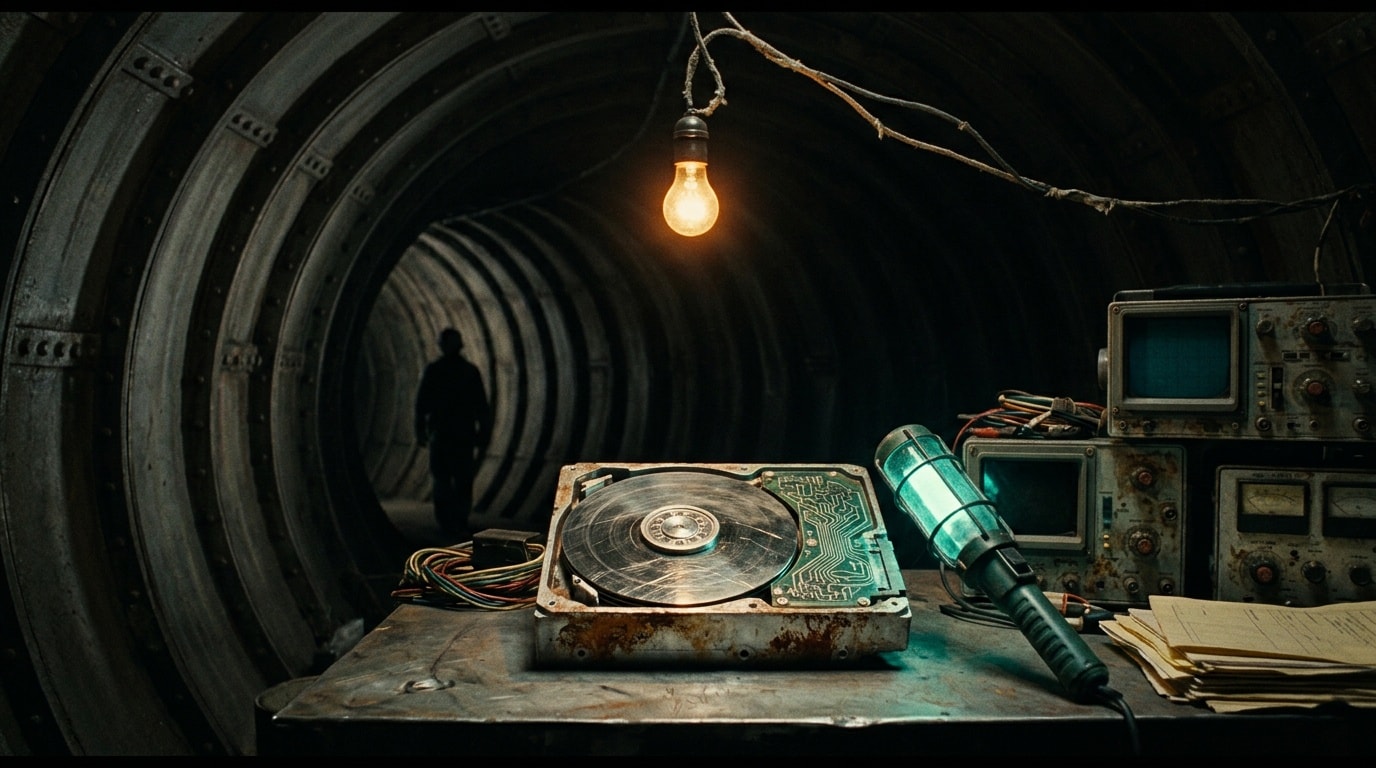
Hidden Maps Reveal Silos Are Connected
The hard drive Lukas repairs for Bernard contains schematics showing tunnels and power lines extending from Silo 18 at multiple levels, suggesting the silos are physically linked to each other or to an external control structure.

Bernard's Authority Was Always Coercion Without Comprehension — and the Architecture Is Collapsing
Bernard Holland has never governed Silo 18 through genuine authority; he has governed it through institutional coercion applied to people he cannot accurately read.

Bernard's Ignorance Is Load-Bearing: How the Silo's Master of Information Governs by Not Knowing
Bernard does not merely control what others know — he has structured his own ignorance as a precondition for authority, deliberately insulating himself from the full truth of the systems he governs.

Billings Edges Toward the Rebellion
Billings has not edged toward the rebellion -- he crossed into it at the level of decision-making the moment he chose to hear Patrick out rather than arrest him, and has since been managing how long he can sustain the surface of compliance.
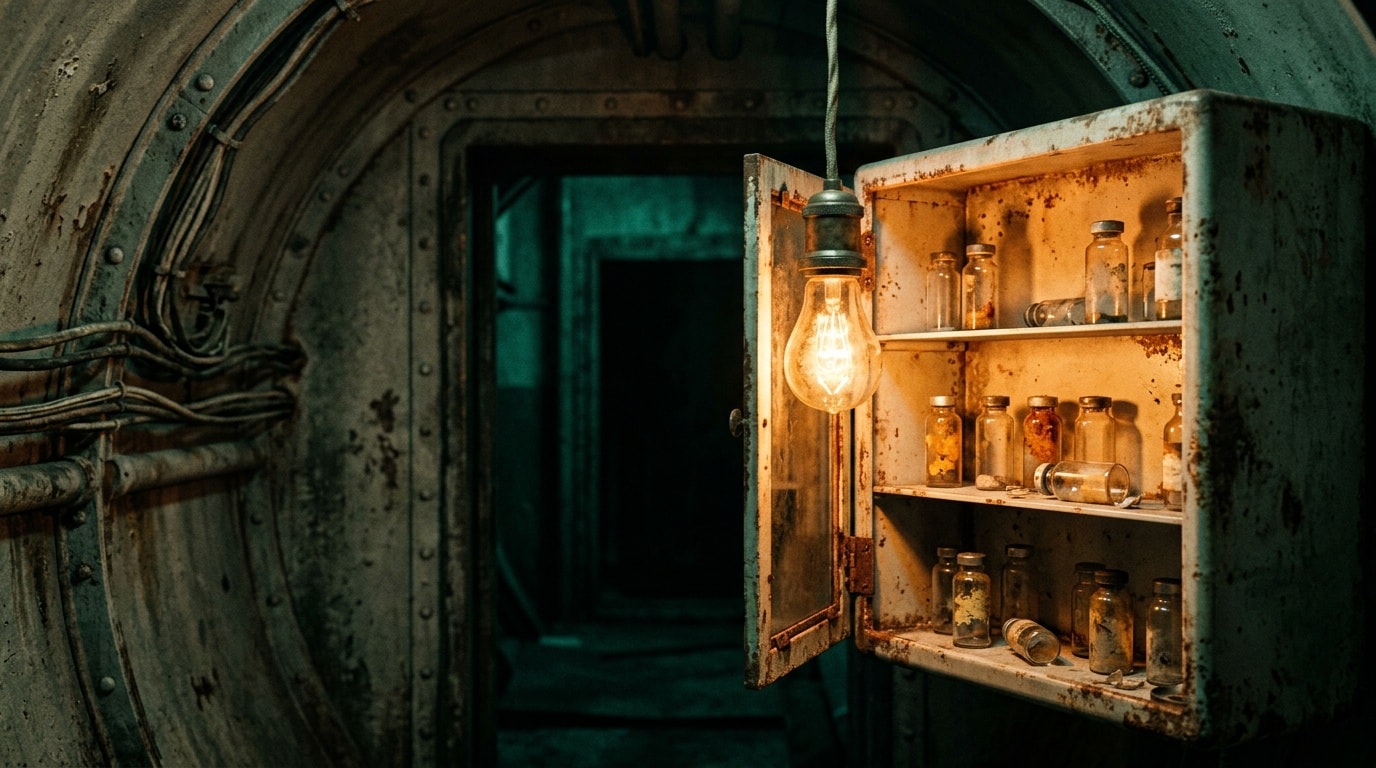
Juliette's Old Wound Finally Catches Up
Juliette's infected arm wound is about to make Solo's leverage inescapable: if he controls the medical supplies she needs to survive, the pump repair she has refused becomes the price of getting home.
Bernard Tests Nichols, But Nichols Is Already Gone
Pete Nichols had committed to an irreversible course before Bernard's recruitment pitch began, and the implant removal is the proof.