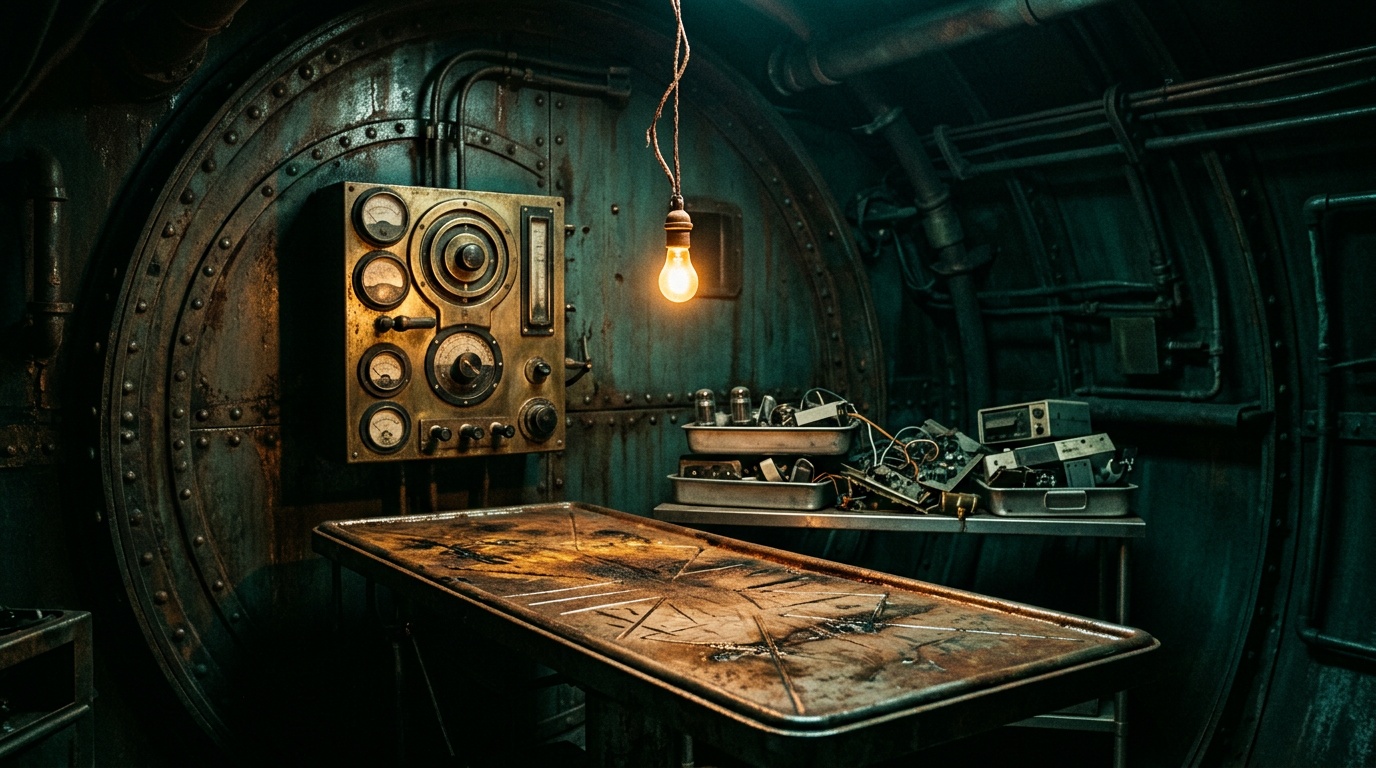
The Cloud Over Iran Is the Silo System's First Weapon, and Charlotte Keene Is Its First Product
THE ARGUMENT
The cloud Charlotte's squadron encountered at fifty thousand feet over Iran was an engineered substance originating from the mountain facility her unit was tasked to destroy, with physical residue on her aircraft confirming direct contact with a designed agent. Every other pilot died; Charlotte alone returned, body intact and identity deleted, a distribution that carries the signature of deliberate selection. That pattern places Charlotte as the first confirmed intentional output of the same targeting and erasure technology that would later define life inside the silos.
How This Theory Works
Charlotte herself confirms on screen that no cloud should exist at fifty thousand feet, registering genuine disbelief at the formation her squadron flies into. What appears in that airspace has long dark tendrils and deposits a gooey residue on aircraft instruments. Both properties belong to a substance that was made. A substance that holds structure, coats surfaces, and behaves physically rather than meteorologically is a substance that was designed. The spatial and temporal coincidence seals the connection: Senator Thurman establishes that Charlotte's squadron was executing a strike on a mountain facility in Iran, and the cloud appears directly above that target during that mission. The most parsimonious reading is that the cloud originated from the facility, either activated deliberately as a defensive countermeasure or released when the squadron's own strike ruptured containment.
That distinction is the theory's sharpest internal tension, because it determines whether the extinction event was a weapon fired in defense or a catastrophe triggered by the very attack meant to prevent it. In either case, the substance encountered at altitude connects directly to whatever was housed underground, and the facility's purpose was plainly something other than conventional military infrastructure.
The distribution of outcomes is where the theory moves from atmospheric anomaly to deliberate selection. Every other pilot dies. Charlotte alone returns: physically unharmed, mentally restructured. The profile that emerges, body intact, prior identity deleted, subject functional and available, reads as a targeting specification. Something in that cloud distinguished between pilots to be eliminated and a subject to be retained and emptied. The residue on the instruments is the material evidence that the cloud acted, that it passed through and did something to the people inside it. Charlotte is described on screen as physically fine following the crash but entirely without memory of her brother Daniel, a dissociation consistent with targeted neurological interference and inconsistent with the diffuse cognitive damage typical of blunt trauma.
The parallel to Juliette's condition is where the argument becomes structurally hard to dismiss. Two individuals, separated by centuries, emerge from catastrophic encounters with the same profile: physical survival, identity erasure, selective amnesia, functional remainder. The show frames this alignment as intentional. If Charlotte's condition were purely traumatic, a product of crash shock or grief, the echo with Juliette would be coincidence or metaphor. The specificity holds across both cases in a way coincidence cannot comfortably accommodate: the body preserved, the self removed, the subject delivered operational. That consistency across centuries extends the known operational range of the same system. Whatever produced Charlotte's condition was a proven technology that whoever built the silos had already validated before the bunkers were designed.
This is where the Iran facility connects to the silo project's founding logic. The proto-silo infrastructure underground, the facility Charlotte's squadron was sent to destroy, was plausibly the development environment for the extinction agent and, embedded in that agent, the erasure process. Charlotte kept alive while her flight group dies points toward a prototype delivery: a single body retained, a prior self removed, a person made available to a system that would be built around her kind. The silo system would eventually require populations who could function within it, follow instructions, fill roles, maintain operations, and carry no memory of the world that preceded the silos' closing. Charlotte's profile is precisely what that requirement calls for. The residue on her instruments is the physical trace of that founding technology, the material signature of a deliberate act with a purpose that incidental contamination could not explain.
The hardest implication follows from what she carried home. If the substance on her aircraft reached the ground, Charlotte may have been its delivery vector, returning from the strike that either deployed or accidentally released the extinction agent, carrying its signature on her hull and its effects inside her mind. On this reading, the silo project and the extinction event share architects, share a targeting and erasure technology, and share a first confirmed subject. The cloud over Iran was the system running its first successful test.
Is this theory convincing?
Key Evidence
Charlotte's Physical Survival Alone
Every other pilot in Charlotte's flight group dies in the encounter with the mysterious cloud, while Charlotte alone survives physically unharmed, a distribution that points away from random crash trauma and toward a selective mechanism.
Mysterious Cloud at 50,000 Feet
Charlotte's squadron flies into an unnatural cloud at 50,000 feet where instruments malfunction and a mysterious residue covers their displays before the jets begin to fail, suggesting the cloud is an engineered artifact rather than a natural phenomenon.
Memory Loss Without Physical Injury
Charlotte is described as physically fine following the crash but mentally affected, with no memory of her brother Daniel, a profile consistent with targeted neurological interference rather than the diffuse damage typical of blunt trauma.
Parallel to Juliette's Amnesia
Charlotte's amnesia mirrors Juliette's current condition in pattern and specificity, with the show explicitly framing the similarity as an intentional echo rather than coincidence, implying a common underlying cause across the centuries separating them.
Silo Design as Intelligent Erasure
The structural parallel between Charlotte's memory loss before the silos and Juliette's condition within them suggests that whatever intelligence designed the silo system also engineered the mechanism that unmade Charlotte's identity, building amnesia into the founding architecture.
This theory was evaluated using Theory Atlas editorial standards, including evidence review, narrative fit, and competing interpretation analysis. Learn how Theory Atlas evaluates theories →
Other Theories for S3E01

The Vitamins Are Erasing Juliette's Mind
The pills Camille administers as vitamins are chemically targeted memory suppressants ordered by the Algorithm, designed to replace Juliette's real memories with a fabricated survival narrative that makes her controllable as mayor.

The Duck Dispenser Traces the Silo's Founders
The rubber duck Pez dispenser connects a pre-founding congressman who likely helped design the silo system to George Wilkins, a rebel archivist the silo eventually killed for what he knew.
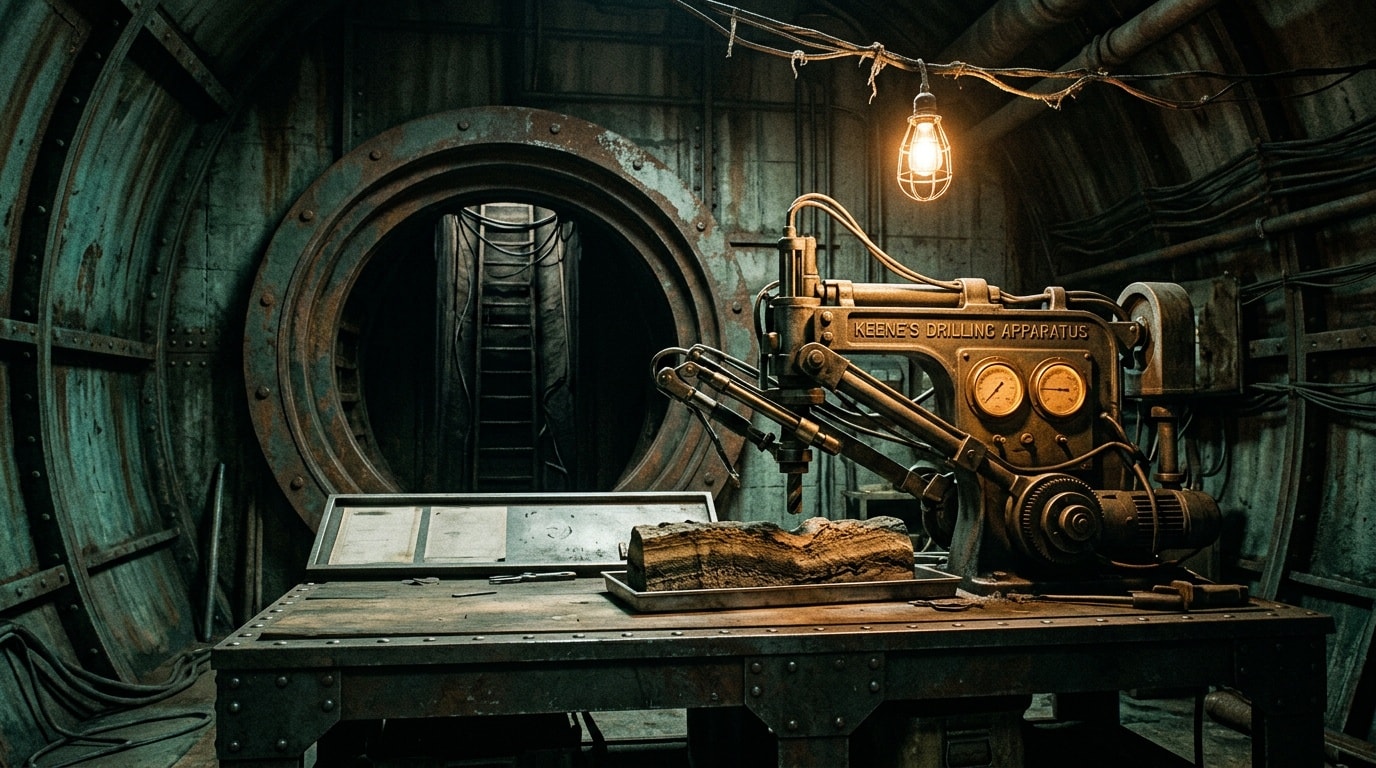
Keene's Drill Was the Lynchpin of a Pre-Planned Civilizational Replacement
Daniel Keene's no-surface-disturbance drilling technology was the single prerequisite that made covert silo construction physically achievable, placing him at the foundation of a civilizational replacement program authorized by Senator Paula Thurman's Iran counter-attack committee before any public catastrophe existed.