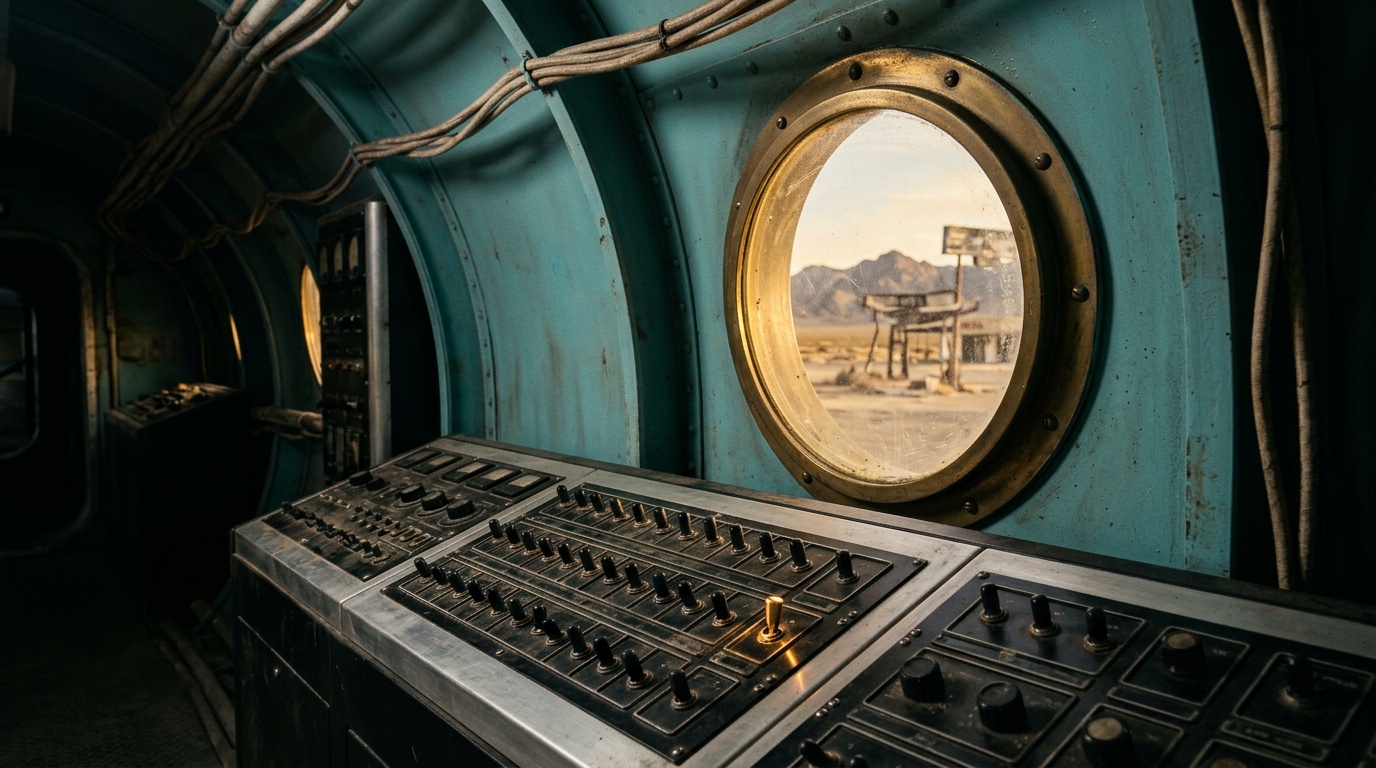
Cooper Howard Is House's Two-Century Contingency Plan
THE ARGUMENT
Robert House did not simply build a casino that could be reactivated by the right power source — he built a delivery system with a human component, and Cooper Howard is that component. Cooper was present when the cold fusion diode changed hands before the war, was assigned a role in seeing it returned, and has spent two centuries holding that position without consciously acknowledging it. His arc is not survival. It is maintenance of placement until the final delivery.
How This Theory Works
The reactivation sequence inside the Lucky 38 is where the argument starts, but it cannot be read in isolation. When the cold fusion diode powers up inside the casino, the systems do not come back online the way a machine restarts after a blackout. They register recognition. That distinction carries the weight of the entire theory. Recognition implies architecture designed to receive a specific input — not a generic response to any sufficient power source, but a pre-existing structural expectation that this exact mechanism would eventually arrive. Two hundred years of dormancy with that level of specificity baked into the building's systems is not patience. It is engineering. House built the lock before the bombs fell. What the show has been slower to reveal is that he also built the courier.
Cooper Howard's pre-war flashbacks establish that his knowledge of the diode is not deduced. He was physically present in the Lucky 38 hotel room at the moment the cold fusion technology changed hands before the Great War. That is not background context. It is the credential that makes everything he does after the bombs fall legible as a single continuous operation rather than improvised wasteland survival. A man who last held that context two centuries ago and still draws a weapon the instant he sees the object again is not reacting to an unknown threat. He is reacting to a known one: the possibility that the diode will reach its destination by a route he does not control.
The sequence of the weapon draw is the sharpest piece of evidence the show offers. Cooper pulls his revolver on Maximus before asking a single question about how the diode came to be in his possession. That ordering matters. Interrogation follows threat assessment, but only when you already know what the object is. A man improvising a survival route through the wasteland does not draw on a traveling companion over a piece of unfamiliar technology. He draws because the object is not unfamiliar — because its reappearance means the assignment that has been structuring his two centuries of movement has just re-entered frame, and the first priority is to establish who else knows what they are carrying. The gun is not improvisation. It is the reflex of someone whose role just reasserted itself.
What Cooper does immediately after the interrogation is the tell the show leaves sitting in open air. He does not take the diode. He accepts Maximus's custody and routes the group toward the Lucky 38 under the stated justification of finding weapons to clear the deathclaws blocking the Strip. That explanation is plausible. It is also exactly the kind of explanation a sufficiently patient intelligence would arrange for people who needed a reason to go somewhere they were already supposed to be. The practical logic holds. The strategic logic is more interesting: a man who drew a weapon over an object's location has no reason to leave it in someone else's hands unless possession was never the point. He does not need to carry the diode. He needs it carried through a specific door by someone who will open that door without fully understanding what they are delivering. House needed a lock-and-key system that could survive two centuries of civilizational collapse. A building full of patient architecture is the lock. A ghoul with direct pre-war knowledge of the diode, a two-century operational lifespan, and no faction loyalty that would redirect the payload is the key's keeper.
The tension the show preserves — and the synthesis must hold rather than resolve — is whether Cooper is executing this role consciously or whether House's design was deep enough to work through instinct alone. Cooper describes the Lucky 38 plan in pre-war terms as modeling the one man who came out on top in Vegas, the man who won by owning the house. That framing fits Robert House as a historical reference. It also fits Cooper Howard as a man describing a game he was already inside before the war ended, one he intends to finish from the inside again. The show has not yet been forced to answer how much of what Cooper does is chosen and how much is the reflex of an assignment so thoroughly internalized it became identity. That ambiguity is not a gap in the argument. It is the argument's most uncomfortable component: a contingency plan sophisticated enough to run through a man who may not know he is running it.
Is this theory convincing?
Key Evidence
House Appears on Lucky 38 Mainframe
When the cold fusion diode is activated at the Lucky 38, a familiar figure identified as House appears on the casino's mainframe screen, implying the AI has remained active inside the building.
Ghoul Routes Group to Lucky 38
The Ghoul tells Maximus and Thaddeus they are heading to the Lucky 38 specifically to find weapons capable of fighting the deathclaws blocking the New Vegas Strip, confirmed in the episode.
Cold Fusion Diode as Activation Key
The AI version of House appears to activate in response to the cold fusion diode being powered, suggesting the diode functions as the power source the Lucky 38's systems have been waiting for.
Reactors Recognize Activation
The Lucky 38's systems register recognition when the cold fusion diode is activated, implying pre-existing architecture designed to receive and respond to that specific power source.
This theory was evaluated using Theory Atlas editorial standards, including evidence review, narrative fit, and competing interpretation analysis. Learn how Theory Atlas evaluates theories →
Other Theories for S2E07

Steph Harper: Canadian Refugee Who Killed to Survive
Steph Harper's authority over Vault 32 may be inseparable from a moral framework her mother installed at gunpoint: dehumanize Americans to survive, and accept God's pre-issued forgiveness for the harm that requires.

Steph Harper's Canadian ID Is the Proof Her Vault Authority Was Never Legitimate
Steph Harper holds administrative authority over Vaults 32 and 33 as the two-century payoff of a survival strategy her dying mother dictated to her at a Canadian internment camp — a strategy already operational before she crossed the border.
Lucy's Pragmatism May Doom Her to Hank's Path
Lucy's decision to leave the mainframe intact, made with full knowledge that the chips cause irreversible memory loss, reveals that she has not rejected her father's utilitarian logic but suspended it, and suspension with the infrastructure still running is the first structural step toward becoming him.
Joan's Last Words Made Steph a Weapon
Joan Harper's dying instruction to Steph was a deliberate moral reprogramming that replaced Catholic conscience with a framework in which Americans are not fully human and therefore cannot be wronged, and every ruthless choice Steph has made since crossing the border runs on that installed architecture.
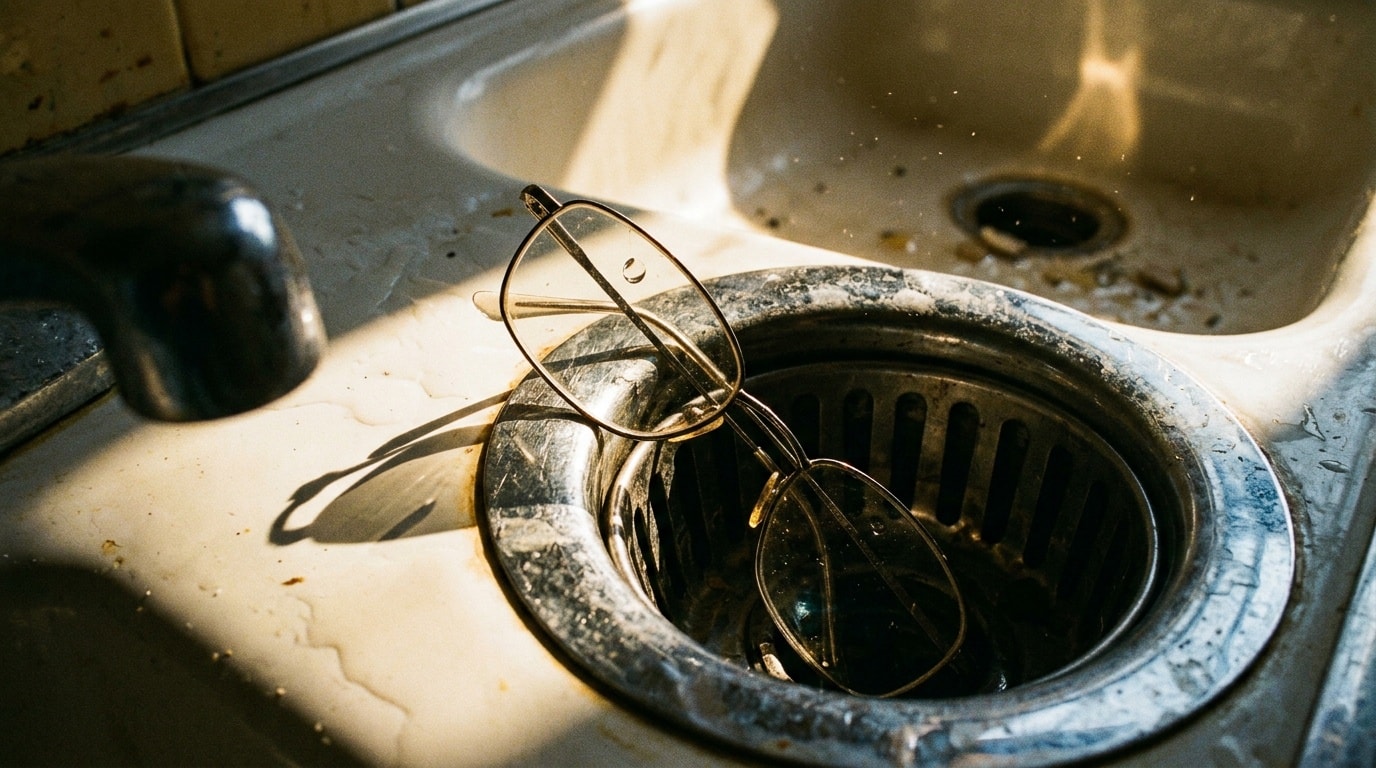
Woody's Glasses Prove Steph Killed Him
Steph killed Woody and tried to destroy the evidence, and the glasses lodged in the garbage disposal of her shared sink are the physical proof of that act.
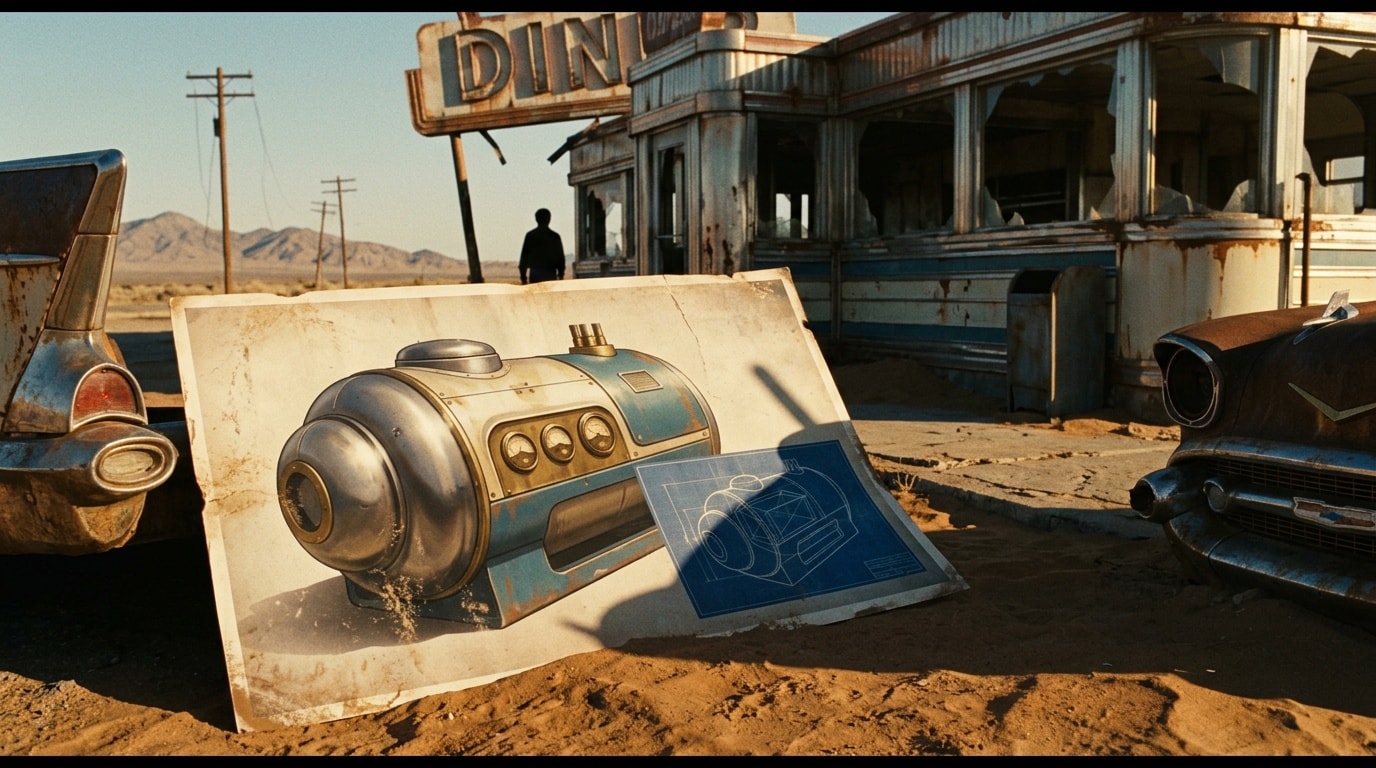
The Ghoul Already Knew Who Had the Diode
The Ghoul identified Maximus as carrying the cold fusion diode before the scene gave him any access to that information, implying his pre-war memories as Cooper Howard gave him both knowledge of the device and a reason to track its reappearance.

Hank Turned Lucy's Mercy Against Her
Hank deliberately staged the conditions under which Lucy would encounter the brainwashed legionary, then deployed a pre-prepared Legion argument at the moment of maximum emotional impact, exploiting her genuine moral concern to make mind-control feel like protection.
The Ghoul Recognizes His Own Lost Idealism
When Maximus invokes Lucy's goodness as the reason to trust the diode handoff, the Ghoul does something he never does: he accepts a moral argument instead of a tactical one, smiles without speaking, and walks away from an object he has personal investment in.