
The Ghoul Recognizes His Own Lost Idealism
THE ARGUMENT
When Maximus invokes Lucy's goodness as the reason to trust the diode handoff, the Ghoul does something he never does: he accepts a moral argument instead of a tactical one, smiles without speaking, and walks away from an object he has personal investment in. The show has not confirmed why, but the pattern points toward something specific. The Ghoul is not trusting Maximus. He is deferring to a version of moral clarity he believes he no longer has access to himself.
How This Theory Works
The Ghoul draws his revolver on Maximus and demands to know how the cold fusion diode changed hands. That is consistent with everything the show has established about him: personal investment in the diode's disposition, a survival posture that treats every unknown as a threat, and a preference for transactional clarity over sentiment. What breaks the pattern is what makes him holster the weapon. Maximus does not produce credentials. He does not demonstrate competence. He says Lucy is a good person who will know how to do the right thing. That is a moral claim, and the Ghoul accepts it without challenge.
The tactical logic is worth pressing on, because it does not hold. The Ghoul is already heading to Las Vegas. He has more relevant history with the diode than Maximus does. If his calculation were purely strategic, there is no obvious reason to leave the diode with a third party when taking it himself would be simpler and more direct. He makes no move to do that. The only explanation offered for the handoff arrangement is Lucy's character, and the Ghoul's faint smile in response is the one moment in the sequence that is not about leverage or efficiency. A man who has spent the series using utilitarian language as a default does not smile at a tactical argument. He smiles here.
What the show is pointing toward is that the Ghoul recognizes something in Lucy's reputation that he cannot claim for himself. His behavior throughout the series is defined by the absence of the moral idealism Maximus is describing. He has not ceased to understand that idealism. He has forfeited it. The smile is not about Maximus passing a test. It is the Ghoul deciding, without saying so, that the person Maximus is describing should not be stopped by the person he has become. That is not trust extended to an ally. It is deference from someone who has decided he is no longer qualified to intercept it.
Is this theory convincing?
Key Evidence
Revolver Drawn, Then Holstered
The Ghoul draws his revolver on Maximus and demands to know how he obtained the cold fusion diode, then accepts Maximus's answer without further interrogation, holstering the weapon based solely on the moral claim that Lucy will use it correctly.
Faint Smile Without Words
After Maximus invokes Lucy's goodness as the reason to trust the handoff, the Ghoul responds with a faint smile and says nothing further, a reaction that is notably non-transactional in a character defined by transactional language.
Lucy Described as Good Person
Maximus tells the Ghoul that Lucy is a good person who will know how to use the cold fusion diode to do the right thing, framing the entire handoff in moral rather than tactical terms.
Ghoul Bypasses Tactical Logic
Despite traveling to Las Vegas himself and having direct history with the cold fusion diode, the Ghoul makes no move to take the diode from Maximus, accepting the third-party handoff arrangement on the basis of Lucy's character alone.
Idealism Recognition Despite Personal Failure
The Ghoul accepts Lucy's reputation for goodness as sufficient grounds for trust, suggesting he recognizes the moral idealism she represents even as his own behavior throughout the series has been defined by its absence.
Ghoul's Personal Interest in Diode
The Ghoul specifically draws a weapon to demand accounting for the cold fusion diode's whereabouts, signaling a level of personal investment in its disposition that goes beyond opportunistic interest.
This theory was evaluated using Theory Atlas editorial standards, including evidence review, narrative fit, and competing interpretation analysis. Learn how Theory Atlas evaluates theories →
Other Theories for S2E07

Steph Harper: Canadian Refugee Who Killed to Survive
Steph Harper's authority over Vault 32 may be inseparable from a moral framework her mother installed at gunpoint: dehumanize Americans to survive, and accept God's pre-issued forgiveness for the harm that requires.

Steph Harper's Canadian ID Is the Proof Her Vault Authority Was Never Legitimate
Steph Harper holds administrative authority over Vaults 32 and 33 as the two-century payoff of a survival strategy her dying mother dictated to her at a Canadian internment camp — a strategy already operational before she crossed the border.

Lucy's Pragmatism May Doom Her to Hank's Path
Lucy's decision to leave the mainframe intact, made with full knowledge that the chips cause irreversible memory loss, reveals that she has not rejected her father's utilitarian logic but suspended it, and suspension with the infrastructure still running is the first structural step toward becoming him.

Joan's Last Words Made Steph a Weapon
Joan Harper's dying instruction to Steph was a deliberate moral reprogramming that replaced Catholic conscience with a framework in which Americans are not fully human and therefore cannot be wronged, and every ruthless choice Steph has made since crossing the border runs on that installed architecture.

Woody's Glasses Prove Steph Killed Him
Steph killed Woody and tried to destroy the evidence, and the glasses lodged in the garbage disposal of her shared sink are the physical proof of that act.

Cooper Howard Is House's Two-Century Contingency Plan
Robert House did not simply build a casino that could be reactivated by the right power source — he built a delivery system with a human component, and Cooper Howard is that component.
The Ghoul Already Knew Who Had the Diode
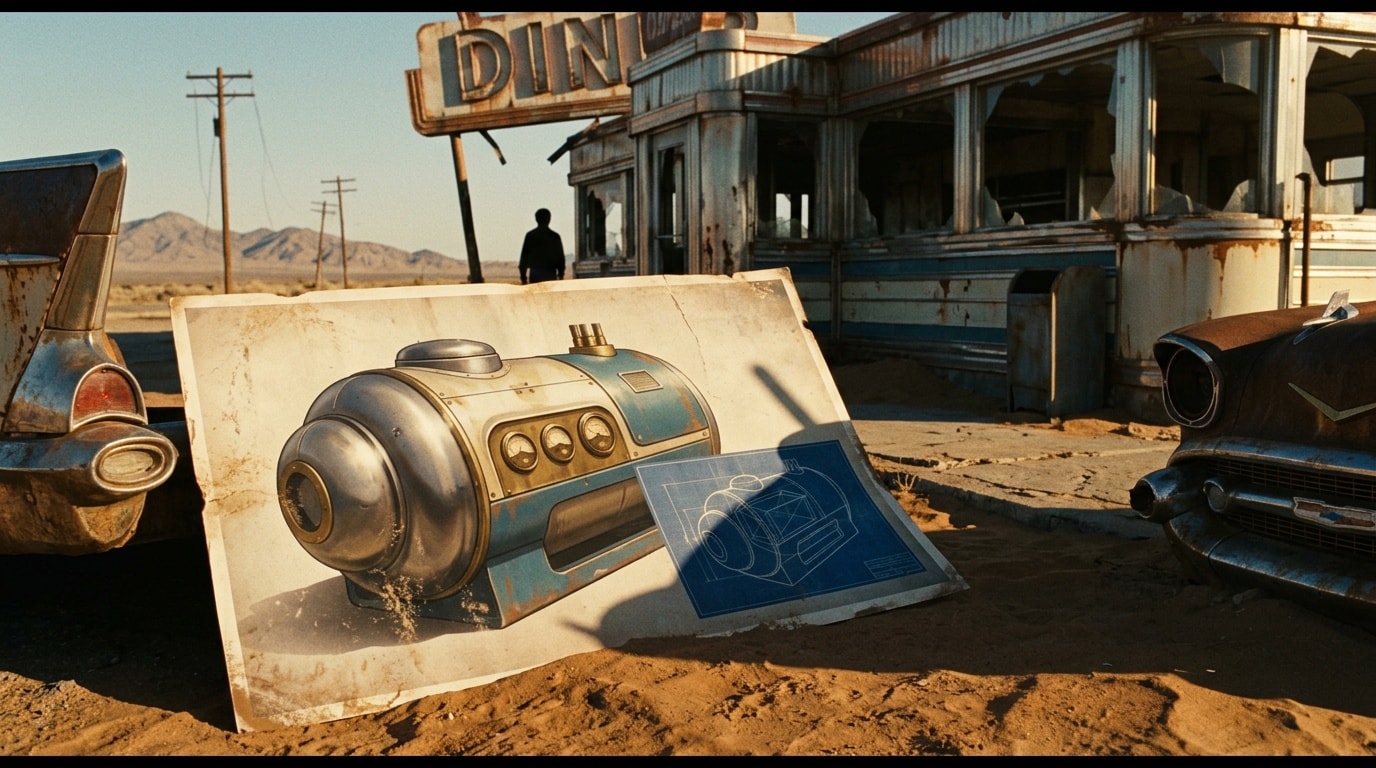
The Ghoul identified Maximus as carrying the cold fusion diode before the scene gave him any access to that information, implying his pre-war memories as Cooper Howard gave him both knowledge of the device and a reason to track its reappearance.

Hank Turned Lucy's Mercy Against Her
Hank deliberately staged the conditions under which Lucy would encounter the brainwashed legionary, then deployed a pre-prepared Legion argument at the moment of maximum emotional impact, exploiting her genuine moral concern to make mind-control feel like protection.