Welch Was The Enclave's Inside Conduit
THE ARGUMENT
Welch was not the uncorrupted channel Cooper believed her to be but the final conduit through which the Enclave accessed the cold fusion diode, with Cooper's trust doing the work that coercion could not. Her self-described lack of structural power and her admission that good actors can be instrumentalized point toward someone who had already accepted a role inside compromised institutions rather than outside them. Cooper's bitterness in the wasteland is not grief over a world that failed him but the suppressed recognition that his own idealism completed the delivery.
How This Theory Works
Cooper Howard's trust in Congresswoman Diane Welch was not a near-miss with salvation but the mechanism of his own complicity. The show has not confirmed what happened after Cooper handed over the diode, but the circumstantial architecture it builds is not ambiguous about the direction it points. The unspoken claim the theory approaches without committing to is this: Welch knew, or suspected, that the presidential channel she was offering Cooper ran through the Enclave, and she offered it anyway. Her admission that she would doubt her own intentions in his position is not a portrait of innocence under pressure. It is the language of someone who has already made a calculation about what her goodness is worth inside a compromised structure and decided to proceed.
Cooper describes Welch as possessing genuine opposition but no political power, no charisma capable of converting conviction into structural force. That is not a neutral observation. It is the profile of someone who has found an alternative use for her proximity to power: not to resist the institutions around her, but to remain inside them, useful, trusted by people like Cooper precisely because she appears to be the last uncorrupted actor in the room. The diode was moving through pre-war Las Vegas at the exact moment Vault-Tec was consolidating its nuclear capability. Every institution Cooper attempted to circumvent had already been penetrated. Welch's path to the President was not outside that penetration. It was the final leg of it.
If the Enclave controlled or co-opted the presidency before the bombs fell, then handing the diode to the President was not a safeguard. It was delivery. Cooper's last act of faith in pre-war governance placed the most consequential cold fusion technology directly into the hands of the faction that outlasted the war with its hierarchy intact. What the theory must commit to is the harder claim: the bitterness Cooper carries into the wasteland two centuries later is not grief over a world that failed despite the best efforts of people like Welch. It is the unprocessed recognition that people like Welch were the failure, and that he was the one who handed them the means.
Is this theory convincing?
Key Evidence
Cooper agrees to Welch's plan
After Welch reveals that an unmarked government plane carrying the President has landed in Las Vegas, Cooper accepts her plan to deliver the cold fusion diode directly to him, placing full trust in her as an intermediary.
Welch admits she would doubt herself
When Cooper expresses that he needs assurances, Welch concedes that in his place she would also doubt her own intentions, a statement that frames her as aware of how easily good actors can be instrumentalized.
Cooper's isolation among corrupt actors
The episode underscores that Cooper found himself surrounded by figures jockeying for power, and that Welch appeared to be the sole remaining person he could trust, making her the single pressure point in his plan.
Vault-Tec seeking nuclear war capability
Cooper reveals to Welch that Vault-Tec is trading cold fusion to Robert House in exchange for the means to start nuclear war, confirming the stakes around the diode and why its delivery path matters.
Welch's ineffective opposition
Cooper tells Welch that despite her good intentions, she lacks the charisma and popular support to convert her opposition into political force, establishing her as someone whose goodness does not translate into structural power.
This theory was evaluated using Theory Atlas editorial standards, including evidence review, narrative fit, and competing interpretation analysis. Learn how Theory Atlas evaluates theories →
Other Theories for S2E07

Steph Harper: Canadian Refugee Who Killed to Survive
Steph Harper's authority over Vault 32 may be inseparable from a moral framework her mother installed at gunpoint: dehumanize Americans to survive, and accept God's pre-issued forgiveness for the harm that requires.

Steph Harper's Canadian ID Is the Proof Her Vault Authority Was Never Legitimate
Steph Harper holds administrative authority over Vaults 32 and 33 as the two-century payoff of a survival strategy her dying mother dictated to her at a Canadian internment camp — a strategy already operational before she crossed the border.
Lucy's Pragmatism May Doom Her to Hank's Path
Lucy's decision to leave the mainframe intact, made with full knowledge that the chips cause irreversible memory loss, reveals that she has not rejected her father's utilitarian logic but suspended it, and suspension with the infrastructure still running is the first structural step toward becoming him.
Joan's Last Words Made Steph a Weapon
Joan Harper's dying instruction to Steph was a deliberate moral reprogramming that replaced Catholic conscience with a framework in which Americans are not fully human and therefore cannot be wronged, and every ruthless choice Steph has made since crossing the border runs on that installed architecture.
Woody's Glasses Prove Steph Killed Him
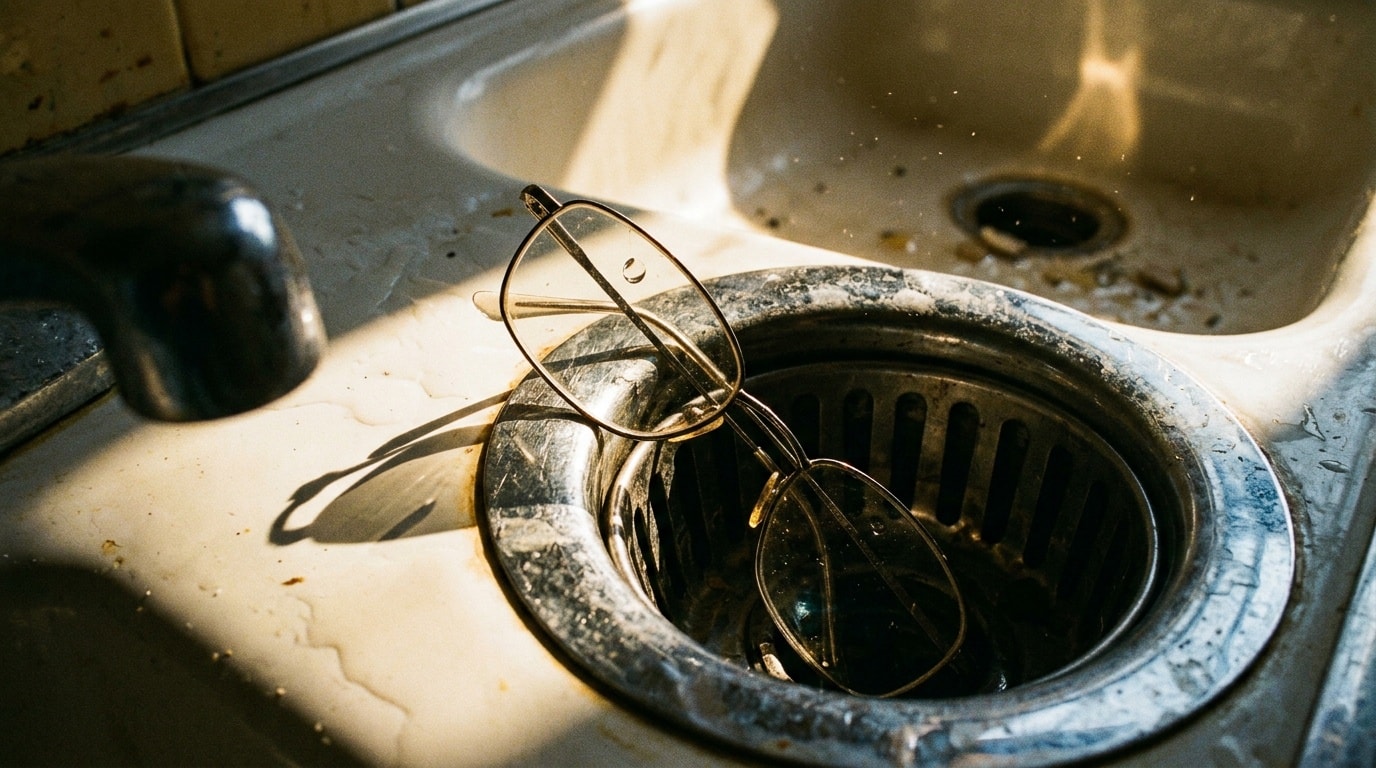
Steph killed Woody and tried to destroy the evidence, and the glasses lodged in the garbage disposal of her shared sink are the physical proof of that act.
Cooper Howard Is House's Two-Century Contingency Plan
Robert House did not simply build a casino that could be reactivated by the right power source — he built a delivery system with a human component, and Cooper Howard is that component.
The Ghoul Already Knew Who Had the Diode
The Ghoul identified Maximus as carrying the cold fusion diode before the scene gave him any access to that information, implying his pre-war memories as Cooper Howard gave him both knowledge of the device and a reason to track its reappearance.

Hank Turned Lucy's Mercy Against Her
Hank deliberately staged the conditions under which Lucy would encounter the brainwashed legionary, then deployed a pre-prepared Legion argument at the moment of maximum emotional impact, exploiting her genuine moral concern to make mind-control feel like protection.