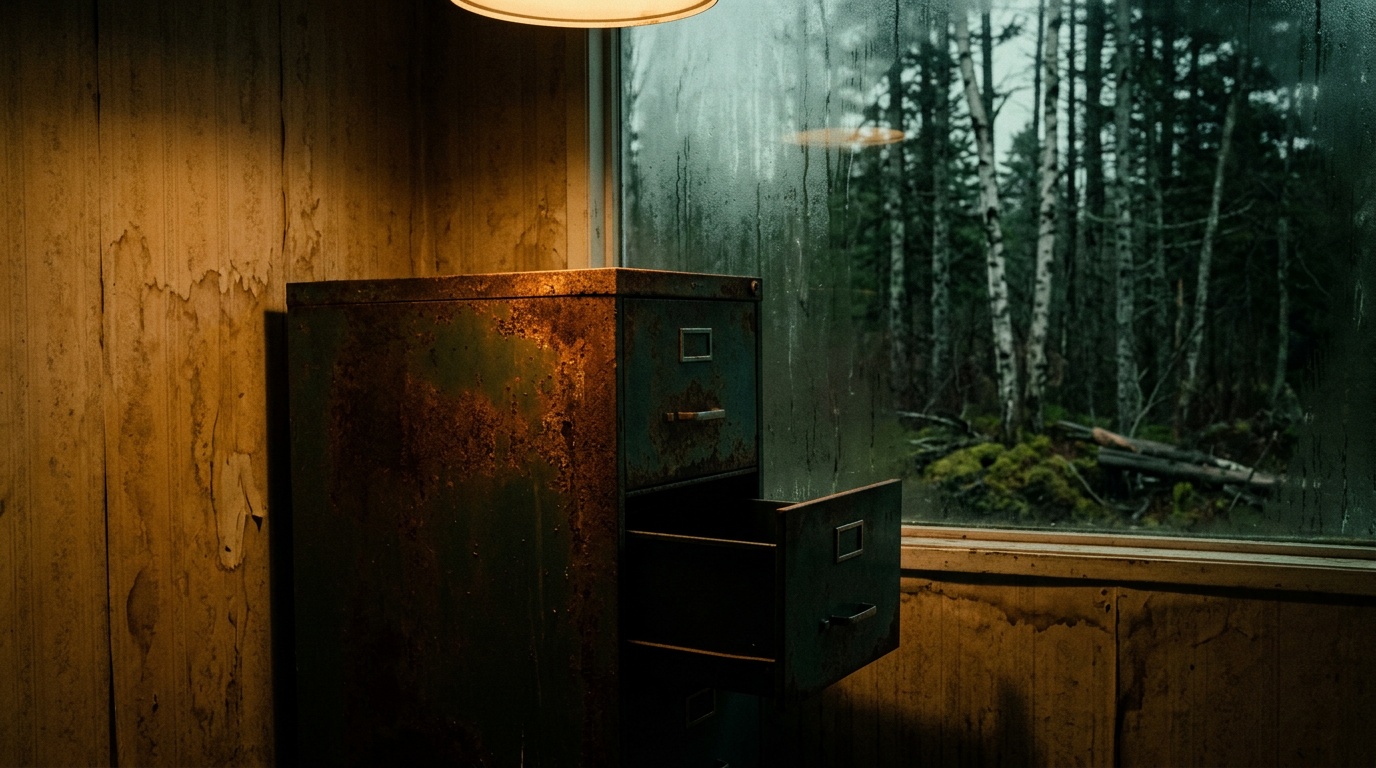
The Box Works Because Both Men Let It
THE ARGUMENT
Boyd built the Box as a deterrent he never intended to activate, and Frank's punishment forces him to confront whether he can sentence a man he respects to death. The episode's tragic core is not Boyd's institutional dilemma alone, but a dark symmetry: the Box functions in this instance not merely because Khatri's logic coerces Boyd into following through, but because the condemned man has already chosen death as reunion rather than enduring life as punishment.
How This Theory Works
The Box was never meant to be used. Boyd's own admission to Khatri, that it was always a deterrent and not an instrument, is the episode's structural confession. When Boyd wakes at dawn and stands at his window staring at it, the weight on his face is not the weight of a leader preparing to exercise authority. It is the weight of a man who built a guillotine believing no one would ever make him pull the rope. Frank's case is the first genuine test of whether the system can hold, and Boyd arrives at Khatri's church not seeking counsel but absolution. His pointed demand, whether Khatri should be talking to him about the virtues of mercy, is not a theological question. It is a man asking to be told he does not have to do this. Khatri refuses. His guillotine-in-the-town-square argument is precise and cold: if Boyd declines to use the mechanism when the rules are broken after multiple public warnings, the deterrent collapses. Everyone will know the teeth are false. Khatri's position is not that the punishment is just. It is that the alternative is institutionally catastrophic, and he offers Boyd no exit.
But Khatri's logic is only half the machinery that makes this episode function. The other half belongs to Frank, and it runs in the opposite direction. Where Boyd is being pushed toward the Box against his inclinations, Frank is walking toward it of his own will. When Boyd visits the cell, Frank is not bargaining or raging. He is settling accounts: asking to be buried beside his wife Lauren and his daughter Meagan, revisiting the swing he built for Meagan in the woods, remembering a child who always wanted to go higher. These are not the gestures of a man hoping for a reprieve. They are the rituals of someone who has already decided, and who is using the time remaining to close what can be closed.
The guilt that drives Frank's decision is also made explicit. He was drunk and absent on the other side of town when the Creatures killed his family. The town, he says, got into his head. That self-indictment is not incidental grief but active culpability, and it has apparently been working on him long before this episode's events gave it a formal outlet. He was offered exile in the woods, continued life at a remove from the community that punishes him, and he refused it. Choosing the Box instead is not passive resignation to fate. It is the deliberate selection of death over survival. When Frank hands Boyd back his talisman, stripping himself of the one protection the town provides, and names seeing his two girls again as the only thing he wants, the gesture clarifies everything: the Box is not a sentence Frank endures. It is the destination he has chosen.
The episode's tragic power derives from the dark symmetry between these two men arriving at the same outcome from opposite directions. Boyd must act without conviction, coerced by Khatri's institutional argument into following through on a threat he built but never believed in. Frank must die, and does so willingly, because his guilt has extinguished whatever will to survive might otherwise have made him fight. The Box works not because Boyd is a resolute leader or because the system is just, but because both halves of the equation align by accident: the man who built the mechanism could not escape its logic, and the man inside it was already prepared to let it run. Boyd tells Frank it is not personal, careful, formal language that signals duty performed rather than conviction held. Frank's calm does not make that easier. It makes it heavier, because Boyd cannot even offer the comfort of a condemned man who needed to be stopped. He is completing a transaction Frank has already accepted.
The most unsettling implication of this symmetry is what it reveals about the legitimacy of Boyd's authority going forward. The Box's power as a deterrent depends on the town believing the man who built it means it. But what actually happened is that Boyd was argued into it by Khatri while the condemned man was complicit in his own sentence. The system held, but it held through a confluence of institutional pressure and a grief-stricken man's desire for death, not through Boyd's moral resolve. Both Boyd and Khatri know what it took to make the mechanism work the first time, and that knowledge sits beneath every future threat Boyd makes, visible to neither the town nor anyone who might next test the rules.
Is this theory convincing?
Key Evidence
Boyd Staring at the Box at Dawn
Boyd wakes in the morning with something clearly on his mind and stands at his window staring at the Box outside his office, establishing that the weight of what he must do is already consuming him before the day begins.
Boyd Tells Frank It Is Not Personal
During his prison visit, Boyd tells Frank that what is going to happen that night is not personal, a careful phrasing that signals Boyd is performing duty rather than acting from conviction.
Khatri's Guillotine Warning
Father Khatri tells Boyd that putting a guillotine in the town square and then failing to use it when someone breaks the rules will destroy the entire deterrent system and cause people to break rules in the future.
Boyd Demands Khatri Counsel Mercy
Boyd pointedly asks Khatri whether he should be talking to him about the virtues of mercy, revealing that Boyd came to the church hoping to be told not to go through with it, only for Khatri to refuse that comfort.
Frank at Meagan's Swing
Boyd takes Frank to a swing in the woods that Frank built for his daughter Meagan, where Frank reminisces about her and asks Boyd to promise he will be buried next to his family, framing the punishment as a death Frank is walking toward calmly.
The Box Was Always a Deterrent
Boyd tells Khatri that he cannot put Frank in the Box, and reveals that it was always meant as a deterrent rather than an actual instrument of punishment, making Frank's case the first genuine test of whether the system can hold.
Khatri Frames Order Over Mercy
Khatri argues to Boyd that if Frank is absolved after multiple public warnings, the rules that hold the town together will carry no weight, positioning institutional stability as the value that must override Boyd's personal discomfort.
This theory was evaluated using Theory Atlas editorial standards, including evidence review, narrative fit, and competing interpretation analysis. Learn how Theory Atlas evaluates theories →
Other Theories for S1E03
Jim Heard the Creatures Before Believing
Jim's acceptance of the town's nightmare is not a matter of rationalization or resignation.
Day Versus Night: How Creatures Divide Their Presence
The creatures are not predators constrained by biology.

The Choosing Ceremony Launders a Compact No One in the Town Authored
The Choosing Ceremony converts imposed survival discipline into apparently chosen lifestyle, but the rules residents are asked to claim as their own may not be locally derived survival knowledge at all.
Sara Works the Morning Shift to Avoid Suspicion
This theory holds that Sara deliberately returns to her diner shift the morning after her actions caused the deaths of the Pratt family, prioritizing the appearance of normalcy over staying home as Nathan urged.