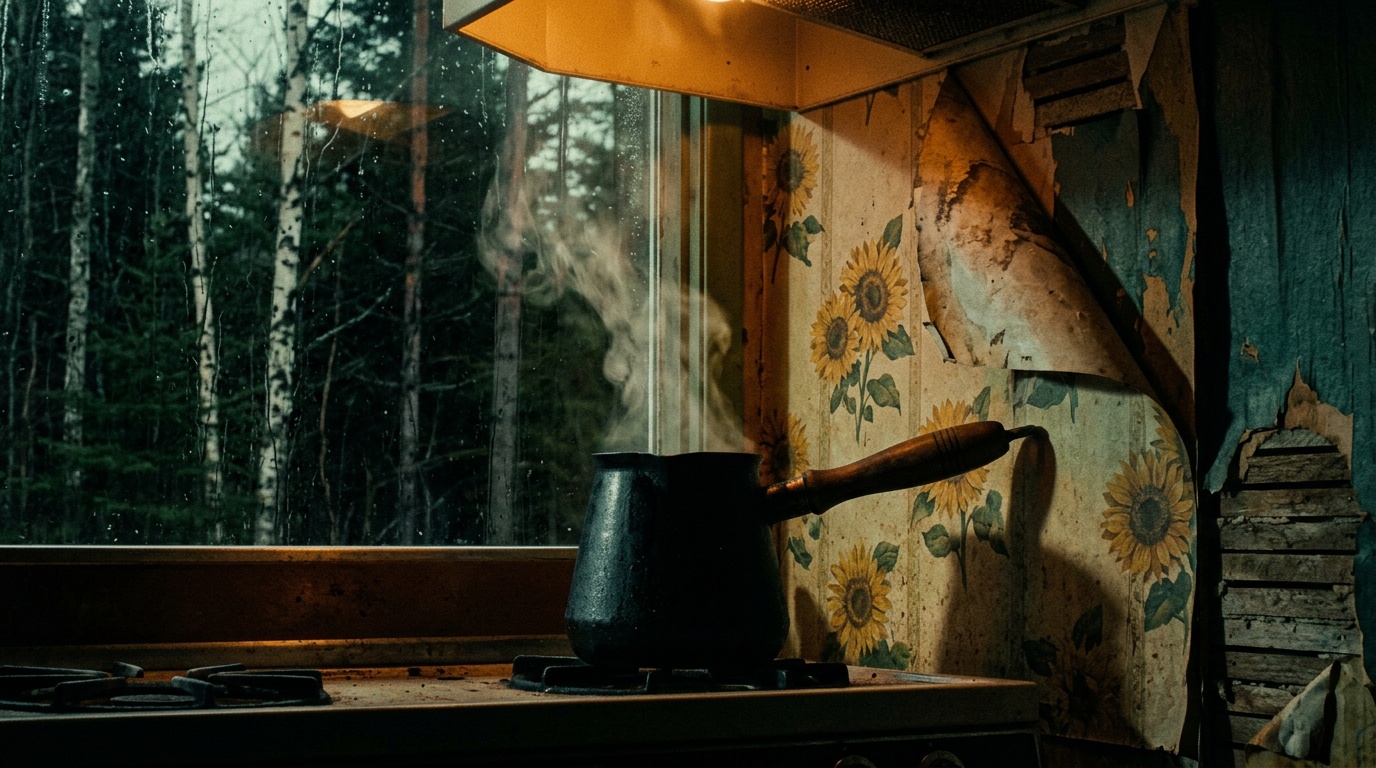
Sara Works the Morning Shift to Avoid Suspicion
THE ARGUMENT
This theory holds that Sara deliberately returns to her diner shift the morning after her actions caused the deaths of the Pratt family, prioritizing the appearance of normalcy over staying home as Nathan urged. Her stated reason, that people would have wondered why she didn't show up, reveals a calculated effort to avoid drawing attention to herself. If Sara is operating in service of some external obligation rather than simple guilt, that calculation becomes more purposeful: she is not managing embarrassment but protecting a role.
How This Theory Works
Sara's brother Nathan explicitly reminds her that she promised to stay home, which establishes that there was a prior agreement between them to lay low after the previous night. Sara's refusal to honor that agreement is not impulsive. She articulates a specific social logic: her absence would have been noticed and raised questions. That reasoning implies she is managing her public image within the town's community, not simply going through the motions of routine.
The episode confirms that Sara left a door open, which allowed the Creatures to kill the Pratts. Her decision to walk into the diner and begin cleaning up a broken glass, an act of visible helpfulness, fits a pattern of performing normalcy under stress. She is not merely showing up for work. She is positioning herself as a reliable, present member of the community on the very morning her actions produced visible deaths.
What sharpens this reading is the possibility that Sara's relationship to those deaths is not one of guilt requiring concealment but of obligation requiring cover. Someone managing guilt returns home and waits. Someone managing exposure goes to the place where she is most visible and most useful. The diner is the social hub of the town. Tian-Chen, Kenny's mother, is there grieving. Kenny is there. Kristi walks in. Sara's presence in that space, cleaning broken glass and offering help, is not invisible. It is a public statement of normalcy that serves a specific interest: remaining trusted and unremarkable in the community she may be operating inside of. Whether that obligation runs toward some external authority, Nathan, the creatures, or a framework she and Nathan share, remains unresolved. But the structural logic of her choice is legible, and it belongs to someone with a role to protect, not merely a conscience to quiet.
Is this theory convincing?
Key Evidence
Nathan's Reminder About Staying Home
Nathan explicitly tells Sara that she promised to stay home, confirming that a prior agreement existed between them to avoid public exposure after the previous night's events.
Sara's Stated Reason for Attending
Sara tells Nathan that people would have wondered why she didn't show up, articulating a conscious social calculus about managing suspicion rather than a reflexive return to routine.
Sara Cleaning the Diner Glass
Upon entering the diner and seeing a broken glass, Sara immediately begins cleaning it up, performing a visible act of helpfulness in the community's most public gathering space.
Sara Admits Leaving the Door Open
Sara reveals to Nathan that she left the door open the previous night, directly linking her to the deaths and establishing why her diner attendance the next morning carries narrative weight.
Presence Alongside Grieving Kenny
Sara works in the diner on the same morning that Kenny and Tian-Chen are processing their loss, placing her physically adjacent to the people most affected by her actions.
This theory was evaluated using Theory Atlas editorial standards, including evidence review, narrative fit, and competing interpretation analysis. Learn how Theory Atlas evaluates theories →
Other Theories for S1E03
The Box Works Because Both Men Let It
Boyd built the Box as a deterrent he never intended to activate, and Frank's punishment forces him to confront whether he can sentence a man he respects to death.
Jim Heard the Creatures Before Believing
Jim's acceptance of the town's nightmare is not a matter of rationalization or resignation.
Day Versus Night: How Creatures Divide Their Presence
The creatures are not predators constrained by biology.
The Choosing Ceremony Launders a Compact No One in the Town Authored
The Choosing Ceremony converts imposed survival discipline into apparently chosen lifestyle, but the rules residents are asked to claim as their own may not be locally derived survival knowledge at all.