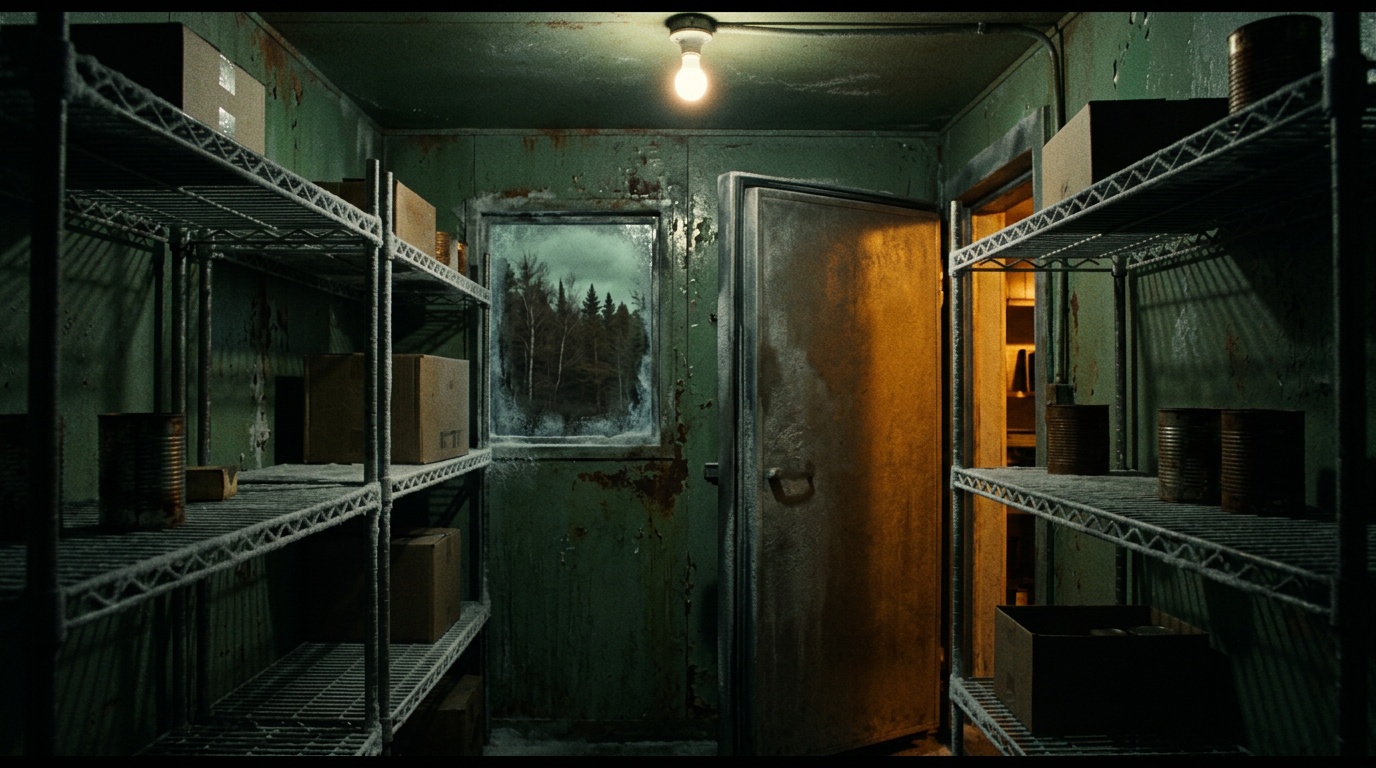
One Month, Not One Year
THE ARGUMENT
The town's food supply will last approximately one month, not the year Donna claimed when rationing began. Whether this gap reflects miscalculation or deliberate concealment, it means the community is operating on false assumptions about its own survival timeline.
How This Theory Works
Donna tells Julie directly that if they ration properly, their preserved food supply will last a year. Jim then examines what has actually been assembled and arrives at a very different number. He estimates one month at most. The gap between those two figures is not a rounding error. It is either a fundamental failure of planning or a conscious choice to keep people calm with an optimistic fiction.
Donna's response to Jim's challenge reveals her reasoning. She does not dispute his math. She argues instead that telling people the truth will cause panic. That framing shifts the question from whether she was wrong to whether she chose to mislead. She knew the situation was grave enough to require managing, which implies she had some prior understanding of the actual numbers.
Jim introduces a third possibility that reframes the entire situation. He suggests that whoever is watching the town has an interest in escalating stress among the survivors. If the food shortage is being engineered rather than merely discovered, then Donna's optimistic messaging may have inadvertently served that purpose by delaying the community's awareness of how close to collapse they actually are. The theory does not require Jim to be right about external manipulation. It only requires that the supply crisis is real and that it was hidden from the people most affected by it.
The sharpest pressure point is Ethan's reaction. Donna's entire justification for the deception rests on the claim that disclosure produces panic and that panic makes things worse. But Ethan's visible alarm comes from overhearing a fragment, a secondhand glimpse at numbers he does not fully understand, in a conversation he was not meant to hear. If partial, accidental exposure already destabilizes a child, the logic Donna is using to protect the community is also the logic that guarantees the eventual revelation will be worse. Every day the one-month figure stays hidden is a day the community cannot adapt, cannot ration with real targets, cannot make informed decisions about risk. Donna is not preventing panic. She is compressing it.
Is this theory convincing?
Key Evidence
Jim's One-Month Estimate
Jim examines the assembled food supplies at the Liu house and tells the group they have a month's worth at most, directly contradicting Donna's claim of a year.
Donna's Year-Long Claim
Donna tells Julie that their food supply will last a year if they ration properly, establishing the official position that Jim then challenges with his own assessment.
Donna Admits Panic as Motivation
When Jim presses her on why she did not tell people sooner, Donna does not dispute the shortage but argues that disclosure would cause panic, confirming she was aware of the severity.
Jim's Stress-Engineering Theory
Jim tells the group that whoever is watching the town would want to increase stress levels, suggesting the food crisis may be deliberately engineered rather than accidental.
Dale's Outburst Confirms Suspicion
Dale confronts Ellis and Fatima at Colony House, accusing them of concealing the food shortage and confirming that the deception is already an open secret among some residents.
Ethan's Alarmed Reaction
Ethan overhears Jim's comment about insufficient food and visibly worries, showing that even partial disclosure of the truth produces the destabilizing effect Donna feared.
This theory was evaluated using Theory Atlas editorial standards, including evidence review, narrative fit, and competing interpretation analysis. Learn how Theory Atlas evaluates theories →
Other Theories for S2E06

Boyd Was Selected for the Infection, and the Infection Is Building a Weapon
Boyd's worm infection was not a consequence of exposure but of evaluation: his sustained pattern of mercy across Martin, the creature, and Sara constitutes a behavioral profile the town's forces appear to have been actively assessing, with the infection as the outcome of meeting the criterion.
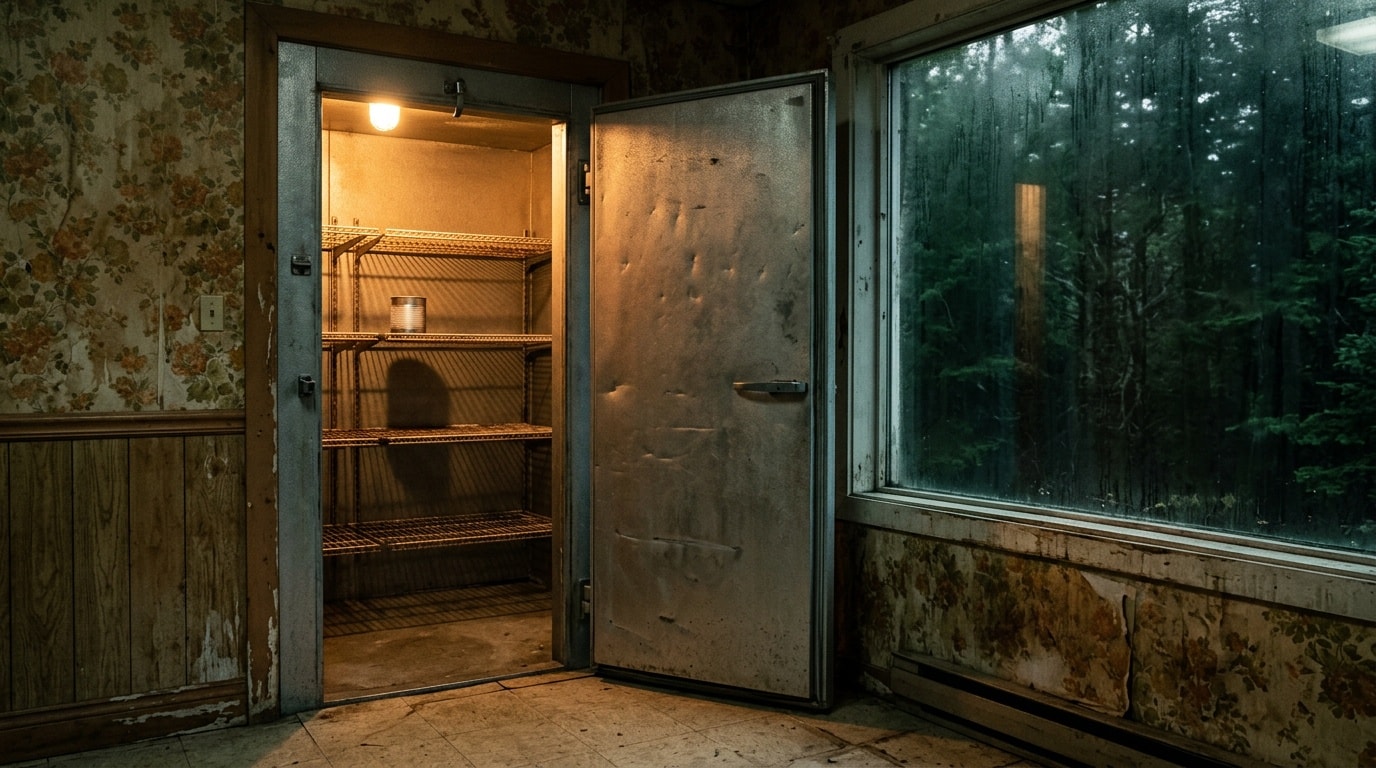
Whoever Watches Wants Them Desperate
The food shortage in FROM is not an accident but a deliberate instrument, engineered by whatever force controls the town to drive psychological breakdown and social fracture among the residents.
Fatima's Secret Predates the Sara Crisis
Fatima has been using Ellis's failure to disclose Boyd's secret as cover for her own concealment, one that originates from the night the bus arrived and predates the Sara crisis entirely.
The Clinic's Drug Supply Is Already Compromised
Mari's admission that she took 'a bit of morphine to even herself out' is not a confession to a single lapse.

Disbelief Traps Witnesses in Isolation
The town's instinct to interpret supernatural experience as mental illness does not merely fail its witnesses.

The Town's Frozen Season Finally Breaks
The leaves changing for the first time in the town's history indicate that whatever has held its environment in stasis is no longer holding, and the food crisis arriving simultaneously suggests the two disruptions share a cause rather than a coincidence.

The Pas de Deux Is the System's Fatal Design Flaw
The worm infection is not tormenting Boyd but dancing with him, running a structured conditioning protocol whose intimacy and sophistication are visible in the music box's causal role and the Martin/Boyd parallel.