
Smiley Spared Fatima Because She Is Mother
THE ARGUMENT
Fatima's unborn child has already been assigned a function within the town's supernatural system, and Smiley's visit to the clinic was not predatory but transactional, a formal acknowledgment of that claim. The word 'mother' delivered to Fatima over Mari's body is the creatures confirming a designation, not issuing a threat. If that reading holds, Fatima is not being protected by the system but held by it, kept alive because the child she carries is the system's next necessary instrument, and the system is the one that created the pregnancy in the first place.
How This Theory Works
Smiley's restraint inside the clinic is not mercy. It is compliance with a rule. He killed Mari and walked past Fatima, calling her 'mother' on his way out, and that word is the argument. The creatures do not speak casually. Addressing Fatima by a title derived from her pregnancy means the supernatural system governing this town has already assigned the child a function within it, before its birth, possibly before Fatima herself understands what that function is.
The talisman's fall during the earthquake was not coincidence that Smiley exploited. It was the precise condition he required. Established talisman logic blocks external supernatural entities from crossing thresholds. Smiley entered the moment that barrier dropped, as though he had been waiting for exactly that gap, then moved to the inner room and killed the one person standing between himself and Fatima. Mari's death was not collateral. It was the removal of interference. Fatima was never the target because Fatima cannot be touched.
The deeper implication is that the prohibition on harming Fatima is not conferred protection but embedded designation. The town engineered this pregnancy by overriding a confirmed medical impossibility. That origin matters for understanding Smiley's behavior. He is not honoring a rule external to the system. He is honoring the system's own investment. The child the town created cannot be destroyed by the instruments the town controls. Smiley's restraint is the creatures recognizing their own work.
What Smiley's visit accomplishes is closer to a consecration than a warning. He did not need to enter the clinic to spare Fatima. He entered, eliminated her only protector, delivered the word 'mother' directly to her face, and left. That sequence is a transaction. The child is not simply claimed by whatever system the creatures serve. It may be the system's next necessary instrument, and Fatima's survival is not protection but obligation, the town keeping its own asset alive until the asset is ready to be used. The town traps people inside it. This theory suggests it also produces something inside them, on a schedule it has already set.
Is this theory convincing?
Key Evidence
Smiley Calls Fatima 'Mother'
After killing Mari and before leaving the clinic, Smiley addresses Fatima directly as 'mother,' a word the creatures almost never deploy, suggesting Fatima's pregnancy has already been recognized by the supernatural system.
Smiley Spares Fatima Deliberately
Smiley kills Mari, who was defending Fatima, but leaves Fatima unharmed despite having direct access to her, indicating she is under a protection or prohibition the creatures recognize.
Talisman Falls During Earthquake
The clinic's protective talisman falls during the earthquake, and Mari is unable to rehang it in time, creating the exact breach Smiley uses to enter, connecting the town's physical disruptions to creature access.
Mari Defends Fatima, Dies for It
Mari interposes herself with a knife to protect Fatima, and Smiley kills her while leaving Fatima untouched, making the kill purposeful rather than opportunistic.
Talisman Limits External Intrusion Only
Established talisman logic prevents external supernatural entities from crossing thresholds, but offers no protection against forces or designations already embedded within a person, which may explain why Fatima's internal connection to Smiley persists regardless of the talisman's status.
This theory was evaluated using Theory Atlas editorial standards, including evidence review, narrative fit, and competing interpretation analysis. Learn how Theory Atlas evaluates theories →
Other Theories for S4E10
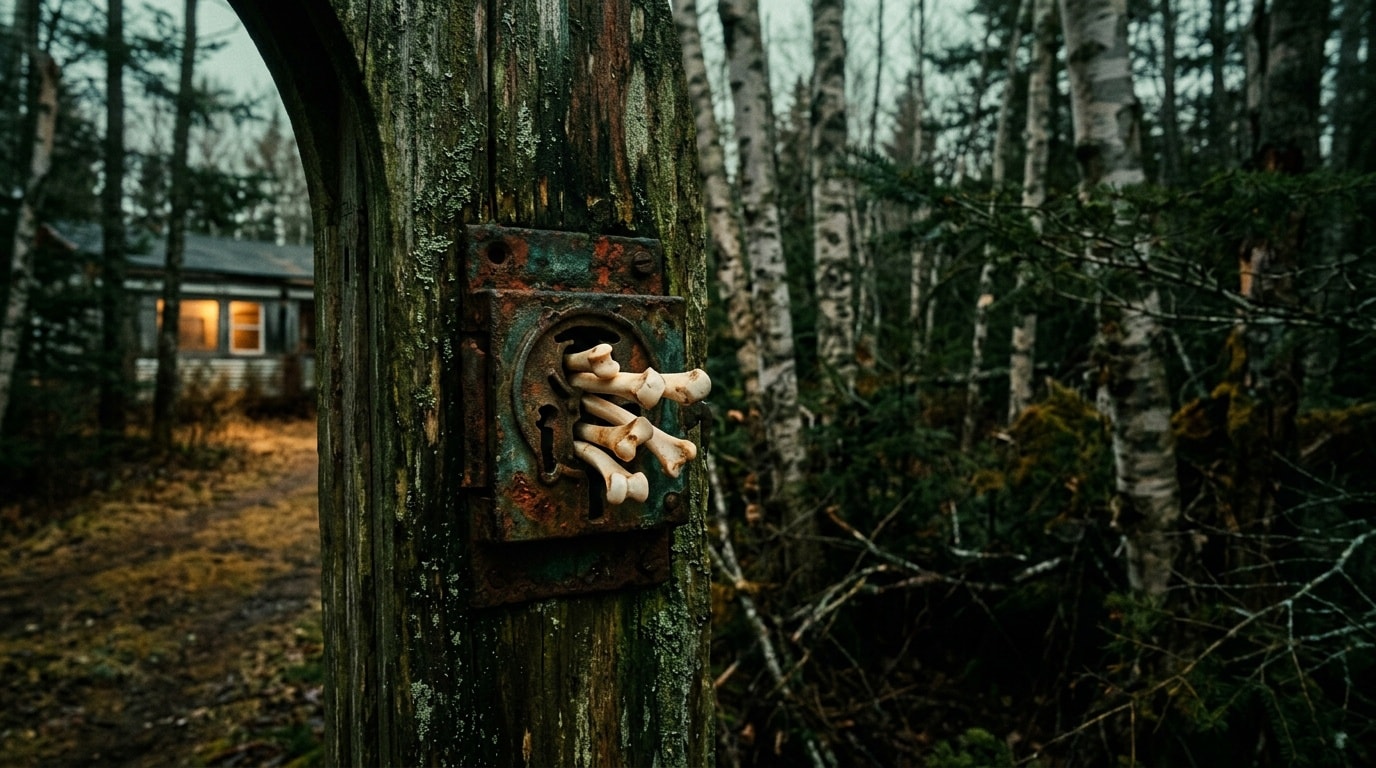
The Bones Are the Exit Price: Escape, Ritual, and Boyd's Convergence as One Mechanism
The Township has always required Jade and Tabitha to spend their daughter's remains as the cost of leaving, and using the children's bones to physically break open the barred archway is not a desecration of the ritual but its completion.

Sophia Harvested Elgin to See the End
Sophia is executing a two-phase endgame she has attempted and failed at least once before: stripping the town's passive talisman defenses to replicate the Clinic breach at scale, while using a hand-contact ritual to extract specific capacities from key individuals.

Sophia Engineered the Bond Smiley's 'Interesting' Ratified
Sophia used the herbal mixture, administered through Clara, to initiate Fatima's transformation long before Smiley reached the Clinic, writing her into his perception as something categorically distinct from prey.

Henry Armed Himself to Escape Reality by Force
Henry's vision has been directing him toward killing Victor as a deliberate mechanism of escape, not as an emotional breakdown.

The Bottle Tree Was the Keystone of a Single Integrated System, and Its Removal Was the Ignition
The Bottle Tree was not one layer among several independent protections but the load-bearing anchor of a unified defensive architecture in which daylight, talismans, and creature behavioral constraints were interlocking outputs of one system.
The Boy and Sophia Have Done This Before
Sophia and the Boy in White have contested control of the township across multiple prior cycles, both carry memory of those iterations, and Sophia has won each one until now.

The Town's Earthquakes Are Deliberate Interventions
Something is actively timing earthquakes to protect Jade and Tabitha specifically, targeting the creatures while leaving the humans unharmed, and has been doing so across multiple episodes.

The Man in Yellow Wears the Dead
The Man in Yellow selects its stolen identities based on knowledge of surviving grief, not random availability of the dead.