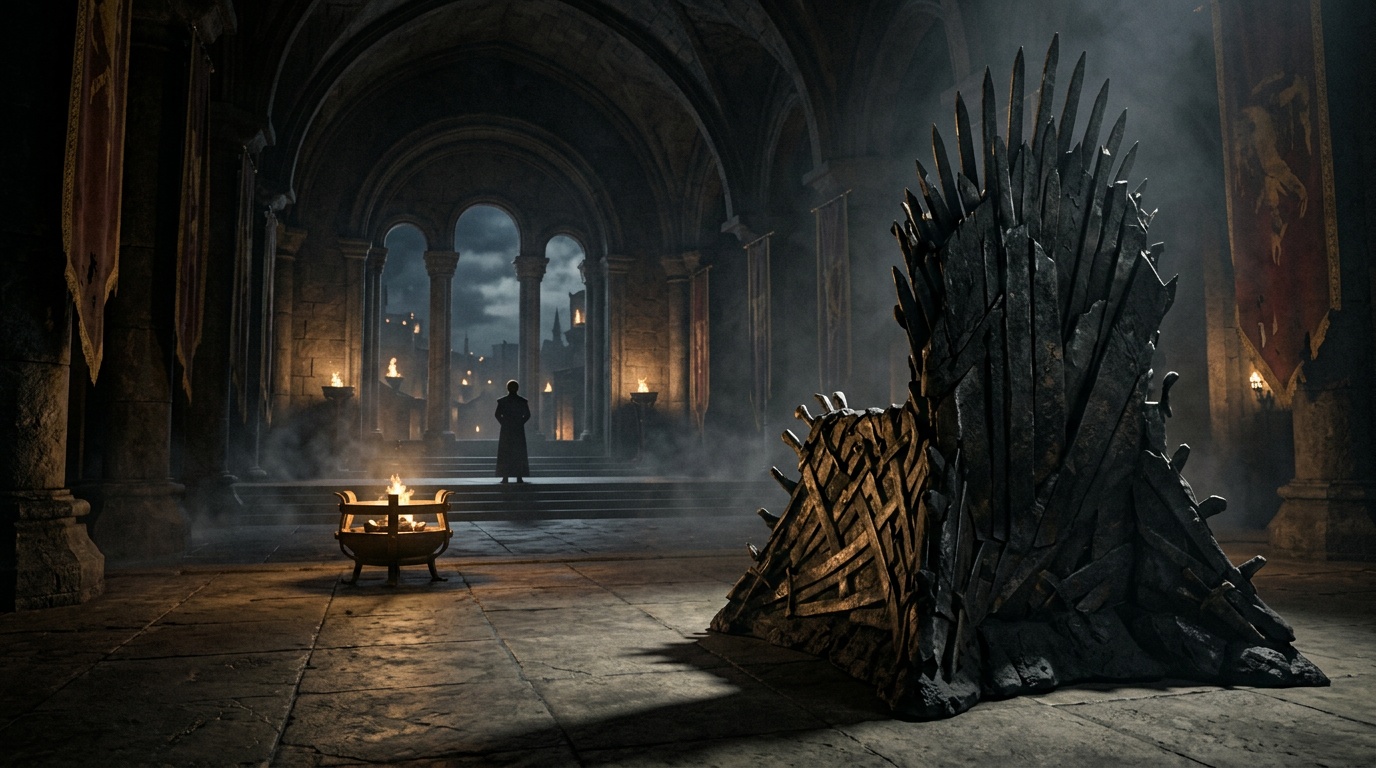
Daemon Baited Vaemond Into His Own Death
THE ARGUMENT
Daemon does not react to Vaemond's insult in the throne room. He engineers it, daring Vaemond to complete the accusation so the execution can follow on Daemon's own terms, with Viserys watching from a throne he can no longer defend. The kill is not an act of loyalty to Rhaenyra. It is a public audition to replace a king who has already vacated the role.
How This Theory Works
The tell is in the timing. Daemon explicitly dares Vaemond to say it. He does not interrupt, does not warn, does not move to cool the confrontation. He invites the insult forward, which means he needs the insult to land before he draws Dark Sister. A husband protecting his wife's honor would have stopped Vaemond sooner. Daemon stops him precisely late enough for every person in the court to hear the accusation and then watch Daemon punish it. The sequence is a construction, not a reaction.
The smile confirms the reading. Daemon begins to smile before he moves, while Vaemond is still speaking. That is not the face of a man provoked past restraint. It is the face of a man watching his plan arrive on schedule. The sardonic quip after the kill seals it. Daemon remarks that Vaemond can keep his tongue, then sheathes his sword with deliberate calm. He cleans the blade. Rage does not clean the blade. Rage does not make the joke. The composure tells us the emotional register of the act was satisfaction, not fury.
The sharpest implication is not about Vaemond at all. Viserys is present on the throne throughout this sequence. He does not act. He cannot. And Daemon knows it, which is why the throne room is the chosen venue. By executing a man inside the king's own court while the king sits motionless, Daemon does not merely resolve a succession dispute. He demonstrates, in the most legible venue available, that the authority to punish now lives with him and not with Viserys. The court does not watch the king's justice administered by proxy. They watch Daemon substitute his own judgment for the king's and walk away unchallenged. Dark Sister removes Vaemond from the succession argument. What it removes in a more durable sense is any remaining pretense that Viserys is the one holding power in that room.
Is this theory convincing?
Key Evidence
Daemon's Smile Before the Strike
Daemon begins to smile as Vaemond approaches the incriminating declaration, indicating he anticipated the moment and chose to let it arrive rather than interrupt it.
Dark Sister Drawn After the Insult
Daemon draws his Valyrian steel sword Dark Sister and executes Vaemond only after Vaemond publicly calls Lucerys a bastard, sequencing the kill to follow the justification.
Sardonic Post-Kill Quip
After cleaving the top of Vaemond's skull, Daemon calmly remarks that Vaemond can keep his tongue, then sheathes Dark Sister, demonstrating composure inconsistent with reactive rage.
Daemon Daring Vaemond to Say It
Daemon explicitly dares Vaemond to complete his accusation, a provocation that invites rather than prevents the insult and sets up the execution on Daemon's own terms.
Casual Sword-Cleaning After Execution
Daemon cleans and sheathes Dark Sister after the kill with deliberate casualness, reinforcing that the act was premeditated and controlled rather than emotionally driven.
Viserys Still Present on the Throne
The execution occurs in the throne room while King Viserys is present, meaning Daemon acts as judge and executioner within the king's own court, displacing royal authority in plain sight.
This theory was evaluated using Theory Atlas editorial standards, including evidence review, narrative fit, and competing interpretation analysis. Learn how Theory Atlas evaluates theories →
Other Theories for S1E08
Vaemond's Driftmark Bid Serves Two Masters
Viserys's execution of Vaemond did not simply silence one man.
Alicent's Handmaid Reports to Mysaria
Talya is not simply a servant who sells information.
The War Rhaenyra's Question Started: How a Misdelivered Prophecy Ignited the Dance of Dragons
Viserys's dying words are not a final royal instruction to Alicent.
The Managed King: How Alicent's Suppression Architecture Made Viserys's Final Act Possible and Necessary
Alicent Hightower's regency rested not on improvisation but on an inherited suppression architecture operating across three interlocking registers: chemical management of Viserys's cognitive availability, institutional silencing of inconvenient witnesses, and symbolic replacement of royal authority throughout the Red Keep.
Aemond's Toast Is a Calculated Bastard Accusation
Aemond's repeated use of 'strong' in his toast is not praise but a deliberate public invocation of Ser Harwin Strong, branding Jace and Luke as bastards before the assembled court through language no one can formally challenge.
The Dinner Truce Will Not Survive Morning
The reconciliation between Rhaenyra and Alicent is genuine, but Otto Hightower sealed the Green position before either woman sat down to dinner.
Viserys Dies Reaching for Aemma
Viserys's final words are not addressed to anyone in the room but to Aemma, the wife he ordered killed and spent the rest of his life failing to grieve properly.
Rhaenyra's Sons as Dynastic Weapons: Symbol, Sentiment, and the Question of Who Pulled the Trigger
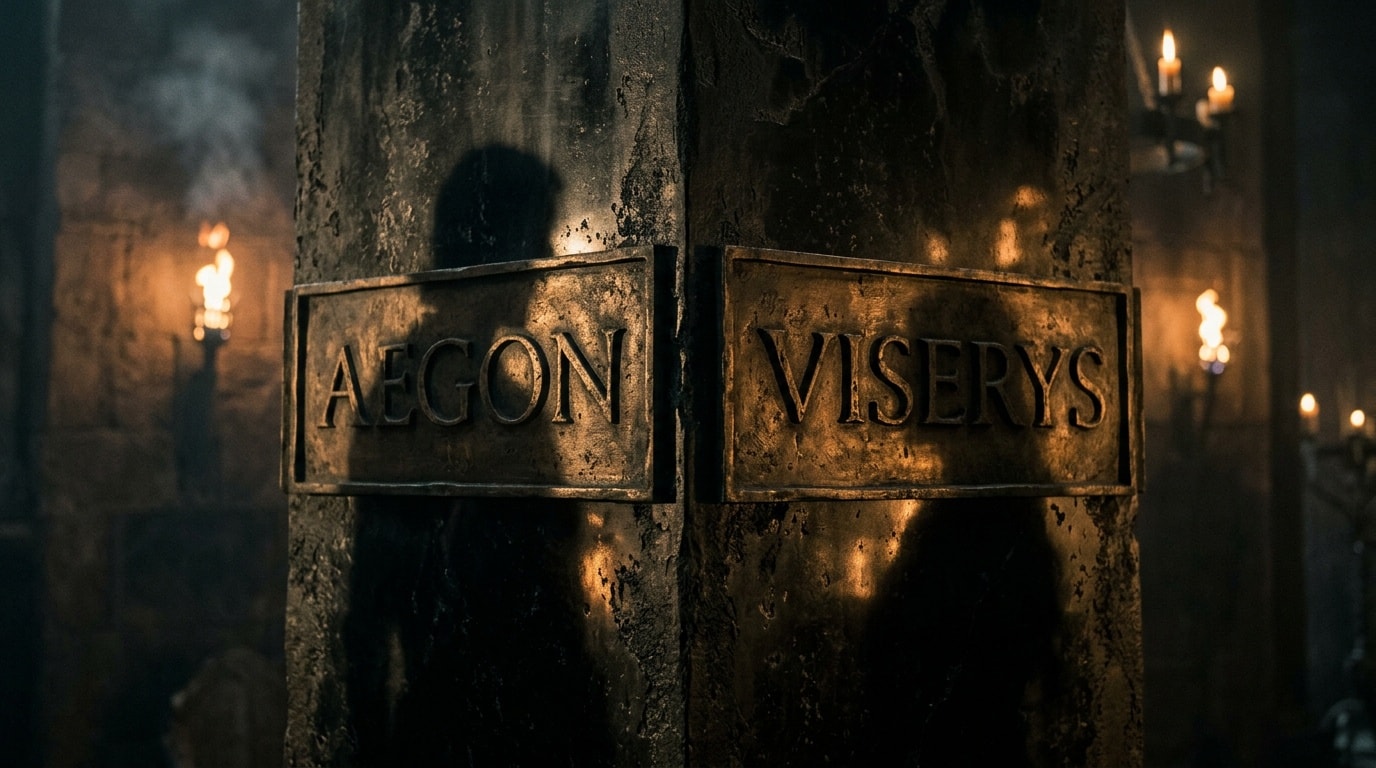
Rhaenyra's naming of her sons by Daemon as Aegon and Viserys is a calculated political act with two simultaneous targets: a deteriorating king whose emotional investment needed to be converted back into binding loyalty, and a Green faction whose claim to dynastic inevitability depended on exclusive ownership of both names.