A Local Feud Ignites the Dance of Dragons
THE ARGUMENT
The Dance of Dragons does not spread through the Riverlands by royal command but through feudal hatreds that use the succession crisis as permission to activate. The Burning Mill is the first military engagement of the war precisely because local lords with inherited grudges acted before any strategic order reached them, revealing that the conflict's spread will be driven by vendetta rather than generalship. This makes the war in the Riverlands not merely difficult to win but structurally resistant to the kind of central coordination Daemon is attempting to build.
How This Theory Works
The real mechanism of the Dance of Dragons is not dragons or queens but generational hatreds that require only political permission to ignite. The Bracken-Blackwood clash is the proof of this: Rhaenyra and Aegon issued no order. The rival succession claims simply gave Aeron Bracken and Davos Blackwood the ideological vocabulary they needed for a conflict that would have found another excuse regardless.
The boundary stone accusation frames the fight as territorial, but the insults collapse that framing immediately. Aeron calls Davos a 'babe-killer' for his house's allegiance to Rhaenyra, importing an entirely separate layer of grudge. Davos responds by delegitimizing Aegon. Neither man is talking about land. The allegiances function as new dialects for old hatred, and the succession crisis is grafted onto a vendetta that predates it and will outlast it. Both leaders die in the exchange, which means whatever local authority might have contained further violence is now gone, and the blood debt compounds without anyone positioned to settle it.
The scale of the losses establishes a precedent without establishing a deterrent. Neither house's survivors will read this as a reason to stop. They will read it as a reason to escalate. This is precisely what Simon Strong's warning about Grover Tully predicts: a lord so diminished that his bannermen act before he can restrain them. The Burning Mill does not merely illustrate that warning. It forecloses the alternative. Daemon's strategy at Harrenhal assumes that rallying the Riverlands is a matter of persuading its lords, but the Burning Mill demonstrates that the lords are already being moved by forces no raven from Harrenhal can redirect. The war in the Riverlands may be structurally ungovernable, which means Daemon is not building a coalition. He is attempting to ride a current that has already decided its own direction.
Is this theory convincing?
Key Evidence
Boundary Stone Accusation as Pretext
Bracken knights are accused of moving boundary stones to annex Blackwood territory, but the insults exchanged immediately escalate beyond the territorial claim, revealing that the land dispute is a pretext for a deeper grudge.
Both Leaders Die in the Clash
Ser Aeron Bracken and Lord Samwell Blackwood both die in the battle, eliminating the local figures who might have been able to negotiate or contain further violence between the two houses.
Allegiances Reframe Ancient Enmity
Aeron invokes 'babe-killer' as an insult tied to Blackwood's support of Rhaenyra, and Davos delegitimizes Aegon in return, showing that the rival succession claims are being grafted onto preexisting feudal hatred rather than creating new conflict from scratch.
First Military Engagement of the Dance
The Burning Mill battle is identified as the first actual military engagement of the Dance of the Dragons, yet it was triggered by local lords acting on inherited grievance rather than by any royal military command.
Tully's Inability to Control Bannermen
Simon Strong warns Daemon that Lord Grover Tully is a fading old man whose control over his bannermen is limited, a warning the Burning Mill battle directly illustrates before Daemon has even begun his Riverlands strategy.
Generational Hatred Outlasts Its Origins
The conflict mirrors a pattern in which the original cause of enmity becomes irrelevant as each generation inherits the vendetta, suggesting the Bracken-Blackwood violence will self-perpetuate regardless of how the broader war resolves.
This theory was evaluated using Theory Atlas editorial standards, including evidence review, narrative fit, and competing interpretation analysis. Learn how Theory Atlas evaluates theories →
Other Theories for S2E03
Harrenhal Selects for Fire, Processes Through Alys, and Destroys Through Recognition
Harrenhal operates as a three-stage trap: it admits claimants through fire as a structural criterion, uses Alys Rivers as its active processing mechanism to engineer the psychological sequence that follows, and delivers its killing blow not through spectral violence but through the one confrontation Daemon has organized his entire life to avoid.
Larys Manufactured the Threat He Sold Aegon
Larys Strong manufactured the council conspiracy rumor he presented to Aegon as a warning, engineering the very threat he claimed to be exposing in order to secure the Master of Whisperers appointment that now gives him control over the king's entire information supply.
The Meeting Rhaenyra Is Engineering Is the One Alicent Cannot Survive Without a Confession
Rhaenyra is quietly protecting a direct approach to Alicent from her own council, drawn to it not by strategic logic but by unresolved guilt over a false oath sworn at the most vulnerable moment of their friendship.
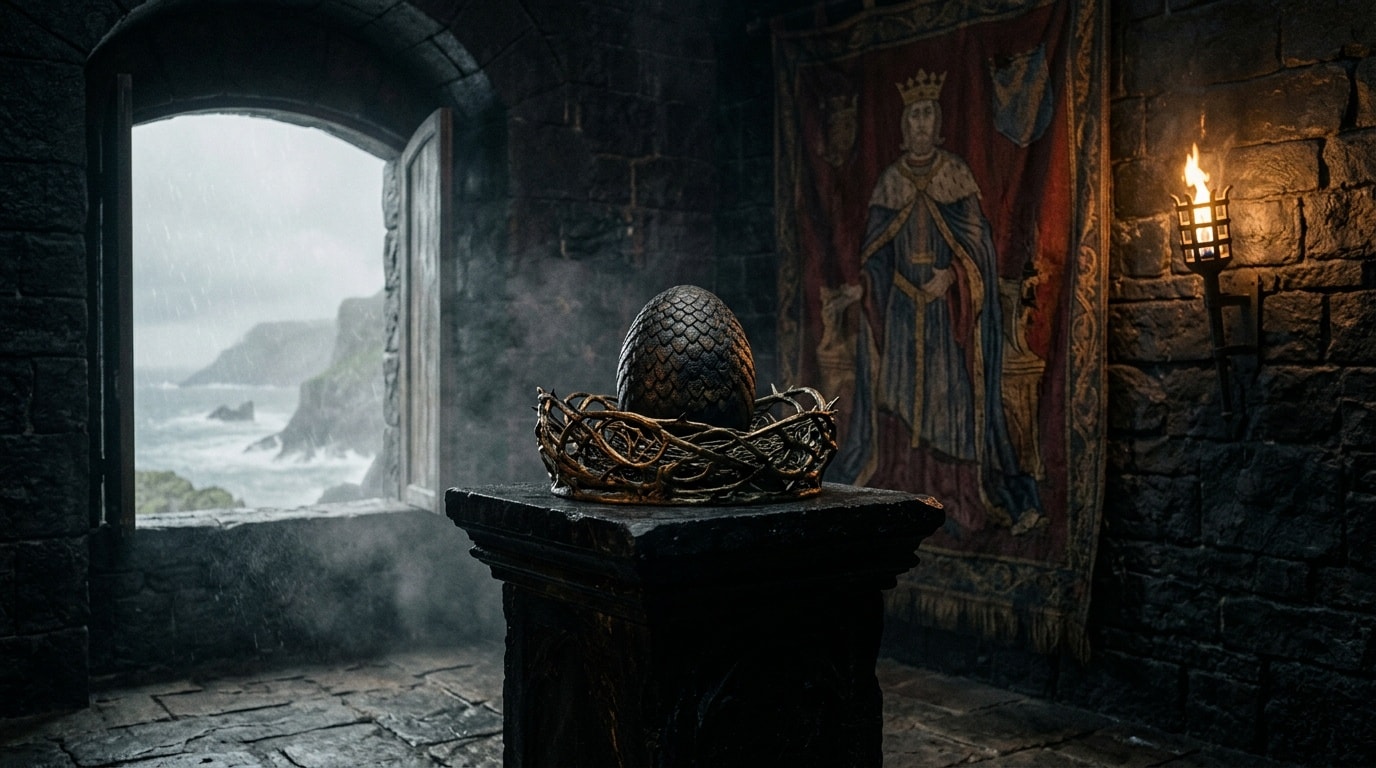
Dragon Eggs Sent to Pentos as Dynastic Failsafe
Rhaenyra has already run the losing scenario to its end, and the Pentos mission is what that conclusion looks like in practice: she is moving irreplaceable dynastic assets beyond the reach of any Westerosi outcome and installing a bonded Targaryen rider there by promising Rhaena a hatchling.
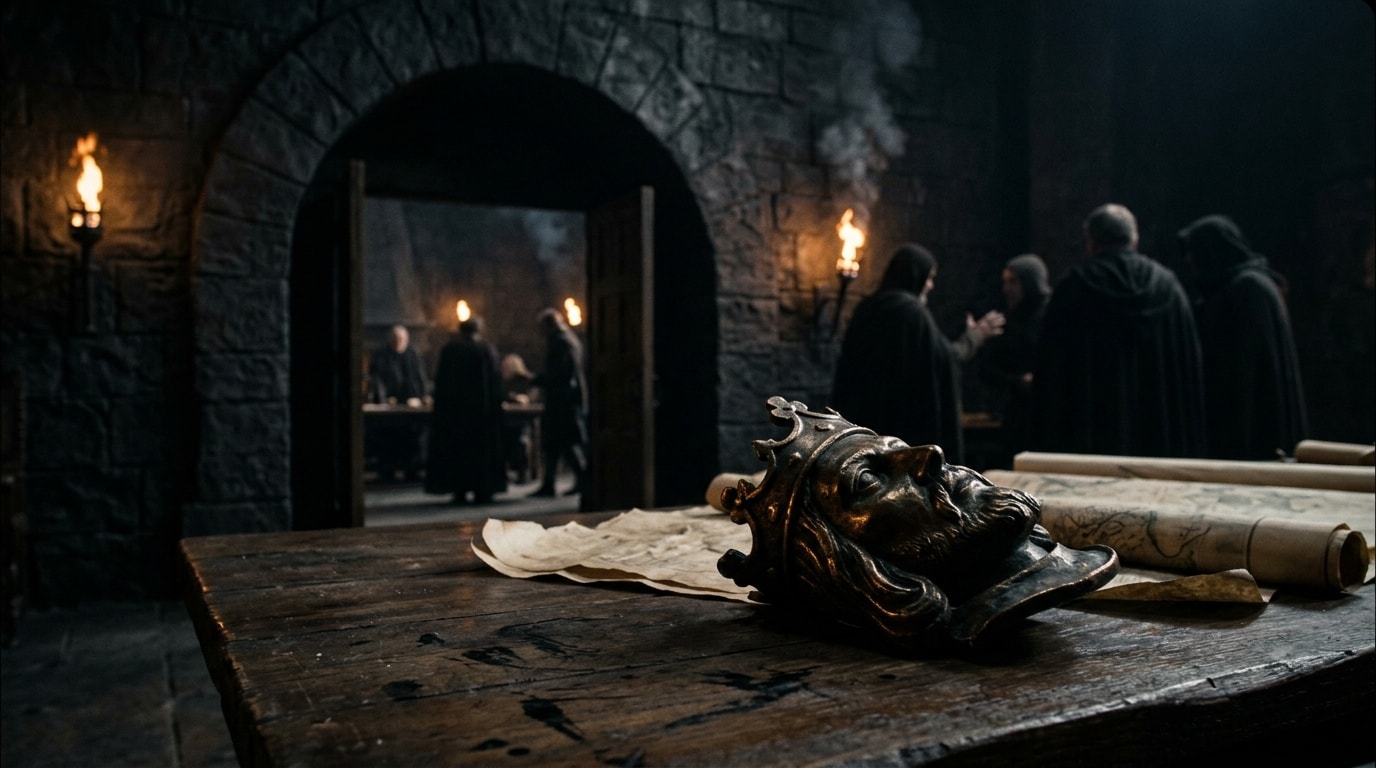
Simon Strong's 'Prince' Is a Power Move
Ser Simon Strong's repeated use of 'my Prince' instead of 'Your Grace' is a calculated refusal to recognize Daemon's kingship, not an old man's oversight.
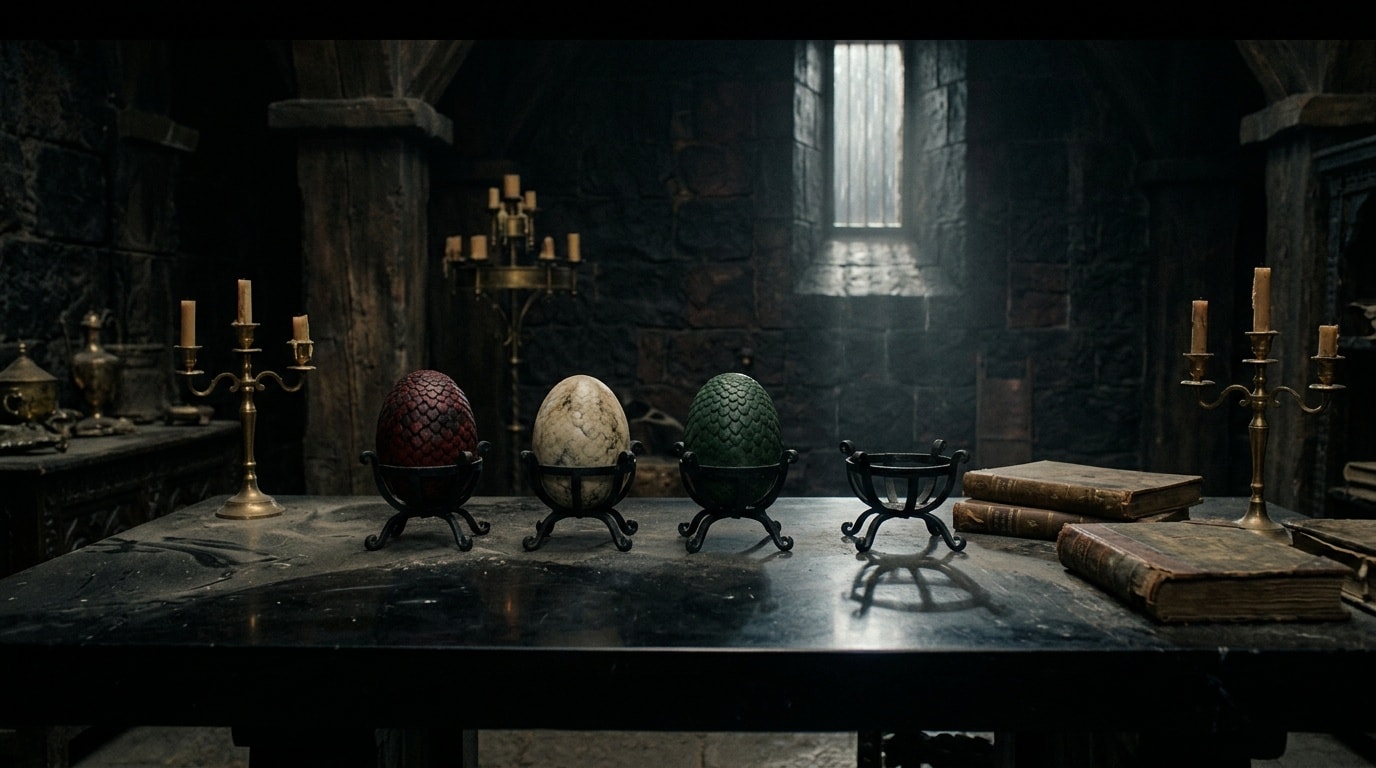
Rhaena's Four Eggs Become Daenerys's Three
The four dragon eggs Rhaenyra sends with Rhaena to Pentos are the same clutch that hatches into Drogon, Viserion, and Rhaegal at Daenerys Targaryen's wedding, with one egg lost somewhere in the intervening two centuries.